
An Evening of Forced Interpretation
Review of Spring '26 at Whim W'him Contemporary Dance Center
Written by TeenTix Newsroom Writer REID MATHEWS
Edited by Teen Editorial Staff Member MARIELA VIDELA
To view contemporary dance is to be exposed to a medium of utmost earnestness. Black Moon, one of three pieces in Whim W’him’s Spring ‘26 season, is described as follows: “Time moves like phases overhead—each connection ripening, dimming, and disappearing—while the body carries the fatigue of what remains unspoken.” Whim W’him has opened for their last show of the season. There are three dances choreographed by three individual artists, yet they flatten and morph together. None are particularly memorable for what they wanted to showcase: an unpretentious social commentary that defies and transcends the “rules” of art.
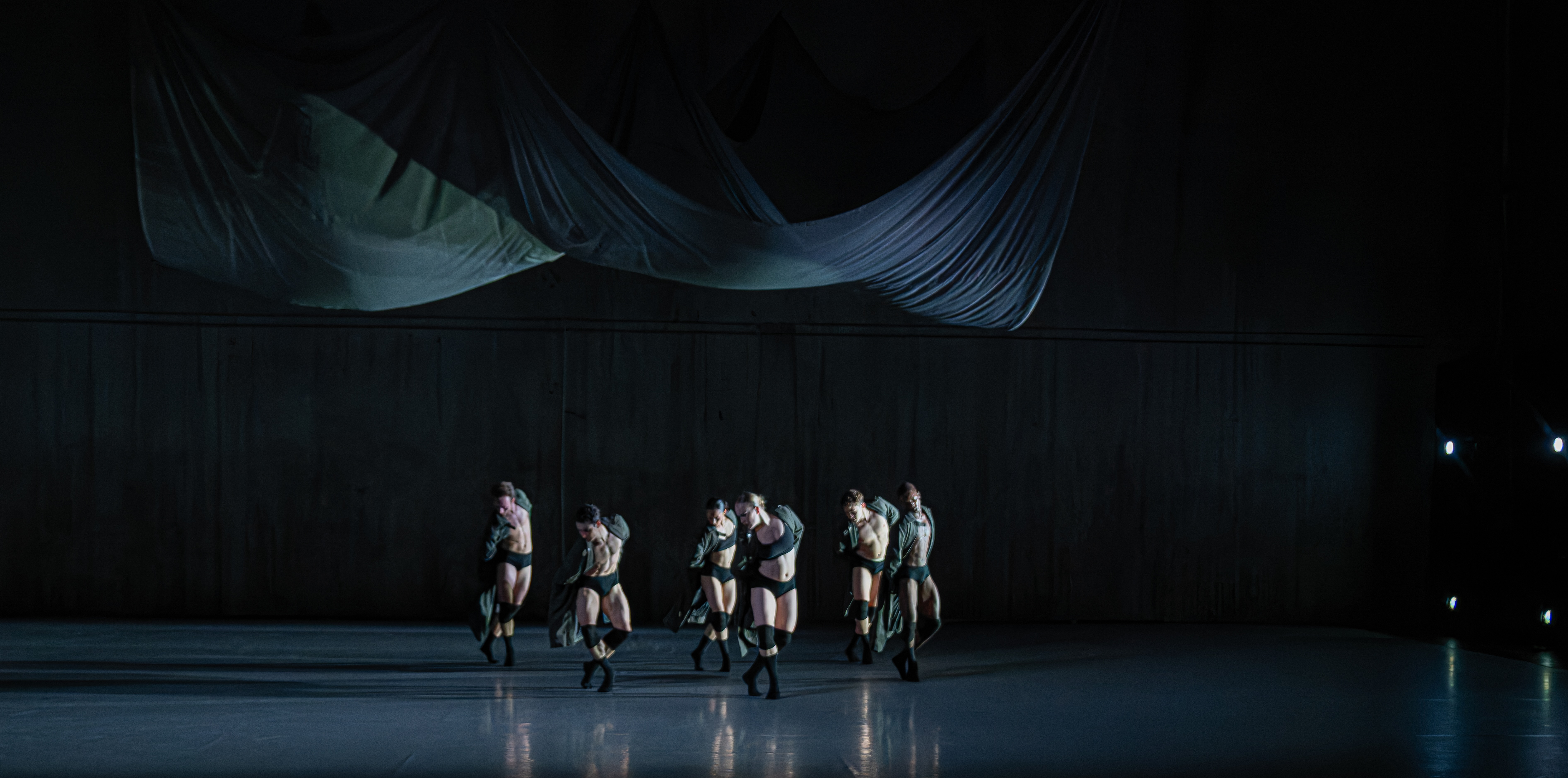
Despite the verbose diction of their program descriptions, the dances offered a fraught and dystopian mood. The dancers were set to a worn concrete wall, their bodies adorned with cold neutrals. The first dance, James Gregg’s Static Bloom, opened with the performers standing center stage, arranged in a three-by-three grid. They were wearing cheetah print jorts and heavy trench coats (which dancer Stella Jacobs described as “badass”). Hyperpop music was playing and the dancers seemed to enter a tortured vogue. Around two-thirds through the performance, the dancers emerged still in their trenchcoats but with nearly nothing underneath. The story—supposed to be a form of divine perseverance—was now being maintained on the basis of sensuality. At the end, the dancers’ movements became more and more discouraged. Instead of ending with the same triumph they opened with, the confidence they possessed at the beginning of the show seemed to dwindle. They ended the performance sobbing.
Black Moon, by Rena Butler, started with the dancers convulsing on the floor, wearing mesh veils akin to fencing masks. The music varied in this set: the beginning held a more acoustic sound, almost a Nick Drake dystopia. The dancers lingered around the stage as Mac Miller began to play overhead. His ramblings clashed with the dancers’ sincerity. It weighed down the dancers.
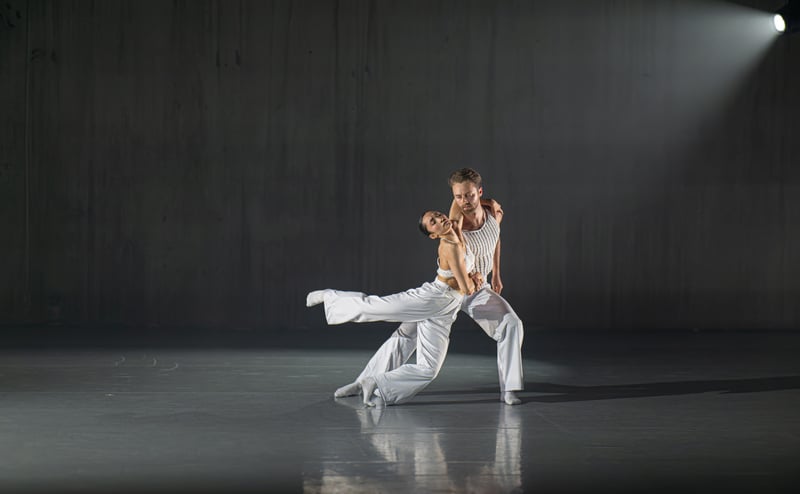
We arrived to a fog-filled stage for Oliver Wevers’s Dark Echoes Come Shining. A spotlight bounced off of the motes and illuminated the dancers on stage. A great deal of the final dance was a remarkable duet, which was awarded a standing ovation. Unlike the previous dances, it wasn’t trying to apply any abstract commentary. It made for a satisfying ending to the night—one of the few moments from the set I find myself coming back to.
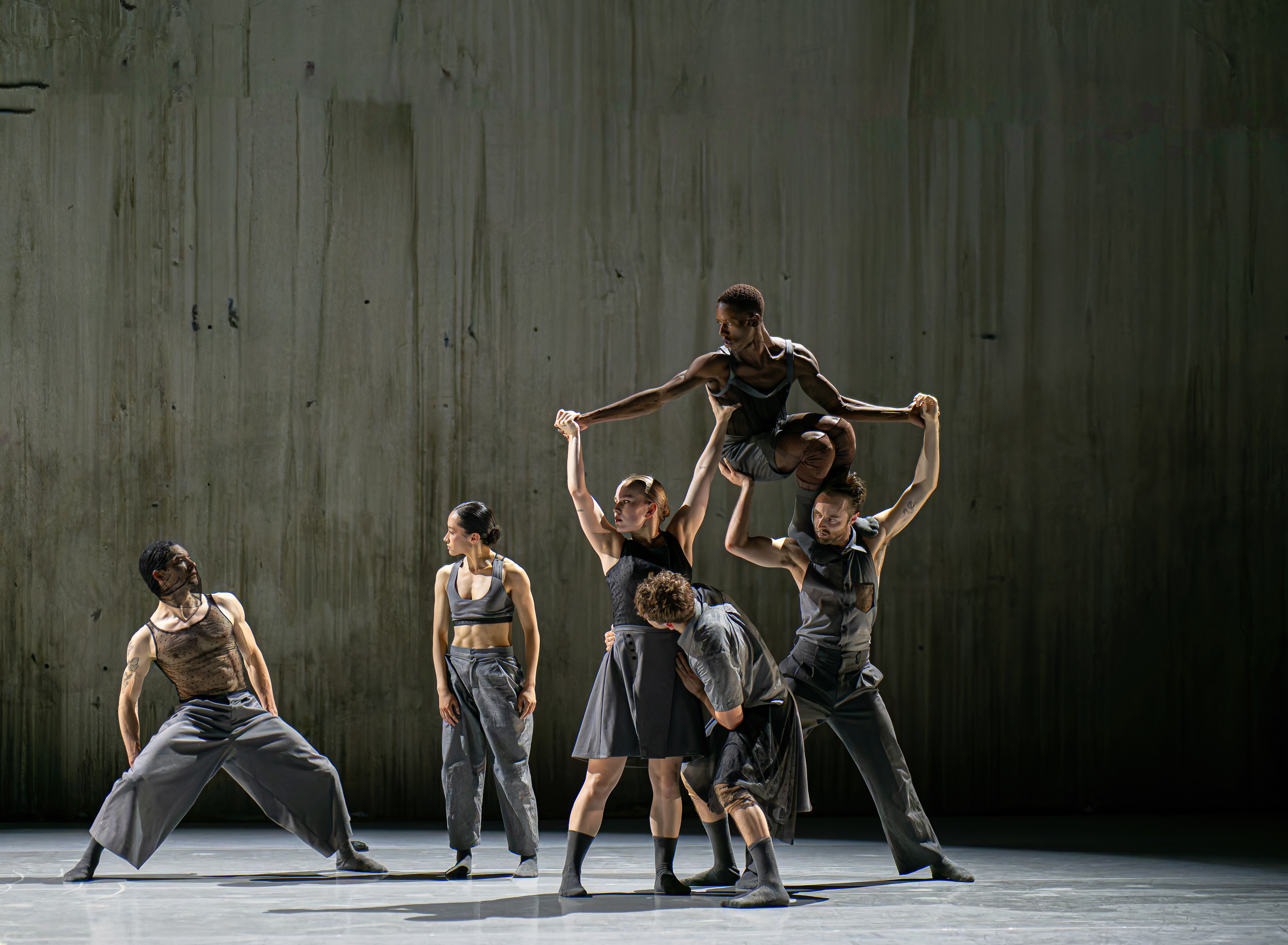
Throughout most of the pieces, the dancers’ bodies moved in a sharp manner. Their technique was good. They were confident. But their fastidiousness rejected the honesty of their subjects, or rather, their staggering moves rendered a more despondent quality than intended. The genre seems to have become a modern dance Animal Farm: Interpretive dance can only become so lawless—it is often not as groundbreaking or outlandish as it tends to be portrayed. One has nothing to defy if everything already has. If the font is all in bold, there is nothing withstanding. Although having superb technique, Whim W’him does not offer anything extraordinary. Each piece is simply another dance. Whim W’him seems to strive to foster a connection with its patrons—one that doesn’t read as transactional. They made it a point to build some intrinsic bond with the audience before the curtains were raised—attempting to make the experience feel like a prosperous exchange of life and divine energy, not just currency. Live dance has the right to be meaningful, but the process of discerning and deciding how you feel is also the right of the audience. Their perceptions ultimately decide—whether they are completely aware of it or not—what it means to them. The dances tried overly hard to cast an introspective mirror, without allowing the audience to decide whether they reflected deeper meaning.
Whim W’him’s Spring ‘26 does not find itself relevant in my mind. I left the performance feeling indifferent. I did not grow a sense of higher virtue nor count myself transformed by whatever parable the dances conveyed.The imperative to viewing Whim W’him’s Spring ‘26 is to be someone who can surrender themselves to another’s vision, allowing someone else to impose their idea onto you. Perhaps it is a problem within myself to not identify with that level of sincerity. Passion for dance is expressed in a certain type of person—the kind I don’t find myself to be.
Lead photo: Choreography: Olivier Wevers - Photography: Jim Coleman - Whim W’Him dancers
The TeenTix Newsroom is a group of teen writers led by the Teen Editorial Staff. The Teen Editorial Staff is made up of 5 teens who curate the review portion of the TeenTix blog. For each review, Newsroom writers work individually with a teen editor to polish their writing for publication.
The TeenTix Press Corps promotes critical thinking, communication, and information literacy through criticism and journalism practice for teens. For more information about the Press Corps program see HERE.