Relevancy and Reflection
Review of Fat Ham at Seattle Repertory Theatre
Written by Sophia Tuaua during an Arts Criticism workshop at Evergreen High School

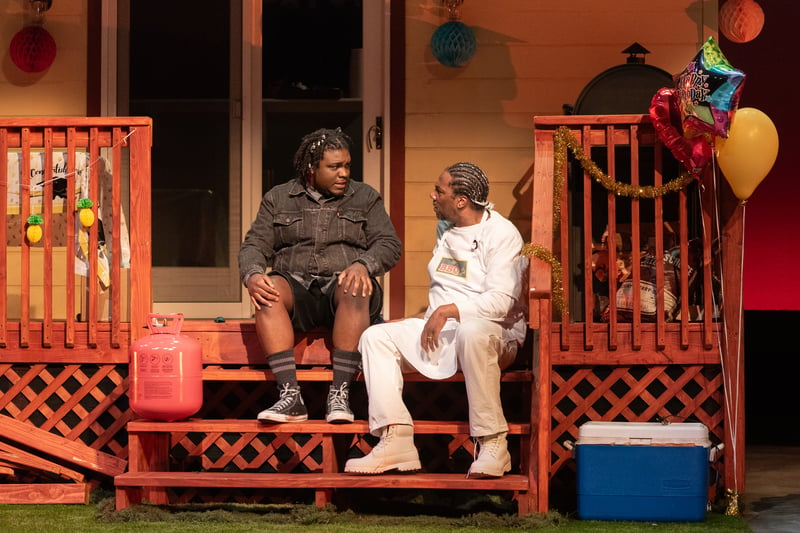
Backyard barbeques aren’t your typical setting for tragedies—especially not a Shakespearean tragedy. And yet, the Pulitzer prize-winning interpretation of Hamlet, called Fat Ham, takes place in a suburban backyard. Playwright James Ijames reimagined Hamlet, a story of death, tragedy, and revenge, to be retold by a Southern African American family. Hamlet himself is represented by a queer Black man named Juicy, tackling the challenges of generational trauma and self-identity. The characters themselves struggle with modern problems in a modern-day setting, attributing to the play's biggest strength—its relatability. James Ijames took advantage of the universality of Shakespeare’s themes and effectively translated them into a Southern context. Much like Hamlet, Fat Ham begins with the celebration of Juicy’s mother marrying his Uncle, Rev. However, unlike Elsinore, their wedding cookout takes place in Juicy’s backyard, shortly after the death of Juicy’s father, Pap. Pap later returns in a ghostly form and demands that Juicy avenge him, as it was Rev who was responsible for Pap's murder. This event serves as a foundation for Ijames to introduce themes of mental health, violence, and generational trauma within Black communities. Fat Ham serves as a successful adaptation of Hamlet due to its representation of conflicts within Black communities and breaking those cycles.
While Fat Ham does showcase the darker side of African American trauma, it shows those patterns being broken and resolved. An example of this is with Pap. Ijames strategically paints him out to be an abusive father, to represent violence within Black communities in the play. This message is conveyed through aggressive, argumentative dialogue to engage the audience with captivating, evoking verbal conflicts. During Pap’s visit from beyond the grave, they argued, violent words being thrown at each other at bone-rattling volumes. As someone who has heard such conflicts many times before in my own family on similar topics, I found the disagreements to be very relatable. It feels raw, using commonly used phrases many teens hear these days coming from parents, which is something that many fights in entertainment tend to overlook. You can tell Ijames and other writers had done their research when skillfully writing what real quarrels sound like. The dialogue continues to be this play's strong suit to also convey themes of mental health to both characters and directly to the audience.