
Blood, Bunkers, and a Little Bit of Strauss
Review of Salome at Seattle Opera
Written by TeenTix Newsroom Writer ALEXANDRA DESCHENES
Edited by Teen Editorial Staff Member ALICE CHEN
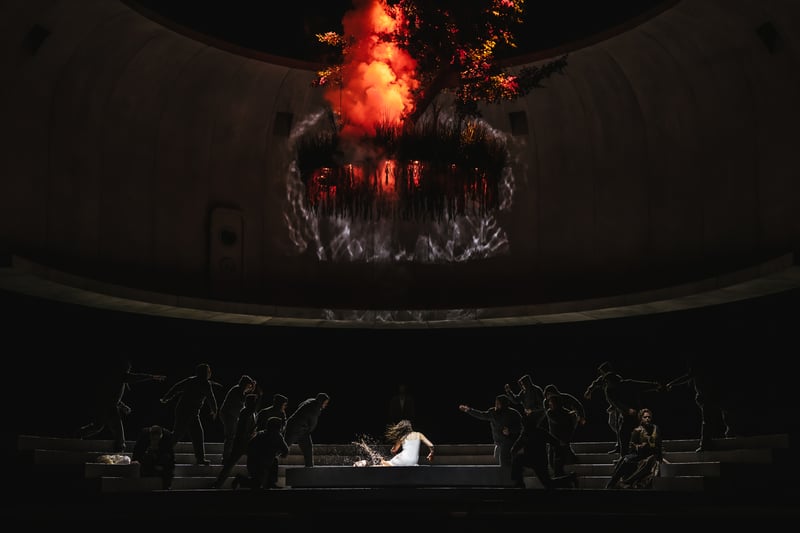
Full of desire, decapitation, and incest, Richard Strauss’ Salome is hardly short on drama. Adapted from Oscar Wilde’s scandalous play via Hedwig Lachmann’s German translation, it covers the biblical story of Princess Salome, who asks her father, King Herod, for the head of the prophet Jochanaan. For a work that is so untraditional, I expected it to be strange—revolting, even—for audiences new to opera. Yet, Seattle Opera addressed the story with a true tact and thoughtfulness that helped connect its audience to Salome and all its unorthodoxy.
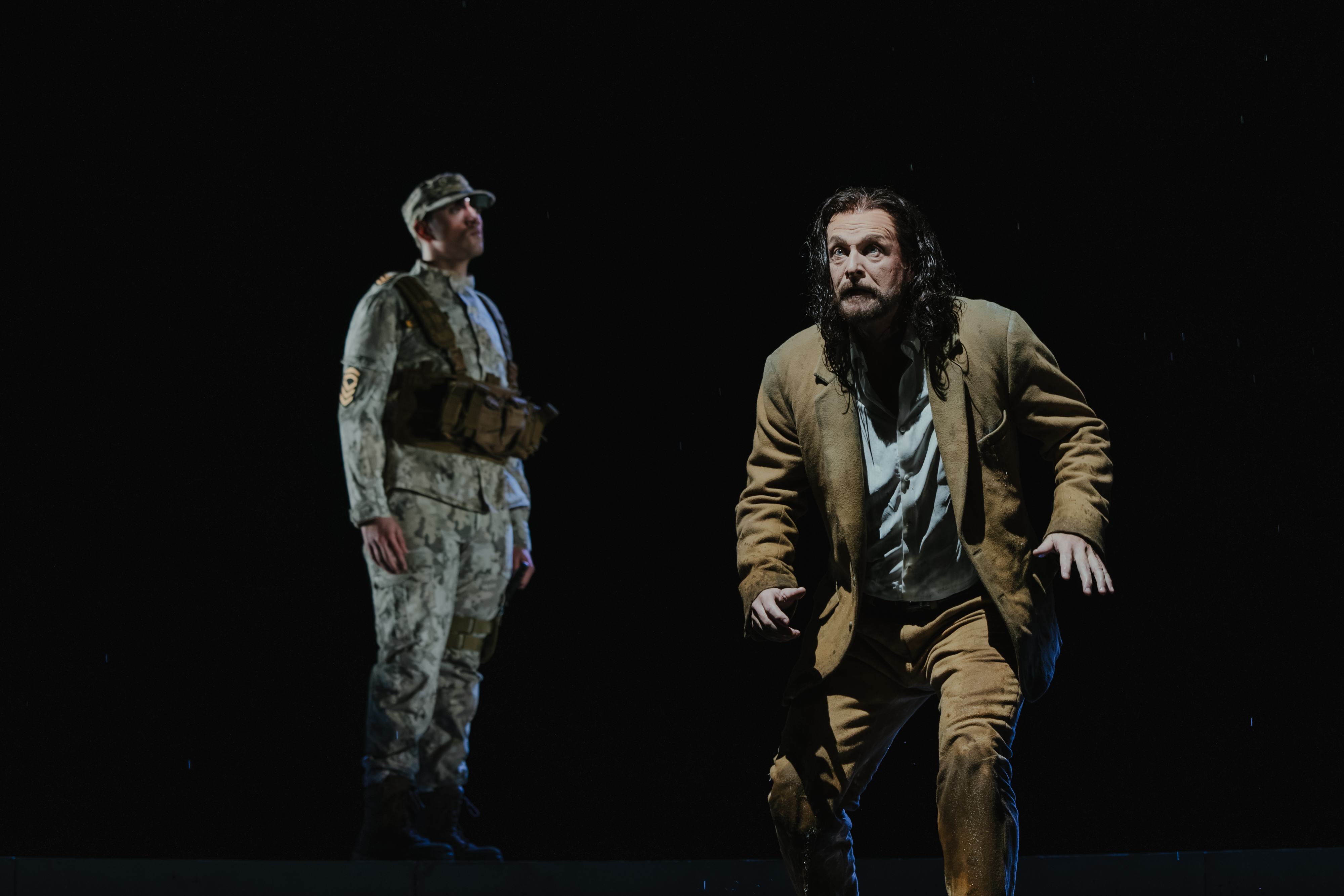
The first indication of this is in the modernity of the costumes, which are definitively from today’s society: Narraboth and the palace guards are garbed head-to-toe in camouflage, sporting assault rifles far more reminiscent of today’s world than of the 1st century. In contrast with the harsh whites and dark purples of the moonlit night, Salome is in a simple sunny yellow dress that flounces about—a choice that directly juxtaposes the overly uptight, jewelry-laden, and gaudy white-tie attire of the rest of the dinner guests; despite the variation in type of attire, all of it is from today. I quite liked the costuming, because it spoke to the timelessness of Salome’s themes and their relevance today, helping break down the disconnect between the wild story and a modern audience.
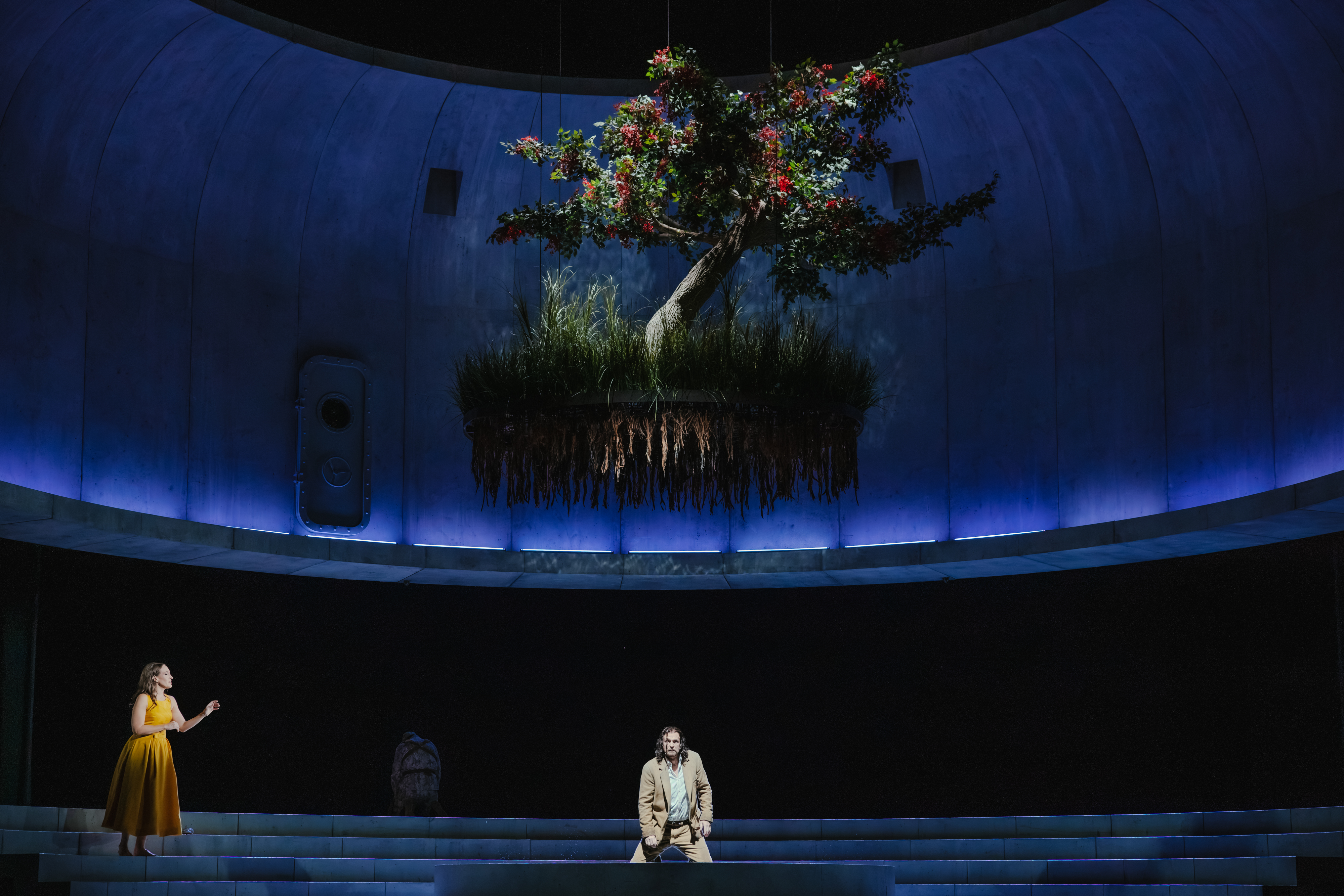
Despite the unexpected costuming, the set, designed by Leslie Travers, is perhaps the most interesting aspect of this production. The opera opens with what I initially perceived to be moonlit nighttime in a garden, until Salome exits the feast through a door, revealing that the moon is actually a porthole in the door leading into the cistern.
The walls, slightly curved inwards, are carved to mimic a concrete bunker. This subtly introduces the idea that everyone is trapped together in their fate, even before any characters mention the mysterious omens they have seen. Simultaneously, the curved shape cleverly acts as an acoustic shell—allowing the singers’ voices to project throughout the massive hall without the use of microphones. Another interesting choice was to have everyone descend into the cistern, rather than have the prophet Jochanaan emerge from it. The production plays with the boundaries of who is in the cistern and when, blurring the distinction in an exceptionally nuanced way. In a sense, it levels the characters’ playing field, condemning all of them to their same eventual deadly fate.
In addition to the set’s coherence as a whole, the centerpiece of the setting is a tree, from under which Jochanaan emerges. During particularly “preachy” parts of the opera, such as Jochanaan’s initial appearance and the segment in which he tells Salome how to cleanse herself of sin, the tree’s roots drip water onto the characters below. It is reminiscent of a baptism, fitting both John the Baptist’s character (literally in the name) and the “purifying” nature of those moments. Musically, Jochanaan’s parts are scored in a broad 4/4 time with a very choral soundscape, characteristic of liturgical music and diametrically opposed to the frantic, dramatic sound of the rest of the opera. What this production does so well is its emphasis on the contrast Jochanaan’s appearance offers, with his simple tan suit, referencing his canonical humble clothing worlds away from the dinner guests’ lavish appearance. There is also a fun pop culture reference in Salome’s (Brenda Rae’s) performance, when, covered in Jochanaan’s blood, Salome reiterates her place as “Salome, Princess of Judea,” and performs a mock curtsy reminiscent of Katniss Everdeen’s in The Hunger Games. It is devoid of all the sweetness and innocence Wilde frames Salome as having in the beginning of the opera—again, I love the emphasis on the same themes being held throughout pieces of media throughout time. It’s like saying: “look, you’re already familiar with and enjoy this quality from a mainstream modern piece of media, which is all the more reason you should appreciate that same quality in a more unconventional one,” a mindset that I think made Salome more palatable without detracting from everything that makes it so special.
While preparing to write this review, I had the privilege of seeing both the final dress rehearsal and one of the official shows. The choice that stood out the most to me between the two was the final scene, where Salome is stoned to death. In the dress rehearsal, as King Herod gave the order to have Salome killed, the stage experienced a full blackout before the lights suddenly came back on to reveal the stoning crowd. Above them, the tree is in flames. I loved this choice, especially given how shocking the ending is; the suddenness that the blackout offered furthered that impact. In the final production, that effect was somewhat lost when instead of appearing on stage after the blackout, we saw the crowd walk onstage after hearing Herod’s order, which read as far less powerful to me. Still, Salome is truly a difficult piece to put on, and Seattle Opera tackled the production ever so thoughtfully: from the innovative set design to the beautiful singing from the artists on stage, Seattle Opera’s Salome was beautifully unique.
Lead photo: Brenda Rae (Salome) and the cast of "Salome" at Seattle Opera. Photo: Sunny Martini.
The TeenTix Newsroom is a group of teen writers led by the Teen Editorial Staff. The Teen Editorial Staff is made up of 6 teens who curate the review portion of the TeenTix blog. For each review, Newsroom writers work individually with a teen editor to polish their writing for publication.
The TeenTix Press Corps promotes critical thinking, communication, and information literacy through criticism and journalism practice for teens. For more information about the Press Corps program see HERE.
