
"Carmen": Featuring the Toxic Boyfriend
Review of Carmen at Seattle Opera
Written by TeenTix Newsroom Writer CARTER WONG
Edited by Teen Editorial Staff Member MILO MILLER

Seattle Opera’s Carmen presents a toxic situationship that didn’t happen on paper—it happened on stage, in French, and ended with a knife. Carmen is a story about love, freedom, and controlling others. The opera has music by Georges Bizet and a libretto by Henri Meilhac and Ludovic Halévy; Seattle Opera’s production is conducted by Ludovic Morlot and directed and choreographed by Paul Curran. The main characters’ dynamic is something we can all recognize: a person who wants freedom, and the person who calls that abandonment.
Carmen (J’nai Bridges), a strong-willed woman who lives according to her whims and passions, attracts Don José (Ryan Capozzo), a soldier who gradually becomes obsessed with her. At first, he genuinely loves her, but as this epic story goes on, his feelings grow from love to controlling Carmen.
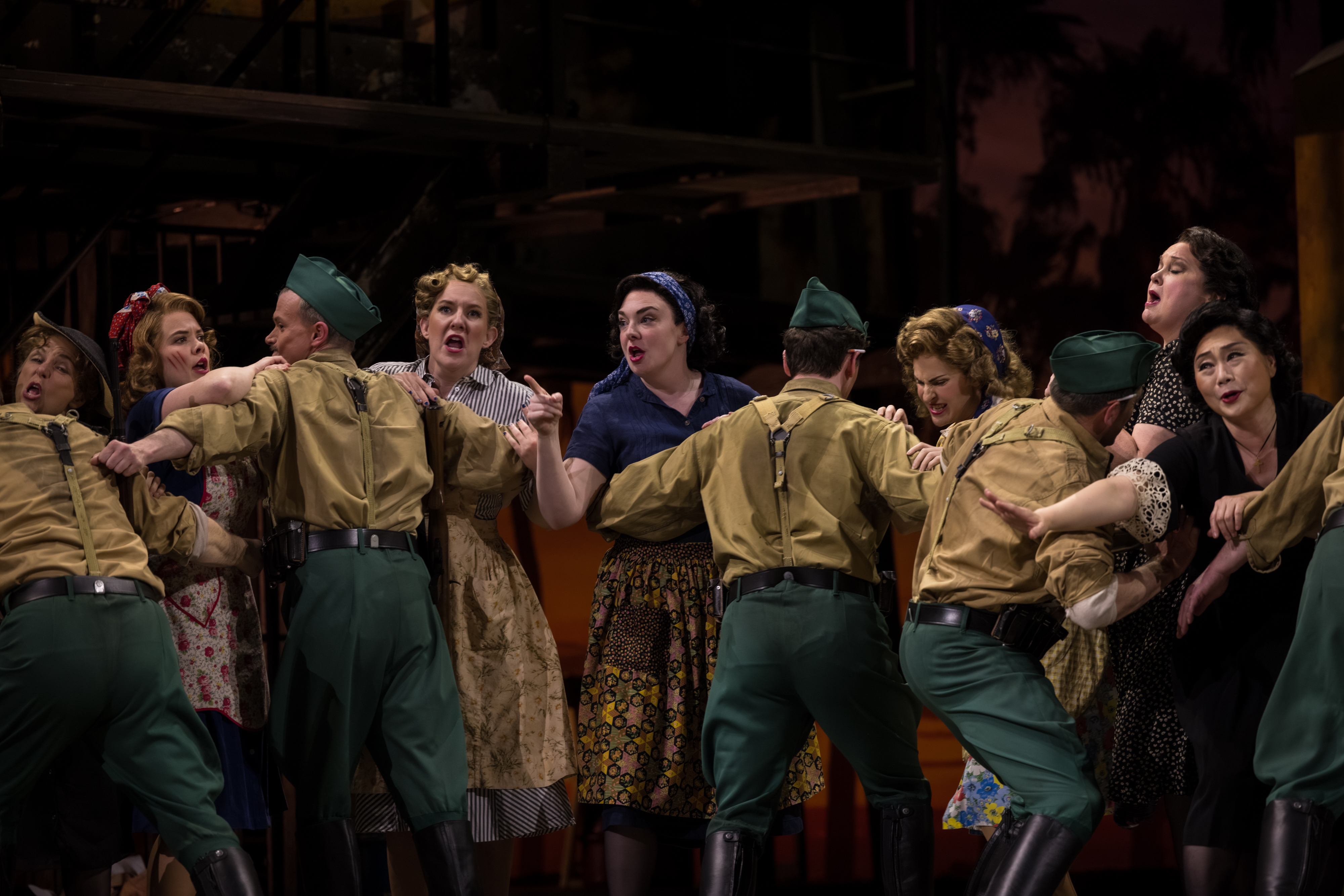
When the curtain rose for the first time, I noticed the energy of the room. The stage was full of people and movement as we are introduced to an epic romance with a Spanish backdrop still grounded in realism of the 19th century. With her bright red costume and the green-caped army style soldiers around her, Carmen is established as the main character, but she is also watched by everyone around her, separating her from the rest of the cast. She moves through the story with confidence, even when other people try to define her. We can see the clothing colors of blue, green, and some tan clothing dominating the cast.
As the relationship of Carmen and Don José develops, Carmen grows apart from Don José, not wanting to belong to him or anyone else. She is bold, playful, and knows the effect she has on other people. While fighting with Don José, she does not try to act weak or vulnerable.
On the other hand, Don José becomes the antagonist of the story. He starts out loving Carmen, but his love turns into jealousy and anger at Escamillo, the matador for whom Carmen leaves him. Don José wants to control her and keep her with him. This makes him dangerous and leads to the saga’s tragic and dramatic ending.
One of the best parts of Carmen is its electrifying music. Notable tunes like Carmen’s dynamic "Habanera" and Escamillo's aria "Toreador Song” are attractive and renowned, recalling the thrill of everyday relationships. The music makes the story easy to follow because it moves to the audience how the characters feel. Carmen’s music feels fast and free, while Don José’s music becomes more tense and wild as the story goes on. The orchestra’s strong performance gave the audience a deeper connection to characters and their story arcs.

The stage design helps show this conflict. The green and tan soldier costumes, Spanish style clothing, and dance create a world that feels lively but not safe. Public scenes have color and liveliness, while more private moments feel dark. This contrast helps the audience understand the tension of Carmen’s life.
What stayed with me most was Carmen’s refusal to give in. She knows that Don José is dangerous, but she does not pretend to love him to protect herself. Carmen stands by her freedom and gets punished for it, an ending made more tragic by Bridges’ exuberant performance. The plot is ultimately a reminder that not all unrequited love is healthy, especially with the type of love that mistakes ownership for devotion. Seeing Bizet’s score sung on stage makes it impossible for us to look away as we worry for the protagonist.
Lead photo: May 3 cast, from left: J'Nai Bridges (Carmen) and Ryan Capozzo (Don José) in "Carmen" at Seattle Opera. Photo: Sunny Martini.
The TeenTix Newsroom is a group of teen writers led by the Teen Editorial Staff. The Teen Editorial Staff is made up of 5 teens who curate the review portion of the TeenTix blog. For each review, Newsroom writers work individually with a teen editor to polish their writing for publication.
The TeenTix Press Corps promotes critical thinking, communication, and information literacy through criticism and journalism practice for teens. For more information about the Press Corps program see HERE.