
"We Run the Night" Could Have Run Further
A book review of We Run the Night by Peace Mbengei
Written by TeenTix Newsroom Writer ADRIEN HONIG
Warning: This review contains heavy spoilers.
You look outside your window at night to see a pair of eyes. Almost-human eyes that shouldn’t be there. It shrieks, guaranteeing a sleepless night, and disappears. Night runners are supernatural beings from the folklore of Eastern Africa that are known to terrify their victims but ultimately do no damage. I found this book to be similar to its subject matter: it grabs you, but leaves no marks. A complex and intriguing plot and premise, with both fully explored and brushed over themes, and shallow characters makes We Run the Night an interesting read, but not an impactful one.
Shani is a student at the boarding school Taji Academy, dealing with both the recent death of her father, who died in a car crash with an unknown drunk driver, and the night runners terrorizing her school. The school administration insists they are simply rowdy kids playing pranks, but she suspects something more supernatural is the cause. She spends the book investigating both the cause of the night running and her father’s killer, working with friends, fighting with other classmates, and navigating her increasingly nefarious school leadership.
Don’t be fooled by the “horror” label: the mysteries in the book were not quite scary, but they were gripping. What kept the abundance of mystery from turning nonsensical was how connected the mysteries were. The plot manages to stay cohesive by keeping its two main questions –the killer of Shani’s father and the cause of the night running – connected through symbolism and, eventually, by a shared answer.
The plot is well-woven, but the themes underlying it are more hit-or-miss. Some of them are well-explored, like the conflict between folklore and science. Characters debate whether night runners are real and whether to use traditional medicine or modern science to fight it. This type of tension is extremely common in supernatural stories, but here, instead of it being a simple belief in supernatural vs nonbelief, it is also a question of modern science vs tradition. This makes the “is this real?” question more complex than a typical supernatural horror story. Additionally, night runners themselves are portrayed as multifaceted people who are not in control of their running, which gives a complex metaphor that asks clear and interesting questions about the theme of what makes someone a monster. Is it their actions, even when they are uncontrollable? Or is it labeling someone else as an enemy and then attacking them for it?
While some themes are well thought out, others are too brief to be meaningful. An example of this is when Shani investigates whether a popular and well-liked boy is her father’s killer. His soccer team covers up his crimes and lies to the student newspaper in an extended scene. This seems to open an interesting conversation of how powerful men are able to get away with crimes, even on the younger, smaller level of a school. But this is never visited again, and that conversation is cut short.
In addition to some shallow themes, the characters are underdeveloped. Aside from the main character Shani, each character is simple as “best friend who likes journalism” or “mean girl who faces pressure from her mom”. The complex plot requires a lot of time to explain and explore, so the lack of focus on the characters makes some sense. But the book is still worse off with its simple and predictable characters. Reading the book, I never felt like I knew or was interested in any of the characters. To make matters worse, the prose of the book is often incredibly cliché, with phrases like “eyes moisten” and “breath catching” feeling vague and emotionless, which makes the illustrations of the characters and themes feel vague and emotionless.
The combination of lackluster characters, unoriginal prose, and half-baked themes give the book a juvenile feel. Some may say this is appropriate for a YA book, but I would assert that teenage audiences are fully capable of understanding complex characters, complex commentary, and unique prose. It reads a little young for a teenage audience, but its heavier topics and level of fear elements seem too mature for a younger audience, making the book not quite right for either. It’s a captivating and exciting story, but I was hoping for a book that could stick with me when I closed the cover.
We Run The Night is out July 7th, 2026.
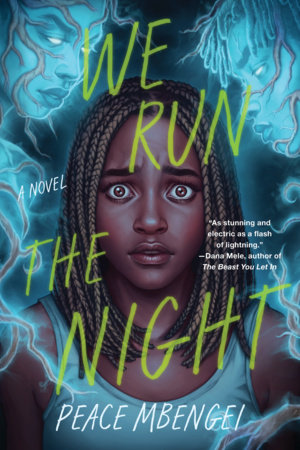
Lead photo: Cover of We Run the Night from Soho Press Inc.
This article was written on special assignment through the TeenTix Press Corps. The TeenTix Press Corps promotes critical thinking, communication, and information literacy through criticism and journalism practice for teens. For more information about the Press Corps program see HERE.
