TeenTix Logo
Login
Sign Up

What Happens When You Give Dancers A Say?

Review of Whim W'Him's Choreographic Shindig IV, written by Teen Editorial Staff Member Anya S, and edited by Teen Editorial Staff Member Hannah S!
Dscf2739

I used to be a dancer. When I danced, however, I never felt closely connected with what I was asked to perform. Sure, The Nutcracker and Sleeping Beauty were classics, but their stories didn’t represent my identity. I didn’t feel that my dancing reflected who I was.

At Whim W’Him’s Choreographic Shindig IV, however, the company could choose pieces and choreographers that reflected them. For the Choreographic Shindig IV, the dancers chose three choreographers—Alice Klock, Brendan Duggan, and Omar Román de Jesús. These artists, using the dancers’ input, created three 20-minute pieces: "Before After," "Stephanie Knows Some Great People," and "Welcome to Barrio Ataxia." Klock’s piece, "Before After," dealt with the death of one world and the birth of the next. It began with the end: a spotlight illuminated a soloist clad in grey, slowly rubbing his hands together. He then moved about the space, clearly suffering. When he was spent, he collapsed to the ground. His death sharply contrasted with what came next. Two dancers, wearing green, created life through fluid extensions and expansive gestures, their movements reminiscent of youthful deer running across a field.

Read More

Reader, She Married Him

Review of Jane Eyre at Book-It Repertory Theatre, written by Teen Editorial Staff Member Huma A, and edited by Teen Editorial Staff Member Anya S!

Opening night at Book-It's production of Jane Eyre was a memorable experience. The place was bustling with an activity and vibrancy synonymous with champagne, cupcakes, and opening night.

The play began with a girl, Jane, holding a candle in the dark and singing an eerie song —replicating the Gothic Romanticism portrayed in Brontë’s novel. As the night progressed, full and rich with English accents, the story switched perspectives from the first, second, and third person. Parts of the show embodied Brontë’s novel, with characters even quoting iconic lines, like “Reader, I married him.”

Read More

Storytelling That Transcends Boundaries

Review of Richard III at Seattle Shakespeare Company, written by TeenTix Press Corps Member Emily B, and edited by the Teen Editorial Staff!
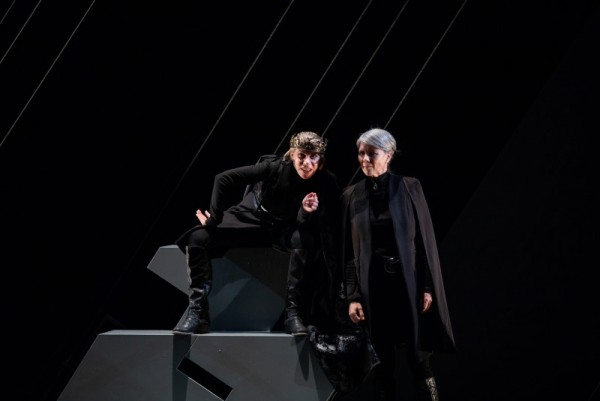
Richard Iii 305

Rarely do I enter a play with as many thoughts and questions as I had going into Richard III at Seattle Shakespeare Company. There was so much to be explored: would a historical play remain accessible not only 400 years after it was written, but 500 years after its events occurred? And what would it be like to see this play – with 21 male characters and 4 female characters – presented by an all-female cast? The answers I found are a testament to the power of Shakespeare’s words to cross boundaries of gender and time, and a testament to what amazing, powerful theatre Seattle Shakespeare Company’s actresses can create when they bring life to all his words – not only those of his few female characters.

One feature which makes all-female productions so exciting, particularly when it comes to all-female productions of Shakespeare, are the opportunities offered for female performing artists, who tend to have fewer opportunities than their male counterparts in the world of Shakespeare. The bard’s plays contain far more roles for men than for women, perhaps because they were originally performed by all-male casts. All-female productions like this open the door for audiences to experience the unique talent and perspectives that female performers can bring to the full array of magnificent roles Shakespeare created. And works of art placing women in positions of power, onstage and behind the scenes, are much-needed today and always. So naturally, I was excited that Seattle Shakespeare Company had chosen to collaborate again with the upstart crow collective to present this sequel to Bring Down the House, their highly-praised all-female adaptation of the Henry VI trilogy.

Read More

The Human Behind the Label

Review of Sweet Land at Taproot Theatre Company, written by TeenTix Press Corps Member Emily B.!

Sl2

The battle cry “Us versus them,”and the brutal labeling accompanying it, is all too familiar today. One might not expect a seemingly simple historical fiction musical to offer a relevant response, yet Taproot Theatre’s Sweet Land does just that with touching, convicting, and joyful power. Sweet Land tells the story of a young German woman, Inge Altenburg, who travels to Minnesota to marry a man she’s never met, Norwegian Olaf Torvik. But with World War I a recent and painful memory, Olaf’s community condemns the match, delaying the marriage. The events of this waiting period–the challenges faced, relationships built, and lives changed—are the heart of the musical’s story.

Molli Corcoran and Tyler Todd Kimmel in Sweet Land, the Musical at Taproot Theatre. Photo by Erik Stuhaug.

The piece is a tour de force for Molli Corcoran (Inge) and Tyler Todd Kimmel (Olaf), who carry the story with moving, grounded brilliance. Corcoran’s vocal versatility and acting ability are immediately evident in her introductory song, which clearly establishes both her talent and Inge’s character (kudos to composer Dina Maccabee and lyricist Laurie Flanigan Hegge for the soaring work of storytelling that is the score). The tough, loving, courageous “mail-order bride” Inge is unafraid to be the voice of reason and to act in defiance of “what people will think.” Her “strength, power, and grace” are some of the first things to strike her fiancé. Olaf is a man of few words—yet Kimmel skillfully creates the character through his striking physicality and presence. Long before he has spoken, the audience knows Olaf well, and, in moments when the stage is full of movement and sound, it is the still, shy farmer who draws the audience’s eye. While waiting for the outside approval the community requires before allowing their marriage, Inge and Olaf come to understand and love one another. Their blossoming relationship—conveyed as much through wordless glances and softening physicality as through words—is a joy to watch. Brownie and Alvin Frandsen (played by April Poland and Chris Shea, respectively) offer contrasting and complementary enthusiasm, loquaciousness, and levity as they alone support—and are ultimately supported alone by—Inge and Olaf. Notable among the many less supportive members of the community (played by a small but versatile ensemble) is Hugh Hastings as Pastor Sorensen, the minister who refuses to marry Inge and Olaf and who plays a large role in turning the community against the couple. Hastings and the writers of the musical’s book, Perring Post and Laurie Flanigan Hegge,make this character (who could easily become the stereotypical uber-conservative villain) refreshingly believable, complex, and ultimately redeemable.

Read More

Humanity and Imperfection

Review of MUSE: Mickalene Thomas Photographs at Henry Art Gallery, written by TeenTix Press Corps Member Lily W.!
Mt Exhibition 01 Web Res

Mickalene Thomas’s most recent exhibition, MUSE: Mickalene Thomas Photographs at the Henry Museum and tête-à-tête is a reminder of the importance of community in the process of creating and experiencing art. The collection features Thomas’s photography and film—both lesser known aspects of her artistic repertoire, but ones that deserve just as much appreciation as the imposing rhinestone-studded paintings she’s best known for. The exhibit, based on a book of the same title released in 2015, is embellished with a tête-à-tête of works curated by Thomas of artists she knows and takes inspiration from, including the work of Derrick Adams, John Edmonds, and Carrie Mae Weems among others.

Derrick Adams. Crossroads. 2012. Courtesy of the artist.

Read More

Hedwig Gives in to the Unknown

Review of Hedwig and the Angry Inch at ArtsWest, written by TeenTix Press Corps Member Anya S!

Hedwig 2

Hedwig and the Angry Inch is not your typical Broadway musical. Instead of chorus lines and tap numbers, the show features an onstage band and 90 minutes of punk rock. On top of that, the characters are eclectic. There’s Hedwig (played by Nicholas Japaul Bernard), who struggles to come to terms with her identity after a botched sex-change operation (although she is genderqueer, she uses she/her pronouns); Yitzhak (played by Dani Hobbs), Hedwig’s husband, whom she hates; and the unseen Tommy Gnosis, a rock star and Hedwig’s ex-lover, who abandoned her after learning that she was not technically a woman. Through these characters, their relationships, and dramatic, powerful songs, the show presents its central message: that one must embrace change and the unknown.

Throughout the show, Hedwig seems fixated on the past and present, instead of looking to the future, something that was mirrored in the staging. Because we normally read from left to right, stage left (from the audience’s perspective) is reminiscent of the past, while stage right symbolizes the future. During the show, Hedwig tended to stay stage left/center, displaying her obsession with her life before the operation and her relationship with Tommy, as well as her inability to focus on her current self and what’s to come. On the other hand, Yitzhak, who sits stage right, essentially becomes the show’s future—at the end of the show, they sing alone while Hedwig leaves the stage.

Read More

Family is Family

Teen Review of Familiar at Seattle Rep. Written by Zoe M. of Cleveland High School
Familiar4

Powerful. That's the first word that comes to mind when talking about Familiar, a play written by Danai Gurira, a well-known African American actress. This play is a masterpiece that everyone should see at least once. Drama is one of the oldest forms of entertainment, and, as humans, we love drama. This makes the play a hit for the audience as it is packed with the twists and turns that make a great family drama. Gurira draws from her own heritage for this play as it brings up many topics like culture, Zimbabwe, identity, and of course, family.

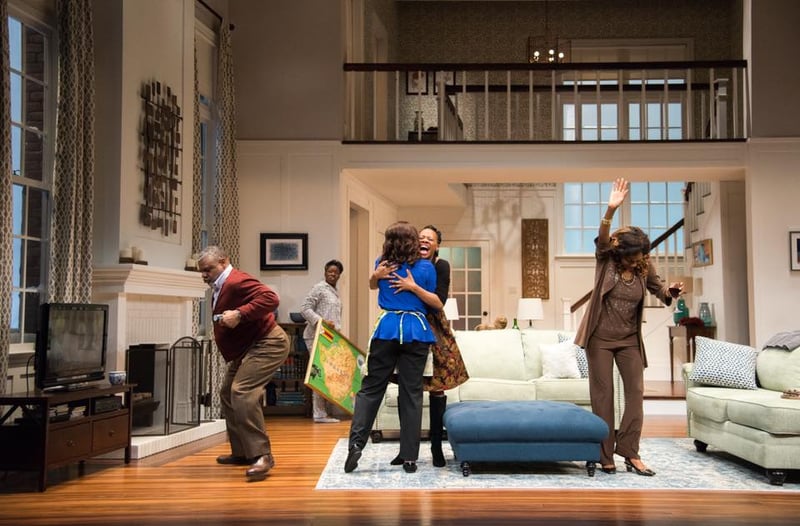
This play revolves around an African family from Zimbabwe and the conflicts they go through about race and identity. The family consists of two sisters, Tendi, the eldest, and Nyasha, the youngest; the parents, Marvelous and Donald; and two aunts, Margaret and Anne. When Tendi decides to get married to a white guy named Chris, most of the family has their own opinions, and her sister, who is afraid Tendi will lose her heritage, has the strongest opinion. The play progresses as more family shows up and causes more havoc in the small American-style house. The plot thicken as the story of this American Zimbabwean family unfolds.

Read More

Relatable and Quite Humorous

Teen Review of Familiar at Seattle Rep. Written by Brooklyn J. of Cleveland High School

Familiar 3

Before seeing Danai Gurira’s Familiar performed at the Seattle Rep Theatre I was doubtful that I would be able to relate to an immigrant family from Zimbabwe. I even questioned if I would enjoy going. Though after the school trip and the one hour and 50 minutes of the play, I was surprised to find that it was indeed relatable and quite humorous. Despite my preconception, I really enjoyed watching the play, could even say I loved it. As I walked into the Seattle Rep Theater I was easily impressed by the set design, it was a great first look at Taibi Magar’s interpretation on this modern-day play. The play begins in the family home of Zimbabwean refugees in Minnesota. I would say that I am not a big fan of one-set plays, but the actors like Michael Wieser, who played Brad, did a phenomenal job at bringing spunk to the show. While Familiar itself was extraordinary, exploding with fun-filled scenes, the ending of act one will continue to be one that I will remember. This is a must-see play due to scenes like this one. In an act of heroism, Brad, played by Michael Wieser, saved Nyasha’s (Aishe Keita) life at the end of Act 1. This scene played a big role in the way we and other characters in the show see Brad as more than just a white male. After watching this play I would say I wasn’t all that happy with the one-set play, and the non-stop arguing, although I would say that I loved seeing a character like Nyasha struggling to understand her culture. Many children identify as the first generation, and it hard to understand your culture when you are so far away from it. Many kids like myself become very stressed while thinking about this topic, but after seeing a character like Nyasha, it made me feel a lot better about my curiosity. At the end of the day, this play is a must see! It’s amazing set, phenomenal acting, and wonderful lessons will have you walking away with an experience like no other. Every person who struggles with finding who you are, and where you come from should see this play in all its glory. This is purely a piece of art that should be praised, but don’t let me shape your opinions, get up and see for yourself.

The TeenTix Press Corps promotes critical thinking, communication, and information literacy through criticism and journalism practice for teens. For more information about the Press Corps program see HERE.

Read More

A Diamond in the Rough

Teen Review of Familiar at Seattle Rep, by Andrew P. of Cleveland High School
Familiar 1

Before I went to go watch the play Familiar with my school, I watched the movie Black Panther. Then, I went and watched Familiar and I had no clue what to expect. Danai Gurira, or General Okoye from Black Panther, wrote Familiar. I walked in the theater expecting a boring play, but I found a diamond in the rough.

The play has a little bit of a slow start, just some dialogue between a couple characters. The dialogue built the characters and through this I saw that this is not a cliché play. The play revolves around Tendi’s wedding, daughter of Donald and Marvelous, niece of Anne and Margaret, sister of Nyasha, and fiancé of Chris. Tendi, the eldest daughter of the Zimbabwean family, is getting married to a Caucasian man. The play takes place in the family house in Minnesota.

Read More

Confusing in All the Right Ways

Review of JACK & at On the Boards, written by TeenTix Press Corps Member Juneaux L!

01 Jack Nateandkeisha Bychristophermyers Image01

Going into a performance or art display of any kind without given any sort of information about the performance beforehand is certainly a curious and exciting experience. Going in to see JACK &, this fact didn't change. I found the steadiness of the fish in the bowl theme to be quite intriguing, given the fact that, in hindsight, I believe it represented much more than what it originally seemed to.

The beginning set up of the show is a blue and turquoise mandala in the center of the stage; on its outskirts, a fishbowl and some cans of Crush soda sit on a stool. Green racks stand to the right side of the stage. On the left sits a computer and speakers on a table, and behind that is a circular tarp.

Read More

Forgotten Black Brilliance

Review of Figuring History at Seattle Art Museum. Written by TeenTix Press Corps Member Will S!

Mtdejeuner Resize

I’m skeptical about art exhibits, I enjoy them enough, but find trouble in writing reviews for them. The art of painting has never been a breathtaking experience for me, in creating or viewing, and so when visiting paintings I find that my perspectives can be more negative and unappealing than most. But with "Figuring History," I was surprised—it felt new and different. The exhibit features three different artists, who all portray black America and forgotten black figures.

George Washington Carver Crossing the Delaware: Page from an American History Textbook, 1975, Robert Colescott

Read More

Strategically Highlighted in Glitter

Review of Figuring History at Seattle Art Museum. Written by TeenTix Press Corps Member Lily W!

Colescott Resize

“Figuring History,” - a powerful new exhibition at the Seattle Art Museum- insists on representation for the underrepresented. “Figuring History” features the cross-generational work of three artists—Robert Colescott, Kerry James Marshall, and Mickalene Thomas—whose paintings highlight the ways in which people of color have been traditionally left out of art and history. This exhibition changes the subject of the rich history of painting, and tells the stories of people of color from their own perspectives. This, combined with the exuberance of each artist’s work, makes this exhibition a must-see.

The exhibit begins with the paintings of Robert Colescott (1925-2009), who invokes a dream-like quality through warped figures that meld into each other in large mural-like paintings where you don’t quite know where to look. His work highlights people of color in history who many have never heard of, often juxtaposing these little known but important figures with less noble caricatures of black people. One of the first paintings in the exhibition, “Knowledge of the Past is the Key to the Future: Matthew Henson and the Quest for the North Pole,” depicts Matthew Henson, a black man who played a major role in the first team of explorers who reached the North Pole in 1906. This painting, and others in the series, highlight the lack of knowledge about the vital role people of color have played in history, and points out how detrimental that is to today's youth of color who don’t see themselves represented positively in history or popular culture.

Souvenir I, 1997, by Kerry James Marshall

Read More

Individuality and Uniqueness

Review of Black Bois by Dani Tirrell at On the Boards. Written by TeenTix Press Corps Member Mayyadah Z!

Black Bois Ishisaka 6460 Edit Web

This performance was very moving for me because the social issues that were brought up are happening in our world right now. I loved that throughout the piece the dancers got a chance to scream as loud as they could and let out all their anger from the injustices they experience everyday of their lives. I have not experienced the prejudice these people have, but I know how terribly they have been treated and how unfair it is that just because of the color of their skin they are treated differently.

Throughout the piece the dancers also shared stories of those who have died from not just police brutality but also from suicide. They also shed light on much less mentioned stories such as those of black trans men and women who have died that aren’t in the news as much. The whole show was supporting individuality and uniqueness which was so amazing to see. In today’s society we are taught that a certain body type or sexuality is ideal, but there isn’t an ideal person in my opinion. Everyone should appreciate and celebrate their differences, rather than putting down themselves and others because of them.

Read More

Rarely Shown Complexities of Black Men

Review of Black Bois by Dani Tirrell at On the Boards. Written by TeenTix Press Corps Member Jocelyn A!

Black Bois Ishisaka Web

Heading into the dimly lit theater that is On the Boards to see Dani Tirrell’s Black Bois, I was met with soft blue lights, a talkative audience, and 90’s hip hop. But even with this, I could not anticipate how poignant this performance would be. Reducing Black Bois, to just “a dance piece” would be embarrassingly unjust. It is a brilliant and moving work of art, that transcends labeling it into one genre. Black Bois tells the story of how black bodies are treated, and how they reconcile and express a range of emotions.

Taking in the stage, Tirrell has arranged it in a way for the audience to always have something to look at; my eyes could roam left to right ending on the table and chairs adorned with candles. Bringing together poetry written by J Mase III and original live music written by Benjamin Hunter, Tirrell assembled an ear-catching team to compliment his choreography and the visual works of Roache the Muralist.

Read More

La Vie Magnifique de Charlie, le Film Très Magnifique

Review of La Vie Magnifique de Charlie at Langston Hughes African American Film Festival. Written by TeenTix Press Corps Member Jessie B.

Charlie2Resize

La Vie Magnifique de Charlie premiered in Seattle at the Langston Hughes African American Film Festival on April 20. A short film by Sewra G. Kidane, titled Proclamation Punctuation, showed before the feature film.

Official Gifs for Gee Spot Cine fashion film Proclamation Punctuation ... an homage to the exclamation point!! www.ProclamationPunctuation.com

Read More

Carpets Are Unrolled. Nerf Guns Are Shot.

Review of Patti & the Kid at On the Boards, written by TeenTix Press Corps Member Anya S.!

Fandlphoto

A bright, gray light illuminates the stage, which is empty except for a tired, sagging tree; two rock-like structures made of carpet; and orange cords hanging from the ceiling. The audience, hushed, waits for thirty seconds. The stage is still. Fifteen seconds more. Nothing. People start rustling in their seats. Another fifteen seconds, and an alarm clock starts blaring. Carpets are unrolled. Nerf guns are shot. Patti & The Kid has begun. For the first half of the play, uncomfortable silence seems to be the norm. In their post-Apocalyptic world, Patti and Kid never speak; rather, the only soundtrack is the blaring of a CD player, which accompanies the two characters as they Jazzercise, eat carrots, and make coffee—completely normal activities, which perfectly juxtapose with the strangeness of the situation. Patti and Kid are wary of the area outside their carpets, and only leave their spaces when standing on a small rolling carpet square and pushing themselves around with a broom. The only technology onstage is old—the clunky CD player, the coffee maker, the alarm clock—yet clearly integral to these characters’ lives.

One starts to believe the silence is some sort of side effect from the Apocalypse. But then Tammy—the antithesis of Patti and Kid, a little girl who seems to have no problem with this new, post-Apocalyptic world—arrives with her feet firmly planted on the ground. She breaks both the fourth wall,addressing the audience directly,and whatever spell has kept Patti and Kid from speaking. While the two characters’ actions originally have the tired, monotonous air of repetition, their silence shows they have performed their morning routine so many times that no words are needed; with the entrance of Tammy, Patti and Kid move into uncharted territory, and discuss previously buried parts of their lives through cathartic monologues.

Read More

Expect the Unexpected

Review of Patti & The Kid at On the Boards, written by TeenTix Press Corps Member Emily B.!

Franklibby

How do you expect a play to begin?

With an almost deserted stage which remains still and silent for an uncomfortably long period? A stage which, even when filled with movement, will be devoid of voice for a large portion of the play?

Read More

THROWBACK: Three Teen Takes on PNB’s One Flat Thing

Oneflatthing4

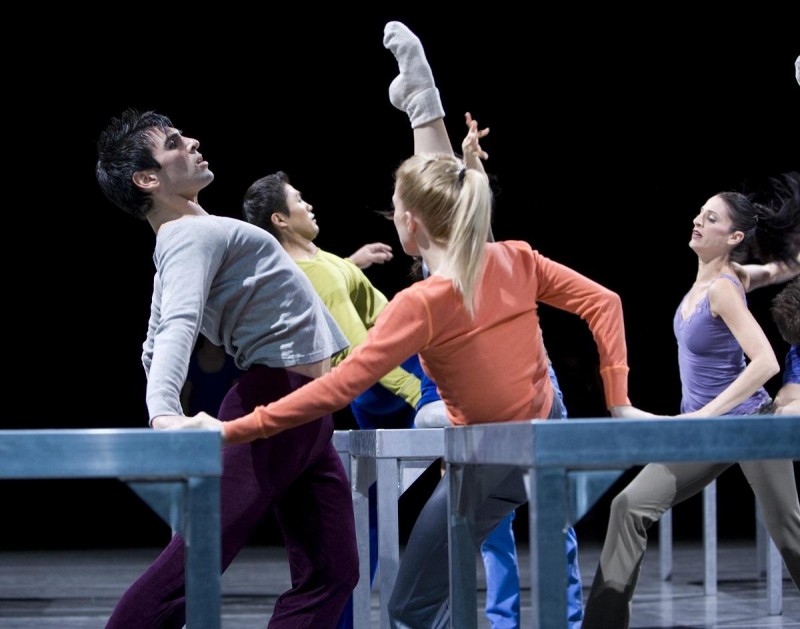
When Pacific Northwest Ballet premiered William Forsythe's One Flat Thing Reproduced in 2008 it caused quite a stir, polarizing audiences and prompting questions about what defines "ballet." In early versions of the Press Corps, teen reviewers tackled the debut of One Flat Thing. Read these impressions from 10 years ago, then go see it for yourself! The piece has been remounted this weekend in PNB's Director's Choice program! "Calculated Chaos" By Greta R.

A dancer's leg kicks upward at the exact moment that an adjacent dancer's arm shoots outward and hand clenches; the two are divinely connected for this second, before their bodies twist in different directions. Every limb of every dancer is on a pivot, malleable and boneless as the dancers navigate a grid of 20 metal tables that they themselves pushed onto the stage in a charging herd. A pelvis juts and a skin turns itself inside out as numerous bodies malfunction like broken toys rewired with a mistaken circuit. This calculated chaos is contained in the sounds of a long-forgotten arcade game, one that hums and whirs and occasionally remembers how to simulate a booming crash.

Read More

American Hwangap: Another Type of Rebirth

New Guard members Anya S. and Neha G. sit down with director AJ Epstein & share their thoughts about West of Lenin's production.

Americanhwangap2

Last week, we were lucky enough to go see American Hwangap by Lloyd Suh at West of Lenin. The play explores the relationships of an American-Korean family, the Chuns, particularly that of the family’s estranged father, Min Suk Chun, who returns home after fifteen years to celebrate his “Hwangap” (a commemoration of his 60th birthday). Before the show, we were also able to sit down with the play’s director, AJ Epstein, to ask a few questions.

With an artist for a mother, Epstein grew up surrounded by theatre. He went to shows regularly, and his parents were very supportive of him going into an arts-related field: “I was really lucky, that… I was able to have agency over [my decision to pursue an arts-related career]”, he stated. That wasn’t the only unique aspect of his arts-related journey, we found out, as Epstein had come up through lights and sound, and got into directing only later, in college. After purchasing West of Lenin, a tiny, eighty-eight seat, black box theater, in 2009, he started producing and directing shows there. Part of the theater’s charm is its small space, which provides the audience with a much more intimate experience.

Read More