TeenTix Logo
Login
Sign Up

Watch in Wonder: Whim W’him’s Three-in-One Contemporary Show

Review of Spring '25 at Whim W'him Contemporary Dance

Written by TeenTix Newsroom writer CAROLINE COSSETTE and edited by Teen Editorial Staff member SYLVIE JARMAN

Whimwhim1

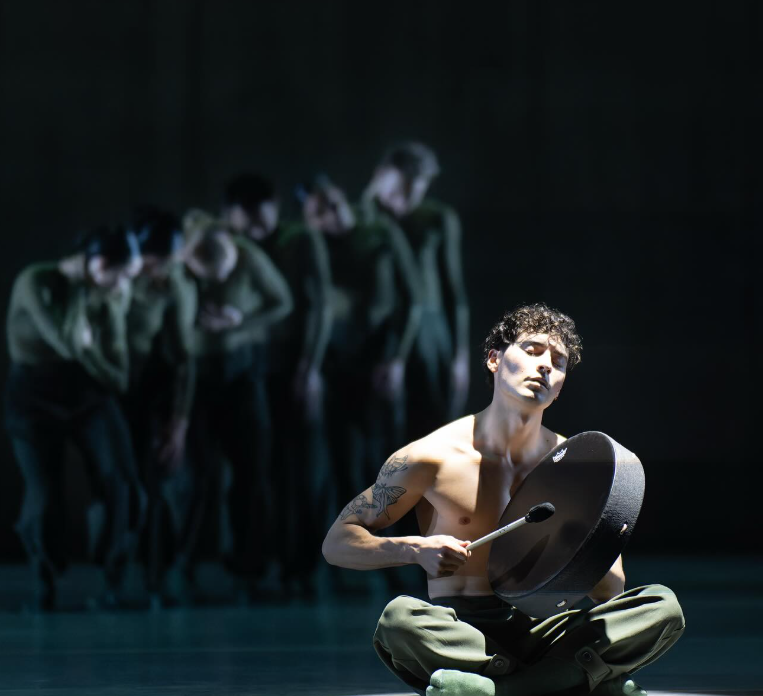
Whim W’him’s Spring ‘25 left me wonderstruck. The show consisted of three sections, each choreographed by a different artist–Olivier Wevers, Mark Caserta, and Lauren Edson, with Olivier being the founder and artistic director of Whim W’him, a contemporary dance company. The talent of the company’s seven dancers–Jacob Beasley, Owen Fulton, Stella Jacobs, Aliya Janov, Daeyana Moss, Ashley Rivette, and Kyle Sangil–is incredible. From their technique and facial expressions to their execution, they are a treat to view. This show was my very first contemporary dance show, and I was so excited to watch it. Dance is such an expressive and engaging art form, and Whim W’him made my love for it grow. When I left the theater, I felt the need to dance again. 

The first piece, Rituals for the Mother, choreographed by Whim W’him founder and Artistic Director Olivier Wevers, was contemplative, peaceful, and spiritual. The dancers were dressed in deep green long-sleeved shirts and formal pants, and the women wore their hair in tight buns. The music was full of percussion and engaging rhythms. The dancers moved together like waves in the sea: frantic yet calm, curious yet peaceful. There were moments of control, playing, and fighting. Throughout, the dancers continuously tormented one of the male dancers. This dancer was the only dancer who was dressed differently (he wasn’t wearing a shirt). They held him above the ground as he struggled to run away, moving in tandem, keeping him confined. The scene transitions to a rectangular white light on stage while everything else goes dark. There were two men on stage (Beasley and Fulton); the first was the one who was being controlled (Beasley), standing in the light, and the second was one of the controllers, standing in the dark. Sometimes they performed synchronized with identical moves, while other times the man in the dark (Fulton) only watched the man on the inside. The two swapped places several times, changing the dynamic of the scene. At first, it seemed like a mirroring effect, but as they went on, it was more watching and interacting with one another, together or apart. No matter what they did, the light was there, though it occasionally changed angles. At one point, they were both together, then back-to-back and separated, dancing to their own rhythms–but once again, they found each other. Whim W'him Spring '25. Photo by Jim Coleman.

Read More

The Weight of Change: Exploring Loss and Identity

A book review of This Side of Falling by Eunice Chan

Written by TeenTix Newsroom Writer THIEN-NHI NGUYEN

8114 b D2cx L AC UF1000 1000 QL80

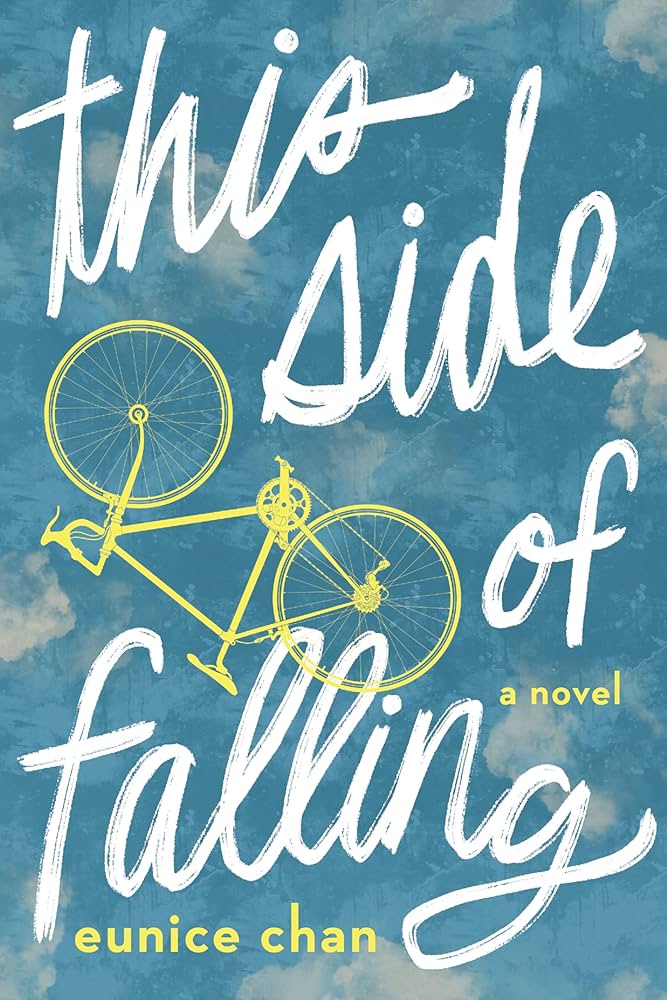
This Side of Falling by Eunice Chan depicts a story of a high school senior girl named Nina Yeung, a high school senior and talented violinist whose life is thrown into disarray after the suicide of Ethan Travvers — her friend, her maybe-love, and her burst of color in an otherwise monochrome world. As Nina juggles the pressures of college applications, her senior recital, and strained family dynamics, she is haunted by memories of Ethan. She questions her perception of him when he was alive. Chan’s book is a beautifully written book that explores grief, identity, pressure, and relationships between characters, and the importance of moving on.

One of the most unique aspects of this book is its raw portrayal of grief. Nina’s world completely shatters with Ethan’s absence; her reality starts spiraling, her behavior, and her beliefs as well. Before meeting Ethan, Nina had always maintained a strict structure and schedule in her life; however, after meeting him, this structure is shattered, and with his absence, all of what she knows is broken again. The structure of the book mirrors this emotional confusion, with disjointed timelines and blurred transitions between Nina’s memories while she’s reminiscing about the past and dealing with what is going on presently. While the timeline of the book does occasionally become confusing and disorienting, this nonlinear format reflects the way that grief heavily distorts your sense of time, clarity, and reality. 

Read More

Ballet’s Best Comedy at OBT

Review of Coppélia at Olympic Ballet Theatre

Written by Teen Editorial Staff Member SYLVIE JARMAN and edited by Press Corps Mentor HENRY BEHRENS

Unnamed

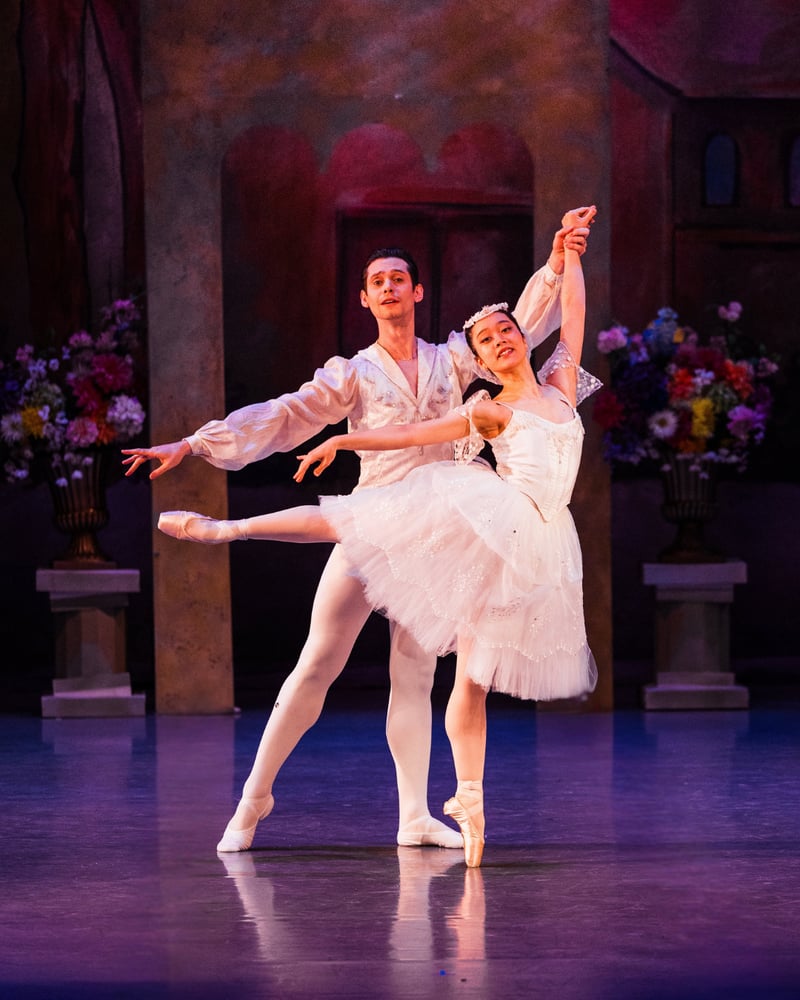
Inherently, the ballet Coppélia by Leo Delibes is a very silly story. The events following a boy mistakenly falling in love with a doll are undeniably absurd, and they offer a brand of comedy far from the stiff-upper-lip that many associate with ballet. These comedic elements can distract from the fact that Coppélia is an incredibly demanding ballet, with difficult choreography, complicated and multi-faceted roles, a larger-than-usual amount of high energy group numbers, and lots of unforgivingly uptempo songs. Balancing Coppélia’s comedy and technicality is a challenge for any company performing it. Olympic Ballet Theatre gracefully took on this challenge with just the right amount of whimsy, humor, and pure talent to perfect the classic fairy tale, which its company performed May 10 and 11.

OBT dancer Jacqueline Iwamura and guest artist Guillaume Basso fully embody the two leading characters, Swanilda and Franz, right from the jump. They were played with immense energy and sass pouring from both. Iwamura’s Swanilda was sweet, social, and delightfully impish. While Swanilda relishes in the mischief she causes across the story, she is still full of love and energy, wonderfully demonstrated through Iwamura’s buoyant and springy steps in her first variation that teem with joy. Basso brought the perfect energy to Franz, playing him as a boyish, lovable yet absent-minded dope. While the unfortunate situations he gets himself in are entirely predictable and avoidable, one can’t help but pity him with how genuine, open-hearted, and foolish Basso portrays him. 

Read More

Complete Sketches But Incomplete Pictures

Review of Alex Katz: Theater and Dance at the Frye Art Museum

Written by TeenTix Newsroom writer JB JAGOLINO and edited by Teen Editorial Staff member RAIKA ROY CHOUDHURY

Frye 20250225 099

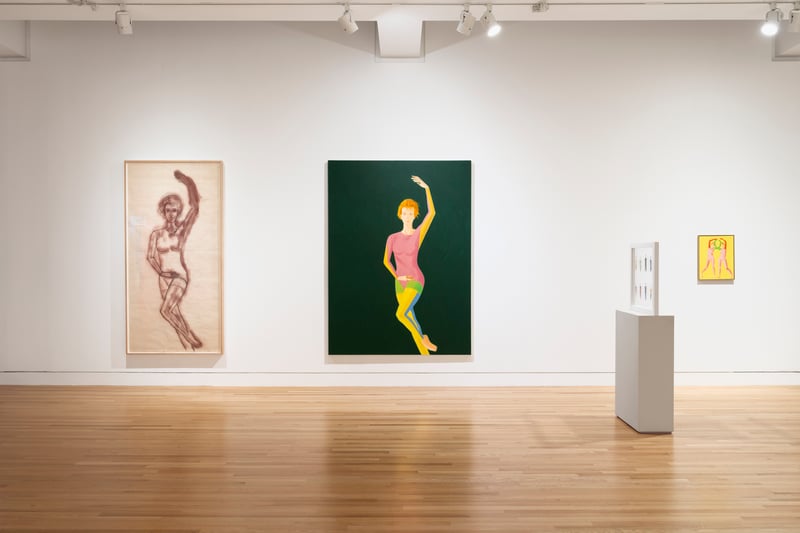
Step backstage with Alex Katz’s Theater and Dance as you’re welcomed into the inner workings of an artist. 

Alex Katz is a painter who over the course of his career, has collaborated with many dancers and choreographers, and has had a grand contribution to theater overall. This exhibit at the Frye allows you to reflect on Katz’s work over the years, featuring anything from thoughtful behind-the-scenes sketches to eye-catching wall-length backdrops. 

Read More

Bringing It All to The Table

Review of The Unfair Advantage at Seattle Repertory Theatre

Written by TeenTix Newsroom writer MARIELA VIDELA and edited by Teen Editorial Staff member KYLE GERSTEL

Unfair at LJP by Rich Soublet 2

Fooling someone from the distance of a traditional stage is one thing. Fooling someone sitting directly in front of you is much more difficult—and astounding. I discovered this when I was ten years old, during my magic trick phase. I spent hours carefully practicing card tricks from books, and yet my demonstrations failed to elicit the awe that I hoped for from my family. In The Unfair Advantage at Seattle Rep, Australian card shark and magician Harry Milas has mastered the ability to fool and amaze his audience up close.

Using a simple but effective format, Milas exposes techniques used to cheat at cards. First, he demonstrates an awe-inspiring card trick, then—unless the trick is strictly for the sake of magic—he explains the secret behind it. Along the way, he sprinkles in anecdotes from his personal magic journey. Audience members must sign a confidentiality agreement before the hour-long show, which is followed by an optional Q&A session. I admit that the NDA made me dubious, but as I soon discovered, The Unfair Advantage is not just a tell-all. Instead, Milas reveals the methods used by card sharks while still preserving the mystery and quiet wonder associated with magic.

Read More

Fast-Paced Fun and Universal Themes at Seattle Rep

Review of Laughs in Spanish at Seattle Repertory Theatre

Written by TeenTix Newsroom writer MARIELA VIDELA and edited by Teen Editorial Staff member KYLE GERSTEL

SREP Laughsin Spanish 11 web

After seeing Seattle Rep’s Laughs in Spanish, I was both energized by its lively humor and left with some challenging questions to ponder.  I attended the 90-minunte play, written by Alexis Scheer and directed by Dámaso Rodríguez, as a Spanish student hoping to practice my listening skills and curious about what a “part telenovela, part whodunit” comedy would be like. Although the Spanish portions of the play turned out to only be brief phrases sprinkled into the dialogue, I could not have asked for a production more chock full of jokes, telenovela tropes, and big questions about identity and decision-making.

The drama begins when Mariana (Beth Pollack) discovers that all the paintings have been stolen from her Miami art gallery on the morning of her biggest show of the year. Juan (Gabriell Salgado), a decidedly unhelpful police officer, is on the scene. Juan also happens to be the boyfriend of Mari’s intern, Carolina (Diana Garle), a graduate student studying painting. Both are more focused on getting Mari to show Caro’s paintings in lieu of the intended artist’s work than on solving the crime. Then, Mari’s theatrical telenovela-star mother Estella (Diana Burbano), with whom she has a fraught relationship, arrives unexpectedly, bringing with her a whole new source of drama. Things get even more complicated when Estella’s assistant, Jenny (Cheyenne Barton), turns out to be Mari’s old crush.

Read More

Centerstage’s Timeless Confrontation of Racial Censorship in Theatre

Review of Trouble in Mind at Centerstage Theatre

Written by TeenTix Newsroom writer CLARA THORSEN and edited by Teen Editorial Staff member SYLVIE JARMAN

Trouble 5919

In June of 2020, in the wake of the rising Black Lives Matter movement, more than 300 theater artists published the statement, “We See You, White American Theater.” This statement tore into the long-established racism within the theater industry: “Our love of theater has often meant surviving an industry-wide culture of fear poisoned by racism [...] Achieve cultural competency in us. Address your vocabulary, behavior, implicit bias, and lack of understanding. We are the experts, not the accessory.” The letter laid out a clear list of changes that needed to be made, highlighting the inadequate worker rights and representation. 65 years before “We See You” was published, playwright Alice Childress addressed near-identical issues through Trouble in Mind, yet the systemic racism of Broadway prevented its production and mainstream success until 2021. Before becoming a playwright, Childress was involved in years of local theatre, eventually making it to Broadway in the ‘40s. Her first-hand experience makes this play an invaluable perspective on Black actors’ experience prior to and during the civil rights movement. Centerstage Theatre’s production highlights the relevance of Trouble in Mind, playing a crucial role in addressing the long-running and unchanging racism within theatre.

Trouble in Mind is a satirical, challenging critique of racism within the theater, following a primarily Black cast in the rehearsal of an “anti-lynching” Broadway production called “Chaos in Belleville,” directed by a white man. Despite the progressive image of “Chaos in Belleville,” the egotistical director’s racism and biases are ingrained in the characterization and plot. The protagonist, Wiletta, is an experienced, strong actress accustomed to complying with stereotypical roles in the theater to make a decent income. Despite giving similar advice to the newer Black actors in the production (“You either do it and stay or don’t do it and get out”), she gradually becomes more openly opposed to the director, culminating in a heated argument that ultimately ends the production of the play. Trouble in Mind follows a variety of characters that differ in perspective on “Chaos in Belleville,” with a satire that still feels very relevant today. The cast of Trouble in Mind. Photo provided by Centerstage Theatre.

Read More

A Nation Echoed. A Note Missed.

Review of Lara Downes' This Land at the Meany Center for Performing Arts

Written by TeenTix Newsroom writer REAGAN RICKER and edited by Teen Editorial Staff member ANNA MELOMED

Lara downes cebru yildiz 3

On April 8th at the UW Meany Center, the black Steinway piano and the iconoclastic pianist Lara Downes stood solitary on stage. Yet, as the classical composition began, it would turn out she was far from alone, accompanied by echoing ghosts of American history and identity.

Covering 14 songs plus one encore in two acts, Downes’ album This Land takes viewers on a cross-country road trip of American roots by paying homage to various musical greats of different time periods, from Scott Joplin’s energetic ragtime to Geroge Gershwin’s jazz-infused classical music to Paul Simon’s folk narratives. By “Reflecting a wide diversity of voices, both new and familiar, illustrating the beauty that resides in the broad landscape of American music,” Downes paints an honest picture of the complexities and beauties of American history. Especially considering the current political climate of the U.S., the arrangement feels like a poignant reminder of what it means to be American and explores a sense of pride that emerges even in a country that has undergone. Perhaps Downes said it best in her opening, right after playing a rendition of Paul Simon’s “America”: “The best place to find America is in music.”  

Read More

And Then There Were Five

Book Review of The Queens of Crime by Marie Benedict

Written by TeenTix Newsroom writer MARIELA VIDELA and edited by Teen Editorial Staff member RAIKA ROY CHOUDHURY

211003830

What if five of the greatest female mystery writers from the 20th century banded together to solve a real-life murder? Marie Benedict explores this question in her historical fiction novel The Queens of Crime, which stars Dorothy L. Sayers and Agatha Christie. I picked up my first Agatha Christie detective novel several years ago, and ever since, I have been hooked. So, when I heard about The Queens of Crime, I was intrigued. I realized that despite my love of Christie’s work, I have never delved into the work of her contemporaries. Would reading Benedict’s novel both shed light on these great women writers and weave a murder investigation worthy of these Queens of Crime?

Set in 1931, The Queens of Crime centers on the respected mystery novelist Dorothy L. Sayers, creator of the detective Lord Peter Wimsey and co-founder of the real-life Detection Club for crime writers. After being shunned by the club’s male members, Sayers bands together with fellow female authors Agatha Christie, Baroness Emma Orczy, Ngaio Marsh, and Margery Allingham. These self-named “Queens of Crime” plan to solve the real-life murder of a young English nurse named May Daniels, showcasing their worth to the men in the club. They conduct their investigation by traveling to France, where May’s body was found, and interviewing women involved in May’s life. These women were overlooked as witnesses by the police due to their gender and working-class status. Solving the murder becomes increasingly urgent when the police and press seem eager to dismiss May as a drug addict and close the case without proper investigation. The Queens soon realize the reality of the situation as “the only ones, aside from her killer, who know the truth,” and “the only ones who will do right by May” (Chapter 45).

Read More

In the Name of Love: Doomed Romance in "The Last Five Years"

Review of The Last Five Years at ACT Theatre (co-produced with The 5th Avenue Theatre)

Written by TeenTix Newsroom writer CHARLOTTE ORTEGA and edited by Teen Editorial Staff member KYLE GERSTEL

4 L5 Y Press

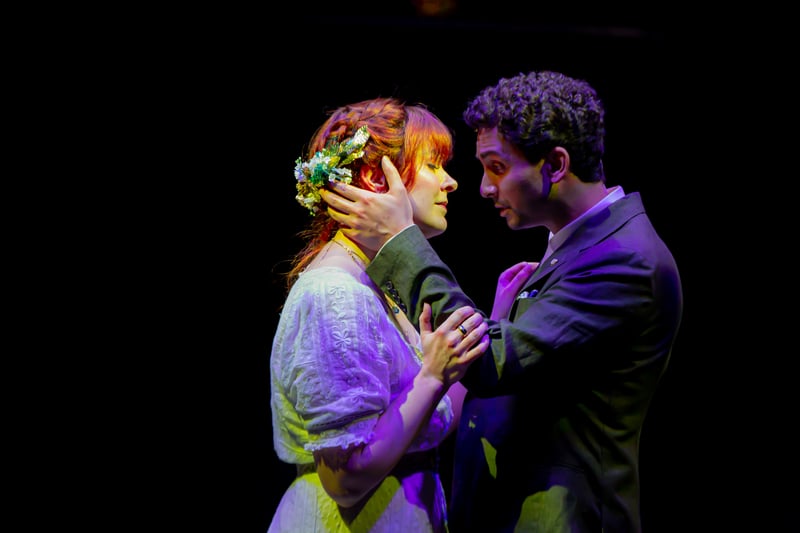
The intensity of Cathy Hiatt’s expression as her gaze seared through the lifeless house she had once shared with her beloved Jamie was unforgettable. The power she harnessed to preach a thousand relentless words without daring to open her mouth magnetized my attention. I felt the world slow down around me as I tried to detect the character’s thoughts in the indefinite silence. Helplessly, I watched the last pittance of hope that Cathy grasped slowly escape her heart as she moved cautiously away from center stage. We simultaneously realized how the trials of romance are unexpectedly vulnerable, opening oneself up to the possibility of either blissful change or weathering agony.

Watching The Last Five Years at ACT Theatre (co-produced with The 5th Avenue Theatre) was undoubtedly a memorable experience. Since I discovered the musical in my freshman year, everything about the production felt captivating: the orchestral fuel and intricate lyricism behind each song, the personal journeys and evolution of Cathy and Jamie both individually and as a couple, and that classic, gut-wrenching question: how did they get here? The theatre-in-the-round staging of ACT’s Allen Theatre added an extra layer of intimacy and immersion to the story, providing the audience with sacred moments where they could almost look straight into the eyes of both characters. Synchronously, the audience could feel the impact of the characters’ current emotional state, whether they be embracing joy, battling fear and insecurity, or simply in constant wonder. The venue maintained a state of constructional simplicity; the furniture of the set was strategically limited so it became unbearable for the audience to observe what seemed like infinite space between Cathy and Jamie as they endured their separate experiences within a slowly deteriorating relationship. This invisible spatial barrier between the two made one particular scene all the more precious.

Read More

Perfect Imperfection: Pottery Across Generations at the Seattle Art Museum

Review of Meot: Korean Art from the Frank Bayley Collection

Written by TeenTix Newsroom writer CLARA THORSEN and edited by Teen Editorial Staff member JULIANA AGUDELO ARIZA

DSC01514 CC

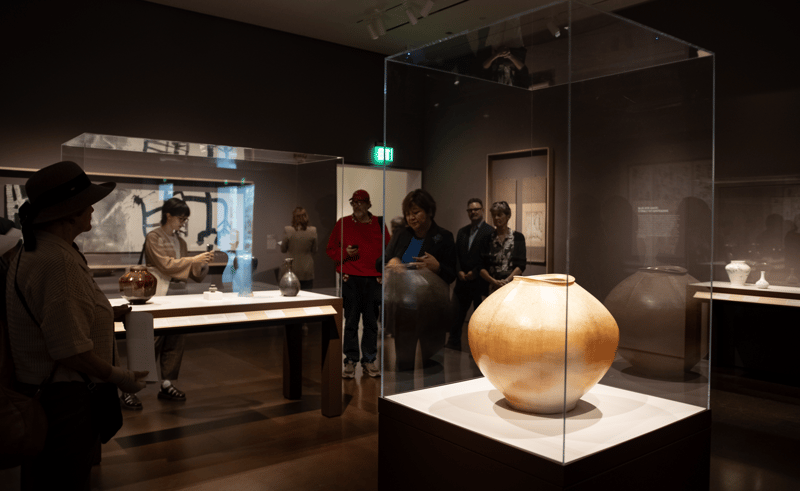
The Seattle Art Museum’s exhibit Meot (멋) displays an impressive assortment of traditional and contemporary works of Korean art, with a focus on pottery. The collection exhibits an array of Korean art: contemporary porcelain jars, 13th century vases and bottles, and ink-on-paper hanging scrolls. Despite the wide, open rooms of the gallery, the exhibit feels intimate and focused, accentuating the intricate details of the pieces. Meot, however, is most distinctive in its focus on the craft, humanity, and history behind its curation and collection. Meot, meaning elegance, beauty, and refined aesthetic sensibility, primarily exhibits Seattle-local Frank Bayley’s donated collection. Bayley (1939 - 2022) was a prolific art collector with an admirable, lasting impact on the community: besides being a longtime trustee and donor of hundreds of works to the Seattle Art Museum, he also co-founded the San Juan Preservation Trust in 1979, which continues to prevent thousands of acres of shoreline from further development on the San Juan Islands. 

Meot’s design is very intentional. Many of the featured artists emulate techniques and elements from the Korean Joseon dynasty (1392 - 1897), from the use of cobalt and white slip to implementing traditional calligraphy, symbolism, and even poetry. The exhibit’s curator, Hyonjeong Kim, is deliberate in her layout design; contemporary pieces are placed adjacent to traditional Joseon dynasty pieces, juxtaposing the time period while simultaneously emphasising the common motifs and influences. One of the exhibit’s stand-out pieces, Younsook PARK’s towering Moon Jar, directly imitates the Joseon “moon jar,” using traditional methods to replicate the pure-white harmonious form. The exhibit places traditional Joseon moon jars in close proximity, allowing the viewer to directly observe the influences and emulated techniques. Moon Jar, 2007, Youngsook PARK,South Korean, b. 1947, porcelain withclear glaze, 20 x 19 1/2 in. (50.8 x 49.5cm), Gift of Frank S. Bayley III, in honorof the 75th Anniversary of the SeattleArt Museum, 2007.86© Young SookPark. Photo: Susan Cole

Read More

The Dragon, The Phoenix, and The Ashes: A Story of Escape, Resilience, and Reconciliation

A book review of Sunlight Playing over a Mountain by Selena Li Bi

Written by TeenTix Newsroom Writer THIEN-NHI NGUYEN

Sunlight mountainn

In Chinese mythology, the dragon and the phoenix are animals that symbolize balance. They are opposite celestial beings bound together, representing power and grace, fierceness and beauty, completing what the other cannot fulfill. The book Sunlight Playing over a Mountain by Selena Li Bi gives these symbols a deeply personal meaning, shaping the fragile, shifting world of Jasmine Cheng, our protagonist, and her mother, where they must chase a sense of belonging and stability across ever-changing terrains. 

The book first introduces us to Jasmine Cheng, a 15-year-old Filipino-Chinese girl growing up in a small town called Briarplace in the Midwest. Her whole life is steeped in a myth. Her mother, Suchou, tells her that the two of them are the dragon and the phoenix, celestial beings who descend from the moon, and that her father is Pangu, the creator of the universe. Her mother’s grandiose myths are her escape from the mourning pressures of Jasmine’s reality- an absent father, an irresponsible and unreliable mother, and the ever-looming presence of being taken away from her mother through Child Protective Services, something she refers to as the “Keeper.” As her mother drifts in and out of her opium-dream world, cycling through boyfriends and herbal remedies, Jasmine is left to fend for herself, caught between devotion and disillusionment.

Read More

Miss Holmes: A Scotland Yard Twist

Review of Miss Holmes at Centerstage Theatre

Written by TeenTix Newsroom Writer CAROLINE COSSETTE

Miss holmes 1

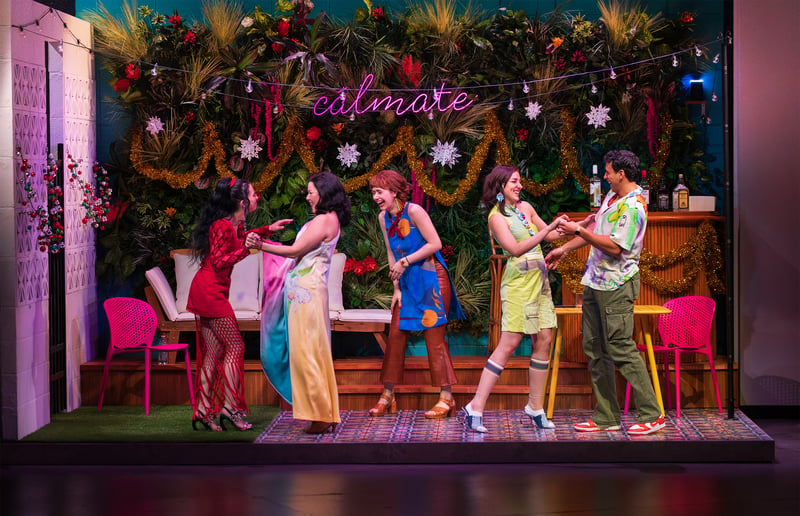
From a dark room with a green door at the beginning, to "the game is afoot" said in the middle of the show, to the applause of a satisfied audience at the curtain call - Miss Holmes, written by Christopher M. Walsh and directed by Angela M. Bayler of Centerstage Theater, is a clever spin on a classic. Female versions of Sherlock Holmes and Doctor Watson create a feminist mystery with themes of death and betrayal while defying stereotypes of the typical Victorian Era woman by changing what would be proper Victorian Women's attire to pants, hats, and work boots. This was also done through how the women in the show talked and how sure of themselves they were. This show, boosted by excellent acting performances, delivers laughs and lots of whodunnit in a cozy, Federal Way theater. This was my first performance in Federal Way, and I was surprised to find this charming, innovative theater at the end of a long, woodsy road in a beautiful park. While I was eating a cookie from their refreshment table I saw a display portraying the challenges of Victorian womanhood and I appreciated being able to learn a little bit about this period before watching the show because it helped me understand the struggles that the female characters in the show faced. As the lights dimmed, the director stepped on the stage and introduced the show to the audience.  Although Miss Holmes and the 2020 film Enola Holmes are not the same, these female detectives have a few things in common: they both carry the Holmes name and have an overprotective brother named Mycroft. And despite being underestimated, these women use their knowledge and social status to blend into society and rebel against the expectations of the time.  The cast of Miss Holmes. Photo by Michelle Smith-Lewis.

The sets in the show feature the hospital where Dr. Watson works, Miss Holmes’s home, and Scotland Yard, and contain sophisticated portraits and warm furniture against a mysterious London background. The period costumes were chosen thoughtfully and were effective for every character. I especially loved Watson’s tweed buttoned-up dress and her medical bag. The men's button-up suits were fitting and I loved Mycroft's cane but it was used more like a prop than a cane itself. This made me wonder why they used the prop if he was only supposed to hold it and not use it for walking. I only wished for some more wardrobe changes for the two main roles which would have made the show more realistic and brought more personality through the characters.

Read More

A Multimedia Extravaganza

Review of The Magic Flute at Seattle Opera

Written by TeenTix Newsroom writer KYLIE LIPPE and edited by Teen Editorial Staff member KYLE GERSTEL

Photo 1

It's too bad the word ‘opera’ is such a turn-off for young people. If I could have just convinced teens to watch the recent version of The Magic Flute playing at the Seattle Opera, their entire perspective on the art form would have changed, guaranteed. 

As I made my way through the opera house in search of my seat, I noticed that the audience was full of older adults. I was surprised by this, considering how every other performance that I’ve been to at McGraw Hall was seen by people of all ages. I suspect that this all has to do with the word ‘opera.’ The lights shut off, a spotlight hit the conductor, and the show began. For the next two hours, I was transported into a fairytale, but one infinitely more epic than your run-of-the-mill children's story.  

Read More

Everybody’s Got A Secret

Review of Covenant at ArtsWest

Written by TeenTix Newsroom writer MANU SUAREZ and edited by Teen Editorial Staff member RAIKA ROY CHOUDHURY

PRESS 1

This review contains spoilers for the play Covenant.

From start to finish, ArtsWest’s Covenant was never what I expected it to be. It begins as a fairly standard family drama in 1930’s Georgia: sheltered, innocent Avery (Simone Alene) wants to leave town with charismatic yet mysterious guitarist Johnny (Donovan Mahannah), but Mama (Felicia Loud) and her pious Black-church values won’t approve. The show foreshadows its ominous tone from the start, especially through the narration of neighbor Ruthie (Kaila Towers), but that eeriness is initially masked by punchy humor and charming small-town colloquialisms.

Read More

Blooming into Human: Faux Flora

Review of Fischersund: Faux Flora at The National Nordic Museum

Written by TeenTix Newsroom writer ELSIE REA and edited by Teen Editorial Staff member RAIKA ROY CHOUDHURY

20241108 fischersund 001

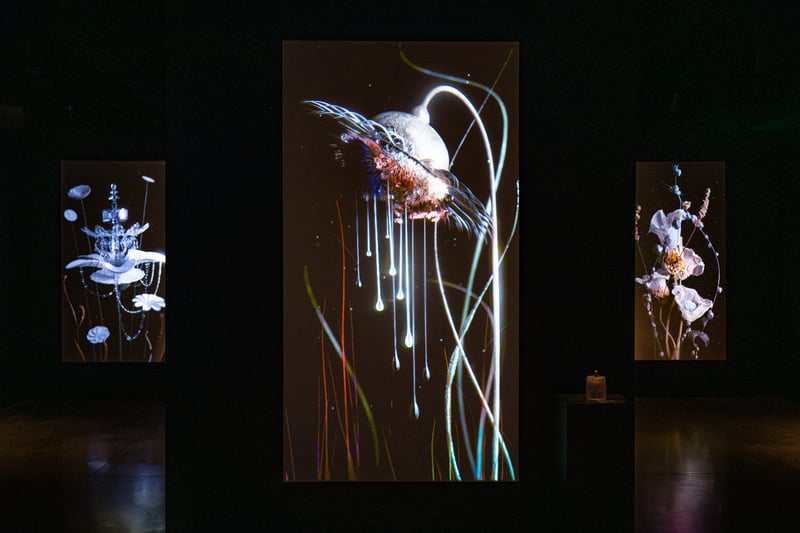
Faux Flora is an all-encompassing, multisensory exhibit at the National Nordic Museum. Fischersund, the creator, is an Icelandic artist collective that creates using sound, scent, light, and visual art. Faux Flora incorporates these elements to tell the story of human life through made-up plants. The viewer is transported to a place where bouquets grow from cereal boxes and glass tears clink together as they hang from the downturned face of a flower. The exhibition covers four stages of life: birth, childhood, adolescence, and death. These stages are represented through the plant life cycle. It is a story that is foreign in its presentation yet all too familiar. There are many words I could use to describe Faux Flora, yet none quite feel adequate. The exhibit felt like an essay, with masterful prose and a vise grip on tonal shifts. 

The exhibit starts eerie and dark. Neutral-toned goo drips from the petals of an alien-like plant species as it sways with a breeze you can almost feel. Birth, represented by germination, is the beginning of the cycle, shown by only two animated flowers. The flowers are mostly shades of light pink and beige. As the smallest section, I found this stage the least memorable part of the exhibition. However, the darkness and overall biological ‘goopiness’ of the section captured the silence and essence of that stage of life in a way that felt a little uncomfortable. Image courtesy of Fischersund.

Read More

PNB’s "The Sleeping Beauty" Is a Fairytale Come True

Review of The Sleeping Beauty at Pacific Northwest Ballet

Written by TeenTix Newsroom writer MARIELA VIDELA and edited by Teen Editorial Staff member JULIANA AGUDELO ARIZA

SB Opening 0818 Generosa Batista

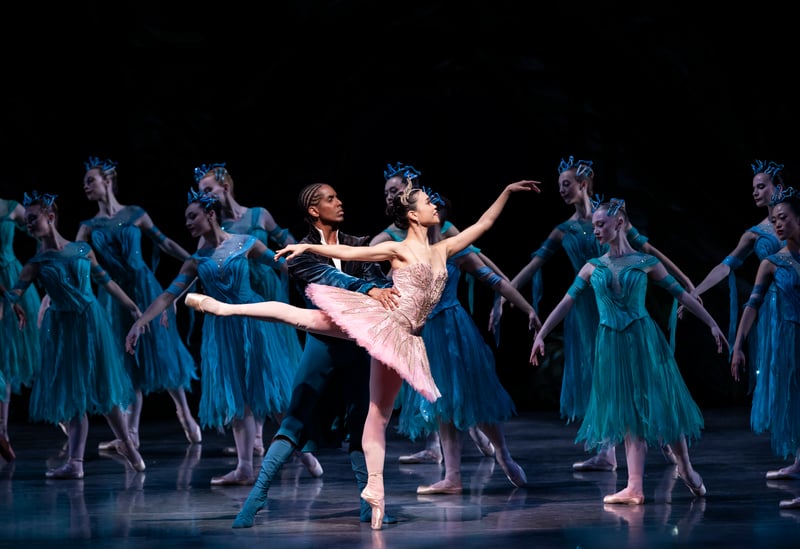
My stomach fluttered with anticipation as I entered McCaw Hall. Attending Pacific Northwest Ballet performances has been a special tradition for my family since I was six years old. Now, I was going to see the world premiere of one of the most ambitious productions PNB has ever undertaken: their reinterpretation of The Sleeping Beauty. Would it meet my expectations? I’m happy to say that PNB delivered all the spellbinding glamor and grace I hoped for, along with some unexpected twists.

In the classic fairytale, Princess Aurora, cursed at birth by the spited fairy Carabosse, pricks her finger on a spindle during her 20th birthday and falls into a 100-year sleep. The only one who can wake her up is the dashing Prince Desiree with a true love’s kiss. In addition to preserving the original storyline of The Sleeping Beauty, PNB incorporated elements derived from the original 1890 production: the work of Russian choreographer Marius Petipa and Tchaikovsky’s swelling score. However, artistic director Peter Boal worked to contemporize the ballet by giving Princess Aurora self-agency, personalizing its setting to the Pacific Northwest, and incorporating Northwest Indigenous Coastal designs into the production.

Read More

Seriously, Perfectly, Positive

Review of Legally Blonde at Village Theatre

Written by TeenTix Newsroom writer ELENA MILLER and edited by Teen Editorial Staff member KYLE GERSTEL

IMG 3543

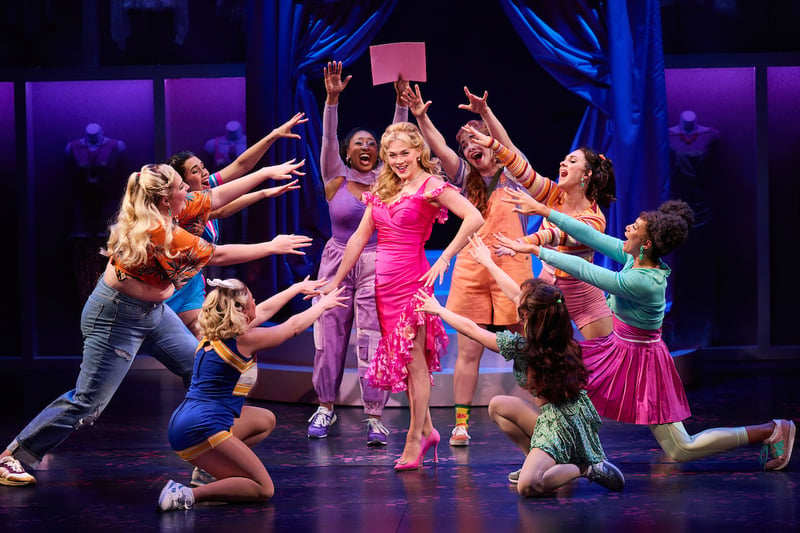
From the first chorus of the opening song “Omigod You Guys!” Village Theatre’s presentation of Legally Blonde The Musical is like being blasted with a pink confetti cannon of positivity. This musical has everything: catchy songs, lovable characters, an upbeat story, and even two adorable real dogs. Fans were decked out, some in all pink, with glowing smiles to see the classic movie brought to life onstage. This musical draws on the enduring appeal of protagonist Elle Woods’ journey to get taken seriously, and it adds a whole new layer of humor and pink pizzazz. Although the plotline seems centered around a typical chick flick romance, the impact of Village Theatre’s production comes from the unique ways it foregrounds subtler themes: sisterhood, hopes and dreams, the illusion of perfection, and keeping a positive outlook through life’s trials. 

Let’s start with the venue! The Everett Performing Arts Center was embellished with pink Legally Blonde paraphernalia. The staff was cheerful and the patrons, many of whom clearly love this story, were excitedly taking selfies in the photo booth. The theater was just big enough to have an astounding set, lighting, and orchestra pit while still maintaining a feeling of community and mutual excitement. Not that they would have had any problem with that anyway; this musical was so upbeat, funny, and heartwarming that it kept me engaged every second. 

Read More

Where Roots Fail to Meet

Review of Where is Here? at Seattle Public Theater

Written by TeenTix Newsroom writer JWAN MAGSOOSI and edited by Teen Editorial Staff member KAYLEE YU

Header

Ask yourself: “Where is Here?” 

The answer might seem quite obvious, whether it's your bed, school, or your living room couch. We all have places we deem familiar, where we have put down our “roots.” For Azam, our protagonist, the answer isn’t so clear. 

Read More

The Annual Celebration of Mechanical Cinema: Grand Illusion’s Secret Matinees

Review of Saturday Secret Matinee at Grand Illusion Cinema

Written by TeenTix Newsroom writer CLARA THORSEN and edited by Teen Editorial Staff member ANNA MELOMED

The Purple Monster Strikes 1945

I first went to the Grand Illusion Cinema two years ago to see a 1937 screwball comedy called The Awful Truth. I was just getting into film, and Grand Illusion was simply perfect: a volunteer-run arthouse theater that harbored a strong community while displaying unique films year-round. Since then, I have attended their events frequently, seeing everything from Fugazi documentaries to their annual showing of It’s a Wonderful Life (1946). The Grand Illusion is moving at the end of January, but I was lucky enough to catch the last of their annual Saturday Secret Matinees at the organization’s current location.

The Saturday Secret Matinees are a long-running program presented by the Sprocket Society, a film appreciation group that curates and screens various eccentric programs, all on 16mm film, a historically popular and accessible form of analog film. The Sprocket Society frequently makes historical callbacks in their programs. For instance, in the first half of the 20th century, the moviegoing experience was inseparable from serial films. These serials were continuous narratives split into short chapters, played at a theater weekly until completion. A typical Saturday matinee at the time would include a serial episode, often shown among other short items, along with a feature-length film. The Sprocket Society recreates this experience yearly, showing an entire serial on film over a few months, along with mystery classic movies to accompany them. I was fortunate enough to speak with Spencer Sundell, the lead projectionist at Grand Illusion, founder of the Sprocket Society, and creator of the Saturday Secret Matinees.

Read More