
Censorship, Interrogation, and Modern Art
Review of A Picasso at Theatre33
Written by TeenTix Newsroom Writer CAROLINE PANG
Edited by Teen Editorial Staff Member JOSEPH HWANG
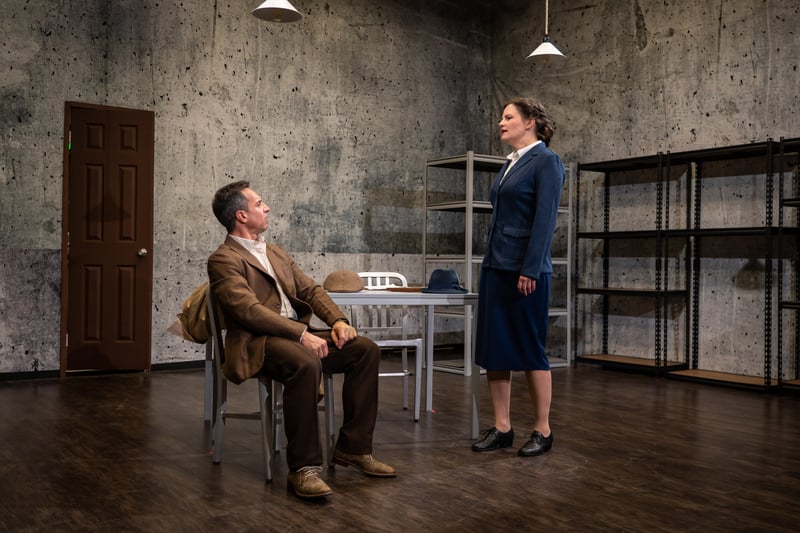
If you were fleeing Nazi Germany’s occupation, what would you reach for first: your beloved family and friends or your precious, authentic Picasso?
In Jeffrey Hatcher’s A Picasso, censorship, manipulation, and the fundamental question of what truly makes a Picasso so special are tackled in a high-tension, high-stakes, comedic and emotional journey. Amidst Nazi Germany’s occupation of Paris in 1941, a hunt for modern art labeled by the Nazi regime as ‘degenerate’ ensued—and Pablo Picasso was next. The play pits Pablo Picasso against a culturally refined Nazi officer, Miss Fischer, tasked with choosing which of his works will be destroyed in the next anti-art bonfire. Through the tense negotiation, Hatcher explores how artistic identity can become both a target of totalitarian control and an act of defiance, transforming a comedic interrogation into a meditation on fame, legacy, and propaganda.
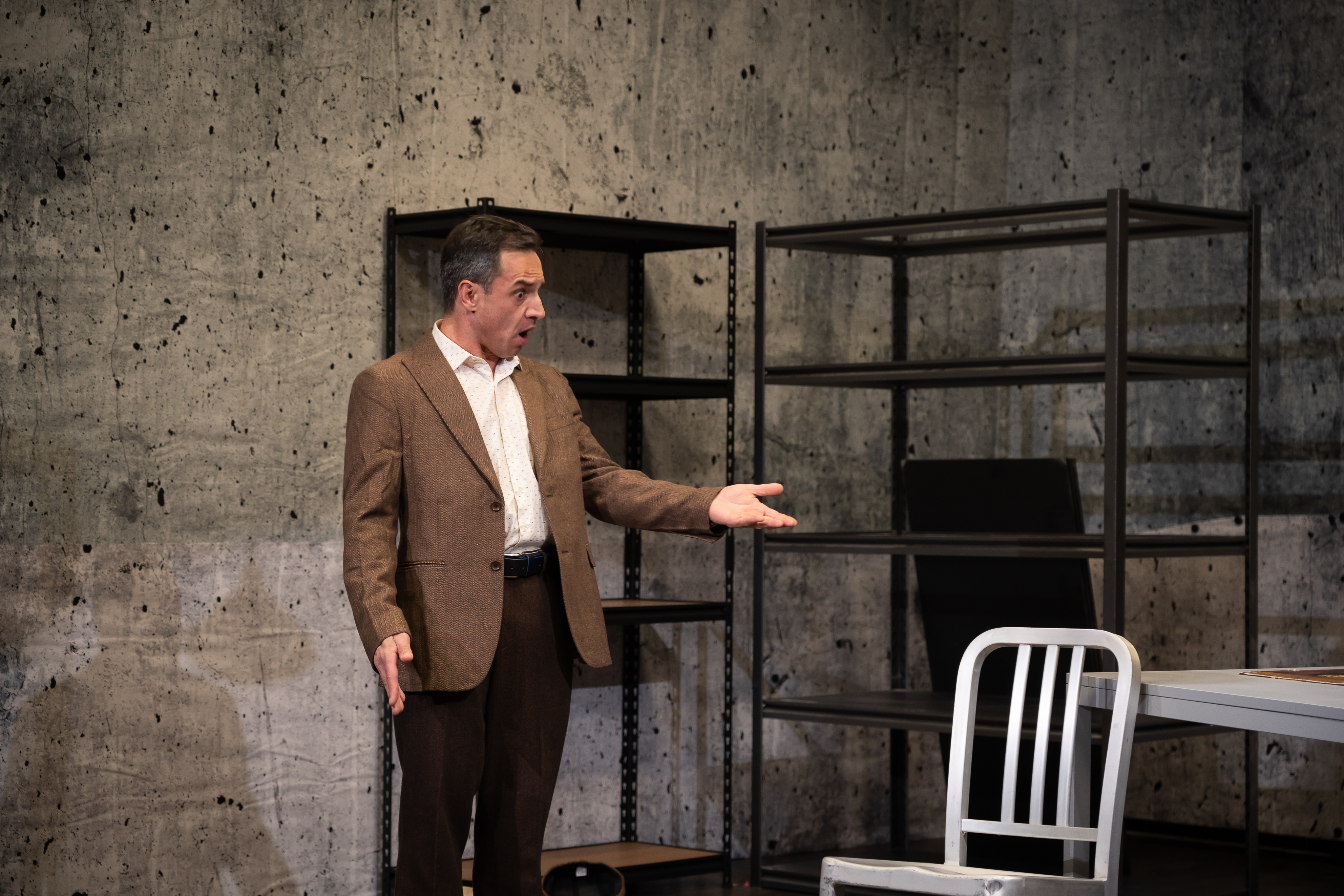
Throughout the play, the power dynamic is constantly shifting between the two–moments where Picasso’s usual shouting and flippant pacing around the room are interrupted by vulnerable contemplation while staring down at his feet on the chair, and pauses in Miss Fischer’s assertive drilling to share the story behind her becoming an officer to the regime–leading the audience to question: who is interrogating who? Fischer attacks Picasso’s political compass, critiques his disregard for those around him–who draws a self-portrait right after learning their best friend died in prison? When I initially listened to Picasso share his guilt of taking part in sending his friend to his death, I could understand how he responded that way to the grief. However, as Miss Fischer tore Picasso’s self-pitying, ‘tortured artist trope’ apart, a light was shone on some selfishness on Picasso’s part.
What begins as an aggressive interrogation slowly progresses into a game of psychological chess, and we learn of raw emotional and unexpected sides of both Picasso and Miss Fischer. Picasso sheds his arrogant mask, hiding the vulnerability behind his brushstrokes. In turn, Miss Fischer’s clinical authority cracks to reveal a deeply personal obsession with his work. The two reach common ground, leading to a truce forged in mutual exposure.
The play’s exploration of the meaning of art fascinates me, and I have always loved exploring the boundaries of reality that modern art pushes, from surrealism, to expressionism, to abstract art forms.
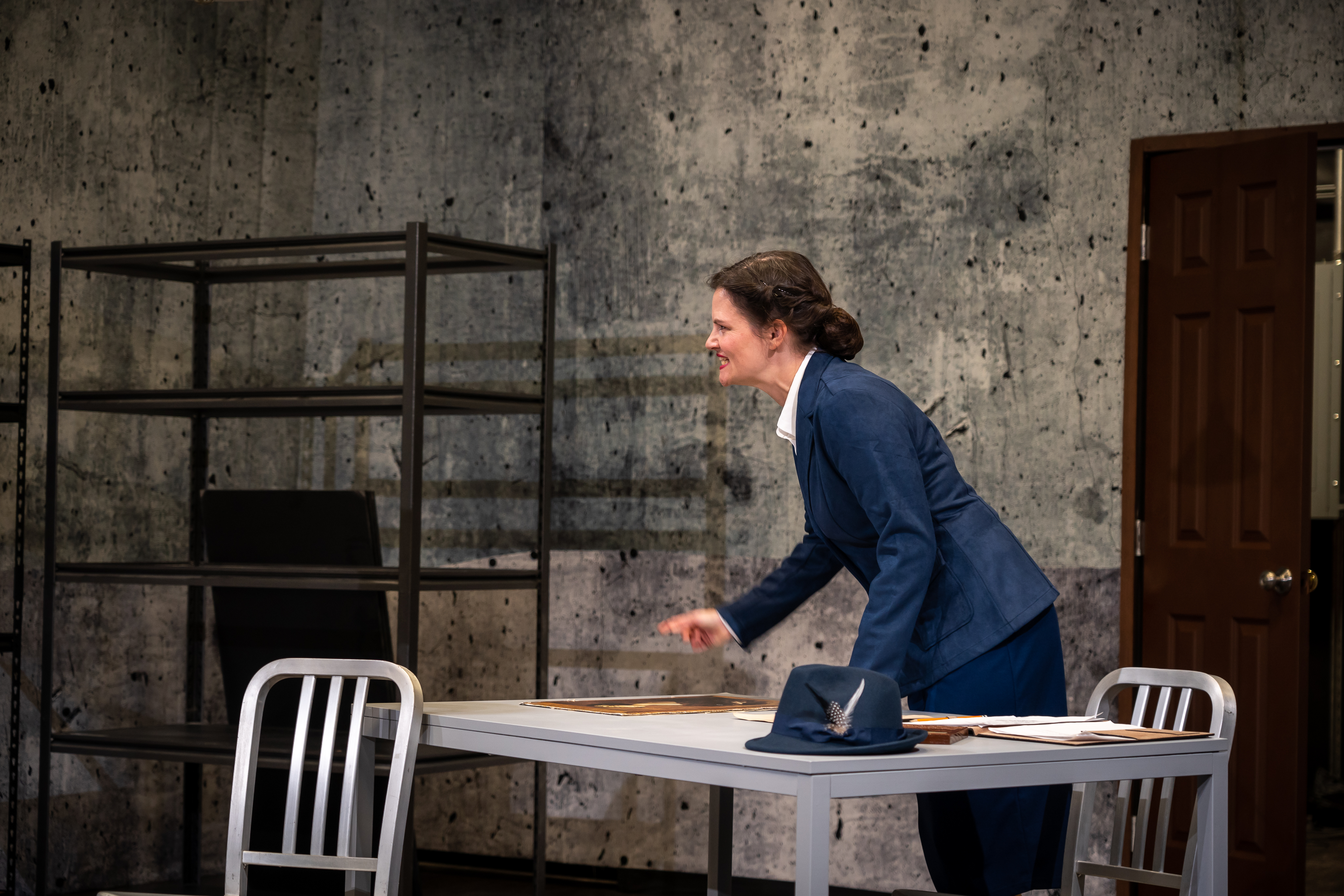
The play wittily incorporates the contexts, artists, and culture of the time, and I saw how some understanding of World War II events and European abstract artists may have been required to understand some of the punch lines. I was able to laugh along and sense when they were poking fun, but a brief history lesson and visual understanding of the artists would have been helpful.
For instance, when the dialogue threw out subtle jabs at Henri Matisse or Degas, I caught the comedic beat but missed the full punchline. Without knowing the exact stylistic rivalries and the visuals of the canvases popping in my head of 1940s Paris, I couldn’t fully appreciate why it was being mocked, so I laughed at the tone rather than the cleverness behind the joke.
So what makes a piece of art worth saving: the power of the image, or the famous signature in the corner? Since seeing the play, I believe a masterwork’s true value lies in its power to provoke, defy, and outlast the forces that try to silence it.
Altogether, A Picasso offers a gripping look at how modern art, which was already born out of the chaos of the early 20th century, was forced to defend its right to exist under Nazi persecution. The play portrays expression under totalitarianism as a volatile threat, one that regimes sought to burn and control.
Lead photo: Christophe Peyras and Ines Kreitlein in A Picasso at Theatre33. Photo by Sergey Prozhogin.
The TeenTix Newsroom is a group of teen writers led by the Teen Editorial Staff. The Teen Editorial Staff is made up of 6 teens who curate the review portion of the TeenTix blog. For each review, Newsroom writers work individually with a teen editor to polish their writing for publication.
The TeenTix Press Corps promotes critical thinking, communication, and information literacy through criticism and journalism practice for teens. For more information about the Press Corps program see HERE.
