
What if Frank Sinatra had played Portal?
An Interview with Charlie Rosen, arranged by Seattle Symphony
By TeenTix Newsroom Writer ALEXANDRA DESCHENES
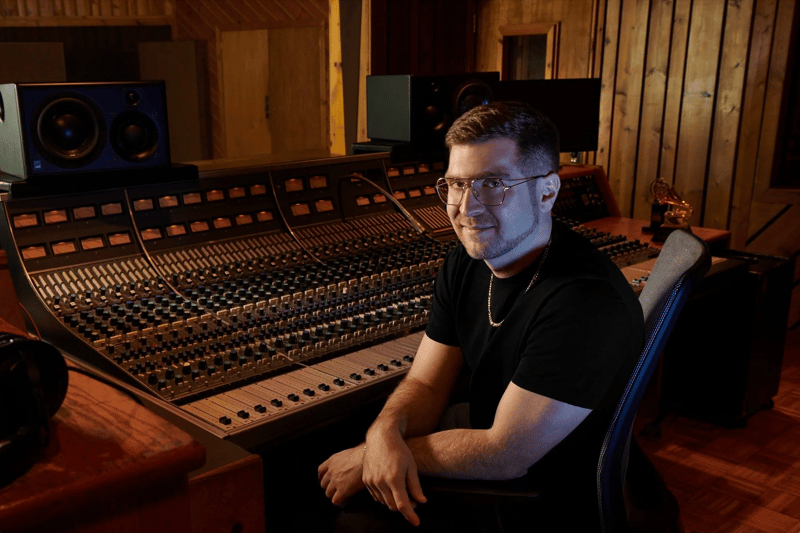
Nothing compares to the exhilaration I felt sitting in the audience at Benaroya Hall, watching the director of the 8-Bit Big Band take the stage to the electrifying flourish of his own introductory music. Over the next two hours, Charlie Rosen, a two-time Grammy and two-time Tony Award winner, captivated the audience with his characteristic charm, arrangements, as well as his one-of-a-kind musical versatility and unexpectedness.
Rosen is—among many other things—a musician, whose arranging career started in Broadway music. Beyond the theater, Rosen has combined his musical expertise with a passion for video games: the 8-Bit Big Band, a jazz orchestra he founded in 2017. The band reimagines music from beloved video game franchises—part of what Rosen has dubbed the “Great Video Game Songbook,” a play on the “Great American Songbook,” which is a loosely defined canon of influential 20th century popular music, show tunes, and jazz standards. The 8-Bit Big Band draws on big-band jazz, funk, orchestral, and Broadway’s characteristic sounds to bring a new perspective on a genre often overlooked outside gaming communities. Rosen himself is a great advocate of the expressive potential and complexity of video game soundtracks; the band’s 2022 Grammy for “Meta Knight’s Revenge” from Kirby Super Star is only further evidence that video game music is deserving of at least as much attention as more traditional repertoire.
Shortly before his second performance with the 8-Bit Big Band at Benaroya Hall, I had the privilege to talk to Rosen himself about the music I was about to hear.
Alexandra Deschenes: Video game music was originally designed to accompany an interactive experience. What changes when that music becomes the main event, with the audience listening to it on its own?
Charlie Rosen: Like you’re saying, this music is designed to be background music. Especially in the early days of video game music, we’re talking about very limited technology: it had forty-five seconds, and it would loop forever. So, one thing I do appreciate about that is that—even with the very limited technology of a thing that could only play literally three notes at the same time—they had to make sure it was something that would loop endlessly that wouldn’t drive you absolutely insane. And so, we ended up—through those boundaries—with some pretty amazing pieces of the building blocks of a song: strong melodies, strong implied chord changes, and fun grooves. I mean, anybody, video game player or not, knows the Super Mario Bros theme, which is a thirty-five second loop from the early days of video games.
I think that the composers in the themes and the melodies that they wrote—even in the early days, (now, we obviously have the technology to do anything we want with music because we can put any kind of audio in a game) but those building blocks are there. They’re the core of a great song. So then, as an arranger, the challenge is to showcase the fact that because the composing in its essence is so strong, it can be adapted to the live stage and be enjoyed independent of the experience of playing the game. What we do as arrangers is see and realize potential in a piece of music and expand upon it, and so then the challenge becomes asking myself, “how do I, as an arranger, add sections and interest and use the raw materials that the composer gave to actually make a cohesive start-to-finish listening journey over time?” It’s no longer about looping, it’s no longer about underscoring, it’s not commenting on any action that’s on screen, it’s just about the actual storytelling of the journey of the arranger. So, what can we do to make that feel like a journey while still showcasing/uplifting the things that made the music great in the first place.
So, a good arrangement is a story that you can talk about in a sentence. That’s what makes a great arrangement: you can tell the story of it and how it evolves. And so, it’s the job of the band—and hopefully what we try to do—to make the songs not rely on visual cues. We use no visuals in the show, so it’s our job as arrangers to make sure that the journey of the listening experience is also really satisfying and has its own story to tell, since we’re not interacting with it via controller.
AD: You describe some of the older “core” pieces of video game music. Do you have any favorites?
CR: For me, as a millennial, there is a first time I remember listening to a video game soundtrack and saying, “this is like a score. This is a real piece of dramatic storytelling music that has themes and motifs and texture changes and things that accompany the picture and sets the mood—it’s not just background music that loops” (No shade to the original Mario, it had limited hardware. It’s a song that loops. It is truly background.) For me, the score that both comments on the action and is specific to the image was The Legend of Zelda: Ocarina of Time, which now there’s a remake of. That soundtrack, I listened to a ton, and every one of the tracks on that has some really interesting music theory to be taken out of it. There’s like really interesting time signature movements and genre changes, and also all sorts of interesting instrumentation, and it was all working within—I mean, it came out in ‘98, so we were using MIDI, but they were still pretty limited in the amount of MIDI they could trigger at one time. It’s very thematic and it’s very interesting, and it’s a real score. And, as a kid, that was one of the moments where I was like “video game music is professionally composed music,” just working with extreme limitations.
AD: Your arrangements can draw on jazz, musical theater, swing, Latin music, and other styles. How do you choose the musical language that fits best for a particular game or theme?
CR: First of all, I think of it like building a house. The scaffolding of the house that keeps the building from falling down is the melody and its chord changes (harmony), and if it’s an actual song, then also its lyrics. Those are like the scaffolding and the walls. They keep the house looking like a house. What we can do as an arranger is—while maintaining the beautiful hardwood floors of this house—say, “cool. What I think we should do is knock down this wall, and make this space more functional, and bring in new furniture, and maybe paint these walls a new color, and theme it this way, while still maintaining what makes the structure of the house great.” We’re sort of like the interior designers of music. However, you can’t do that to a house if the walls are going to fall down. So if a melody is strong, and the chord changes are strong, You should be able to arrange it in basically any style if you as an arranger have a vocabulary to do so in your brain, to be able to hear how it would function within that genre. It’s like arrangers have this soup of listening that we’ve been accumulating for years—the best arrangers listen to as many genres of music from as many cultures as they can, they really dig inside the music of history and around the world and ask: what makes it tick? What’s its melodic, rhythmic, and harmonic vocabulary? What’s the cultural context from whence it came? How did it evolve? What are other genres associated within the umbrella of that one genre and how do they influence each other? If you understand the DNA of that genre, and it’s in the soup of your head, then something about the original song will inspire you to say “oh, that reminds me of this other cool thing I heard from this genre.”
So, what makes an arrangement function really well is a thesis that you could say in a spoken language sentence. For example, we play a song tonight called “Still Alive,” which is a song from Portal. It’s like an indie rock song, it’s quirky, and the tone of the lyrics are this AI robot that you defeat, but during the credits, it’s really snarky, and it’s always kind of jabbing at you and insulting you, and that irreverence and ribbing reminds me of the way the Rat Pack used to interact with each other on stage. Because in that song, the lyrics are great, there’s so much character, and the melody and chords are strong, one question popped into my head: “What if Frank Sinatra had played Portal?” So, from that dramaturgical jumping off point that I could define in a spoken sentence, there was the seed from which all the other ideas came.
Basically, everything has to be justified somehow—why are you doing this in this new style? You have to be able to explain it simply in a way that will make the storytelling of that arrangement satisfying.
AD: That being said, do you think that some pieces of music are more flexible?
CR: I do. The ones that are the most prone to adaptation are the ones that have clearer song forms and melodies. There are a lot of video games these days—especially modern video games, because we have the technology to basically make them film scores; they’re often massive works, and they’re very textural and ethereal, but not necessarily melodic. That’s okay, the same way a lot of film scores these days are about texture and not really about melody and theme in the way that John Williams scores are. That’s okay, but that makes it hard because there isn’t as much of a thing for me as an arranger to hang my hat on and say “this is the recognizable thing—these are the walls.” I would describe those things as more of a landscape. If I change something about the landscape, I change the nature of it. It’s not the same landscape anymore, and so it’s not as arrangeable.
So it’s things that have sections and melodies that can be arranged more easily than things that are textural and vibe-based scores. The things about those scores that work are the literal sounds of the instruments and the arrangements themselves, not necessarily a theme that I could play through on a piano. It has to be that landscape for it to work.
AD: This past year, my top genre on Spotify was jazz fusion, which I would've never come to hear without first experiencing Mario Kart at my neighbors's house years ago. Do you think that's a common experience? To you, what is the role of video game music in exposing youth to different sounds and genres?
CR: Yeah, totally. In the course of recorded media—like our ability to transmit media, which didn’t really start until recorded sound in the 1920s. THe advent of recorded sound was able to spread popular music far and wide.
We’ve always have canons of music that are associated with media or places or a genre that create a shared experience of growing up with that piece of media and knowing the music associated with it. We’re talking canons like Broadway shows, film scores, the Great American Songbook, Motown, the Beatles. These are canons of work that have entered the cultural zeitgeist, and what jazz musicians have always done, since the advent of jazz, is take media from these canons of popular music, because people are familiar enough with it, and then they put their sauce on it. They reinterpret it. They do things with it: they improvise over it; they use it as a jumping off point for expression and communication—but it requires that enough of the general populace be somewhat familiar. Well, they don’t have to be, but it helps if they can say “hey I know this song, now it’s doing something different!”
Most jazz standards came from Broadway shows or films. So now that we’re basically forty-five years into video games, we have a new canon. We have a new songbook and we have two generations at this point who’ve grown up with video games. Especially with the franchises that have lasted that long, we know these themes. Especially if you’re a game fan.
That’s what we do. We do what jazz musicians have always done and we try to do what the great arrangers of the mid-century did for those soundtracks from films and Broadway shows and the Great American Songbook and those tunes and reinterpreting them. That’s what jazz arrangers do, and now that we have this with video games, we have a Great Videogame Songbook. The proof of that is—there’s a tune we always do called “Bob-Omb Battlefield.” It’s from a Super Mario game from 1996 called Super Mario 64. It’s sort of like a jazz standard. There’s a video game jazz club in New York, and you can go there and say “let’s play ‘Bob-Omb Battlefield.’” It’s like calling a jazz standard. Most people I go there and play that tune with, they were not alive or did not play the game when it came out, but it doesn't matter, because the same way jazz musicians play songs from musicals in the 1930s—I was sure as heck not around in the 1930s when “All the Things You Are” was written for a musical called Very Warm for May. Every jazz musician learns that song. It’s just proof that we have this new set of standards that our generation has grown up with, and now we can reinterpret them.
AD: What are you most excited to perform tonight?
CR: We’re opening the show with a brand new arrangement that has never been played before. There’s a game that’s very popular in Japan called Dragon Quest. It’s made by the people who made Final Fantasy, but it did not become popular over here, so I’m curious to see how it will land, because it is a little bit niche. The game opens with the “Dragon Quest Overture,” and it’s this very regal, heroic piece of very traditional classical music. It plays the theme four or five times, and I’ve arranged each in the style of a different television show from the mid-century in America, and I’m excited to hear how that goes. The first time I heard it out loud was in rehearsal today, which was really fun. We’ve never opened a show with it before. It’s a bit of a big swing, and I’m not sure how it will land, but I think it will be enjoyable regardless, so we’ll see. Because it’s orchestral and the Seattle Symphony had given us twenty-five strings, I said “yeah, let’s do this!”
AD: What kind of advice would you give to young artists now?
CR: Growing up, people always said to me, “you have to pick one thing and really go for it in music, because it’s so competitive. If you want to be a bass player, you have to play nothing else but the bass.” That proved to be so untrue. I feel like that’s old-school conservatory talk. It’s just so not true. The more things you can do, the more they all influence your ability to do other things and communicate with other people who share those same skillsets.
I had to choose an instrument to go to college with, and I chose bass, of all things. I was a bass player, but I grew up saying “I want to take drum lessons, I want to take cello lessons, I want to take guitar lessons,” is the thing that gave me the ability to be an arranger. It’s what gave me the ability to have vocabulary on all these instruments. Also, I had the ability to use a computer and play around with music software. My parents got me the cheapest interface they could find, and I spent hours in GarageBand messing around with it. The more things you learn to do, the more hireable of an artist you’ll be, the more understanding you’ll be, and the more interdisciplinary you’ll be. I wish I knew more about how lighting worked. Being able to not just stay in one lane is the thing that gave me my career. Do it all.
Lead photo via charlierosen.com
This article was written on special assignment through the TeenTix Press Corps. The TeenTix Press Corps promotes critical thinking, communication, and information literacy through criticism and journalism practice for teens. For more information about the Press Corps program see HERE.
