
Campy and Horrifying: "Carrying" by Samantha Josephs and the transgender experience.
Book Review of Carrying by Samantha Josephs
Written by TeenTix Newsroom Writer LURAN
Edited by Teen Editorial Staff Members THIEN-NHI NGUYEN and ELAINE ZHANG
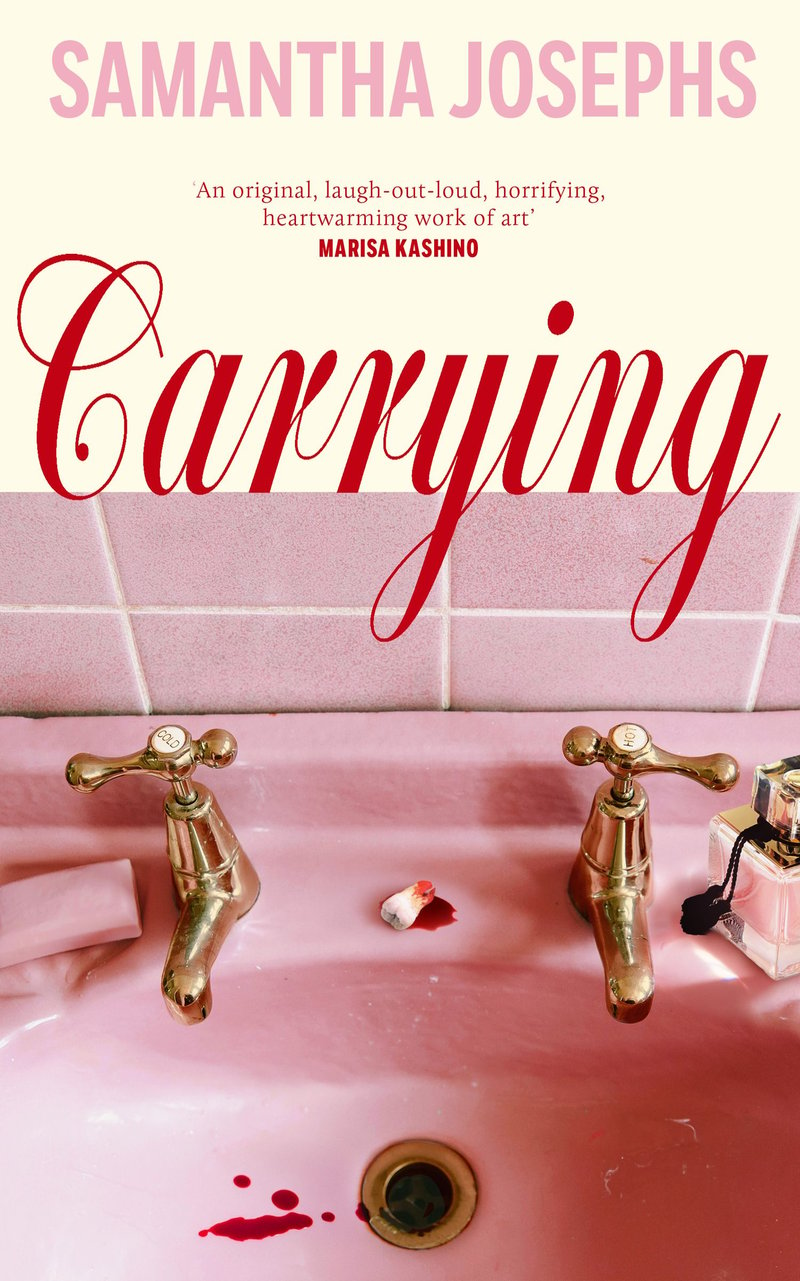
You never really expect a book touted as the epitome of transgender body horror to open with the platonic ideal of a tradwife waffling on about her Japanese minimalist bathroom. Then she starts cutting beef liver, and the horror kicks in full swing on the very next page.
Carrying by Samantha Josephs perfectly slots the horror genre in conversation with the lived realities of transgender women, skillfully inviting the reader to consider not only the way they perceive transgender individuals, but also how they perform gender. It’s Samantha Joseph’s debut novel, though one could never have guessed. The prose is delightfully conversational, personal, and doesn’t shy away from queer and ballroom vernacular. This is a novel clearly written by a queer author, for queer readers.
The protagonist, Martha, is introduced hunched over her bathroom sink, shaping up a piece of liver. What for, we wonder. With dawning horror, we realize, through Joseph’s charming and coy prose– that leaves much unsaid– she is faking a miscarriage. Martha is a stealth trans woman, a term in the transgender community used to describe individuals who can and choose to pass as cis—even to her husband, Leon.
And that’s the crux of it. Leon wants nothing more than a child with Martha, and Martha just wants to be loved like a woman—which, obviously, would involve giving her husband a kid. So she plays the long game. Martha is thirty-nine; her hope is that with enough "miscarriages", a friend-turned-gynecologist who’s willing to commit just a smidge of medical malpractice, and time, she’ll be able to keep up the act until she can be medically diagnosed for early menopause.
Things go catastrophically wrong when food starts to taste like gasoline. Martha declines rapidly after the “miscarriage,” eventually becoming more or less bedbound. An ultrasound confirms a uterus, ovaries, and a fetus growing in Martha. Martha is a trans woman. She’s overjoyed, but also? Horrified. With medical interest in her case, it becomes even harder to conceal her identity from her husband, and the rest of the book follows this cat-and-mouse game as it curdles.
Josephs truly has a talent for tone. The novel is paced excellently; it’s almost got a gothic feel: the traditional ramp-up, Martha gets better, she gets worse, the subtle sense that something may be preternaturally wrong, and the inevitability of it all; the novel is gripping in its entirety. The prose almost reads like a run-of-the-mill young adult romance, a wife trying to conceive, but there is a looming horror and implicit distaste at the system level.
Not the horror of being trans, exactly. The horror is at femininity—what lives under the hood. Martha is hurt by the standards that are socially enforced on women (I mean, the entire novel is her struggling with her inability to fulfill the role of a wife by conceiving), but at the same time, she buys into them, perhaps even more than the average cisgender woman. She puts in a huge amount of effort to be the most feminine version of herself—breast augmentation, bottom surgery, facial feminization, voice training, you name it. She describes the surgeries as painful but necessary, knowing that performing femininity is hard.
Nevertheless, she judges other women cruelly. When she picks up her stepdaughter from school, Martha mentally disparages the appearance of every mother she sees. Too wrinkly, breasts not big enough, too fat, not dressed well enough, bad make-up. Through this contradiction, Josephs engages in a dialectic that interrogates gender norms in our society.
What I found to be the most striking is the way the author engages with the current discourse surrounding transgender individuals. Martha’s internal dialogue is straightforward. However, the prose is tongue-in-cheek, asking us, the readers, to consider several questions. The most important among them is about disclosure— does a trans person need to disclose their identity to potential sexual partners? Martha has a neovagina, done so well that Leon doesn’t notice, all the surgeries, and even a female reproductive system. It’s a Theseus’s Ship; if she’s doing everything to perform femininity, does that make her a woman?
Nevertheless, to me, Carrying struggled in its attempt to engage with intra-community discourse and judgement. When Martha engages with a transgender man in the book, he heavily judges and critiques her decision to obscure her transgender identity from her partner, and she subsequently has a monologue about how cisgender men never see transgender women as worthy or real “women.” This is an extremely relatable experience today.
Despite that, I don’t think this is a tasteful way to approach it. There is some vitriol between transgender women and men (I like to call them the Suffering Olympics) over who is oppressed more, but I don’t think this discourse is productive. While Josephs should definitely engage in the disclosure discourse, having the most of it coming from the transgender man doesn’t feel great.
Overall, this is still a groundbreaking and fantastic work in exploring transgender identity and third-wave feminism (and its fallout) in general. The lived reality of trans individuals really does lend itself stunningly to the body horror genre. I look forward to reading more from the author!
Lead photo: Cover of Carrying by Samantha Josephs
The TeenTix Newsroom is a group of teen writers led by the Teen Editorial Staff. The Teen Editorial Staff is made up of 6 teens who curate the review portion of the TeenTix blog. For each review, Newsroom writers work individually with a teen editor to polish their writing for publication. Every month, Newsroom writers have the opportunity to pitch additional arts events or publications like this one, expanding the TeenTix Blog's coverage.
The TeenTix Press Corps promotes critical thinking, communication, and information literacy through criticism and journalism practice for teens. For more information about the Press Corps program see HERE.
