
"Runway to Runway": Radical Revolution and the Evolution of Flight Attendant Fashion
Review of Runway to Runway at The Museum of Flight
Written by TeenTix Newsroom Writer VARNIKA JAMMALAMADAKA
Edited by Teen Editorial Staff Member ELAINE ZHANG
A curious collection of hats and handbags framed in tiny black squares lined the floors of the Museum of Flight like a trail of breadcrumbs. The tiles offer a subtle but intriguing invitation, asking visitors to stray off the main hallway’s path and follow them through an unassuming barn door. There, the full picture is revealed in a welcoming floor decal bearing those very same accessories: “R\\R | Runway to Runway.” The exhibit, I came to find, was a fascinating crossover between the evolution of flight attendant fashion and the hidden social justice symbol that each uniform stood for.
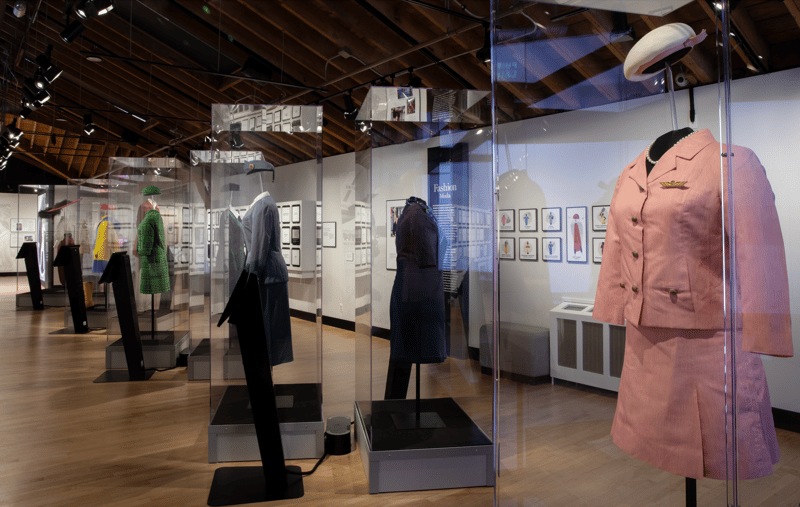
When I entered the room tucked away at the end of the Red barn, the exhibit seemed rather small at first glance. It consisted of only two rooms, and everything seemed to be visible from the doorway. As I made my way around the glass displays and wound through the carefully constructed layout, I began to realize there was more to discover than meets the eye.
The immediate focal point was a seven-foot photograph of a woman standing in the engine of a plane, wearing a dress with a psychedelic print that was a hallmark of 70s fashion. She was, according to the informational kiosk next to the display, Betty Green Bateman Atchison, a flight attendant for Braniff International Airways in the 1950s. When Atchison was fired after marrying her husband, she filed suit against the dismissal and started a chain reaction that struck down no-marriage policies across the airline industry. That strong-willed response was reflected in the bold patterns of her outfit. With pinks, greens, and a swirl pattern reminiscent of rolling hills that became designer Emilio Pucci’s signature design, the outfit was both eye-catching and unusual. This photograph and its subject worked in tandem with the actual outfit display to immediately set the stage for the entire exhibit, and was only a small hint of what was to come.
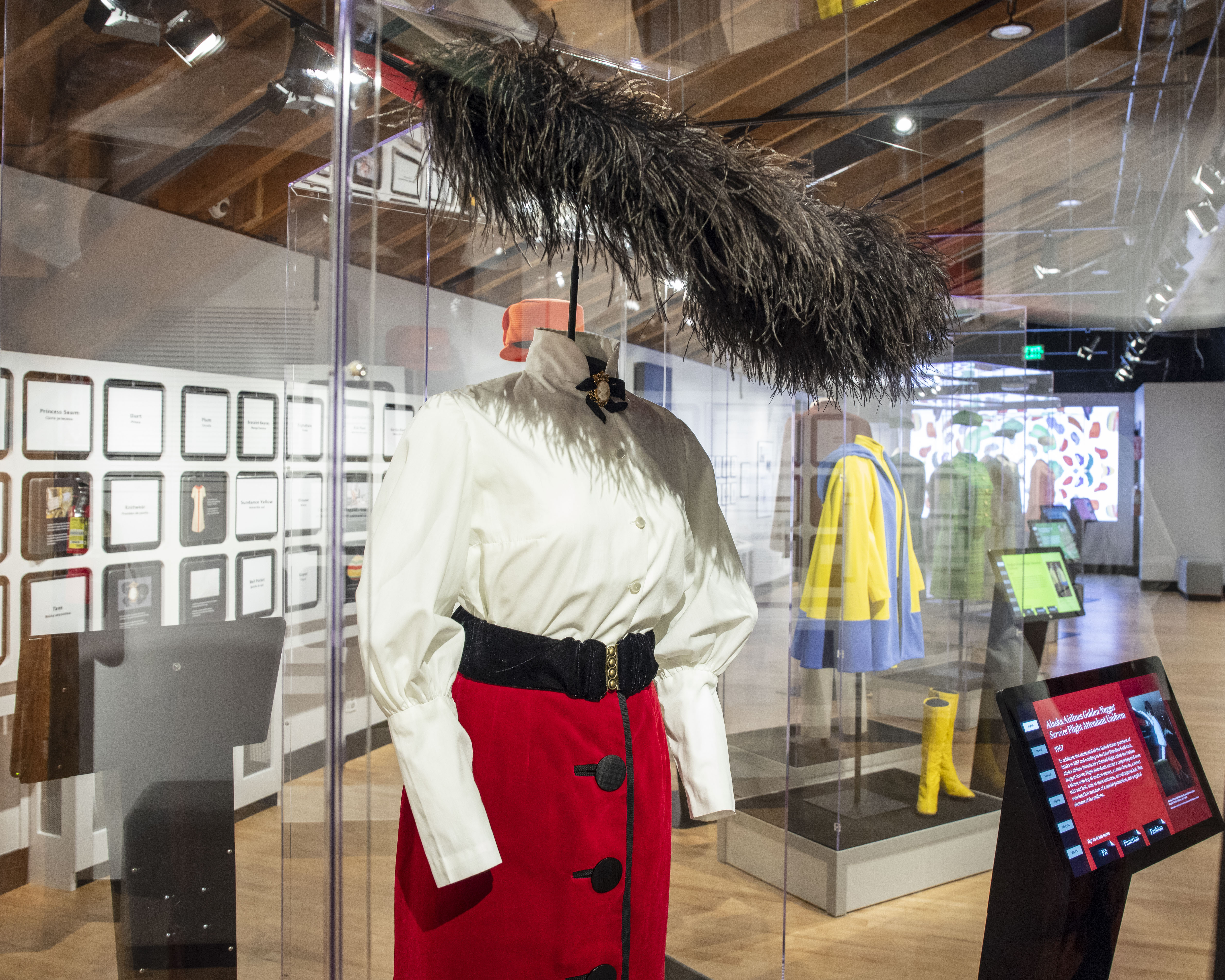
After that, I was presented with an exciting choose-your-own-adventure. I could continue making my way down a timeline of historical outfits or take a detour and explore the accessories that shaped flight attendant style for decades. I made my way into the second room, which centered around a multidimensional display of purses, scarves, and handbags, each with its own kiosk for exploring the pieces individually. With these, I had the option to learn more about the fit, form, and function of each piece in depth. As a lover of high fashion myself, I was immediately intrigued to see the likes of Yves Saint Laurent pop up on the screen.
But for visitors not familiar with runway brand favorites, there was something else entirely to engage with: interactive displays unique to each accessory. These were what elevated the exhibit beyond being just a wealth of information. With mannequin heads, magnet installations, and mirrors with fun hats etched in the glass, there was an element of playfulness added to the narrative. These interactive pieces added a lighthearted balance to the civil rights issues being discussed throughout the exhibit, making the topics engaging without minimizing their significance. I especially loved the Fashion Glossary, which was made up of spinning tiles, and the texture swatches that lined the wall opposite. With these additions, the exhibition successfully moved from purely visual representation to a full integration of the senses.
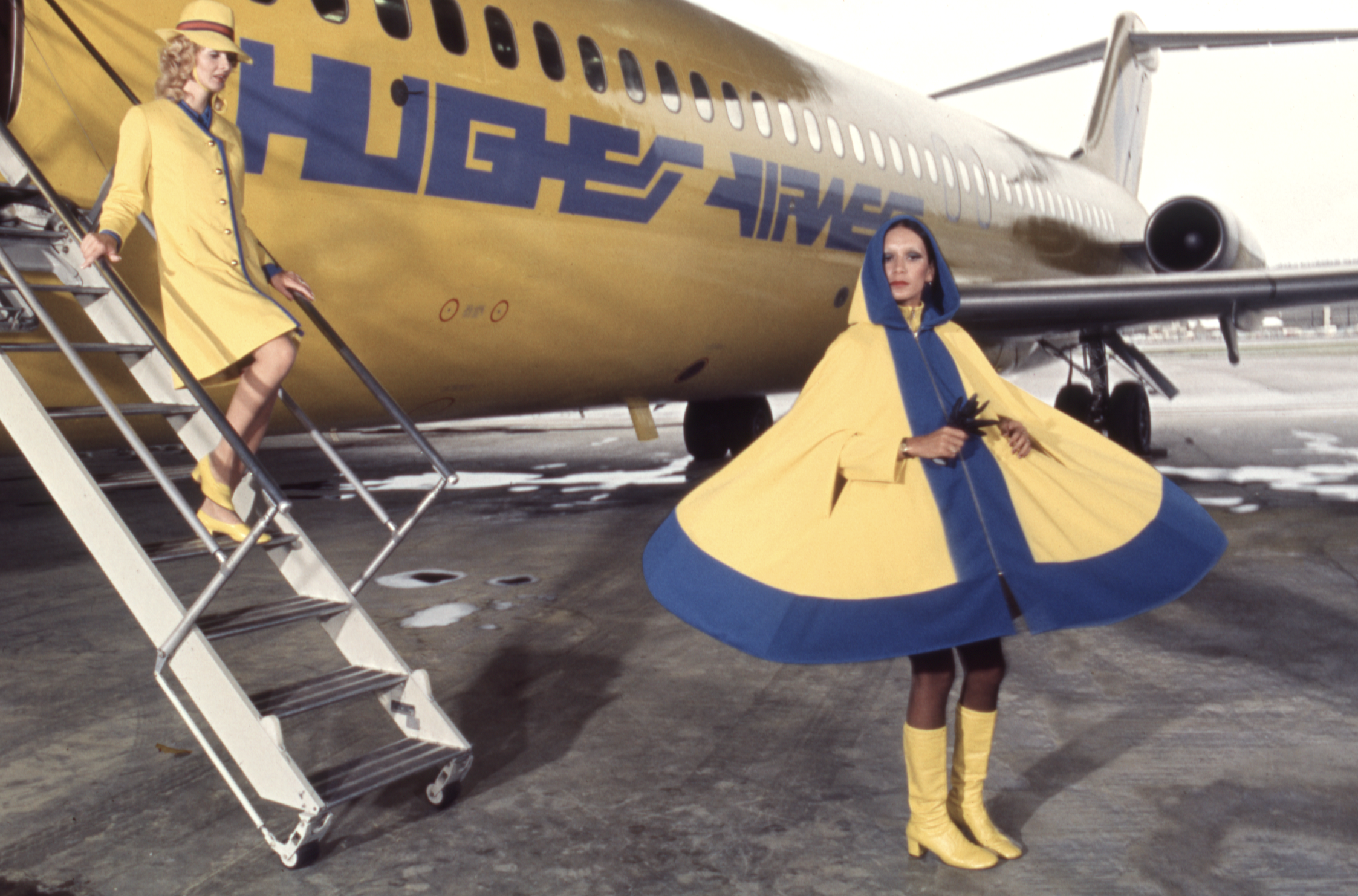
The outfits in the main room ranged from the 1950s all the way to the 2020s, and it was an eye-opening look on how fashion had changed. We went from outrageous, exquisite, and comically large hats to the familiar streamlined look every flight attendant has adopted on Alaska Airlines flights today. But I was surprised to learn just how ingrained activism has been and continues to be in forging those styles. The social advocacy aspect was seamlessly woven into the narrative. After the case Diaz v. Pan AM, in 1971, the restriction on hiring men as flight attendants was finally lifted. As a result, Continental Airlines created a fashion line inspired by menswear specifically. I found myself learning and appreciating history I would have otherwise never been exposed to, and I slowly realized that had been my experience for the duration of my time there. The exhibit effectively took advantage of every open space as a way to draw viewers in and add complexity to the visuals being presented, without becoming overwhelming. The walls were intentionally plastered with various prints, plaques, displays, and designs in a way that created a clear visual hierarchy whilst crafting a detailed story. It emphasized the vital role of women in the early stages of flight culture and acknowledged the perspectives still missing, which was a meaningful modern touch.
My only critique was the low, dimmed lights in the exhibit, which made it harder to fully take in the intricacies of each outfit. But as I made my way back to the entrance, I noticed a plaque titled “It’s Dark in Here!” and quickly learned that in order to protect the fabrics from damage, the lights had to be lowered. This addition, though simple, only reinforced the exhibit’s overall attention to detail. Every choice, from the layout to the wall displays to the ambient background music and occasional flight attendant announcement, enhanced the experience.
Overall, Runway to Runway is a fun, playful, and engaging exhibit that offers something for everyone. The visible commitment throughout to honoring different designers, decades, and distinct expressions of individuality is a rewarding one that will have visitors losing themselves in the enriching history of flight attendants and fashion.
Lead photo: The Museum of Flight/Sean Mobley
The TeenTix Newsroom is a group of teen writers led by the Teen Editorial Staff. The Teen Editorial Staff is made up of 6 teens who curate the review portion of the TeenTix blog. For each review, Newsroom writers work individually with a teen editor to polish their writing for publication.
The TeenTix Press Corps promotes critical thinking, communication, and information literacy through criticism and journalism practice for teens. For more information about the Press Corps program see HERE.
