"Fat Ham": Modern Mistake or Well-Regarded Tragedy?
Review of Fat Ham, a Digital Production by the Wilma Theater
Written by Rayann M. during an Arts Criticism workshop at Evergreen High School
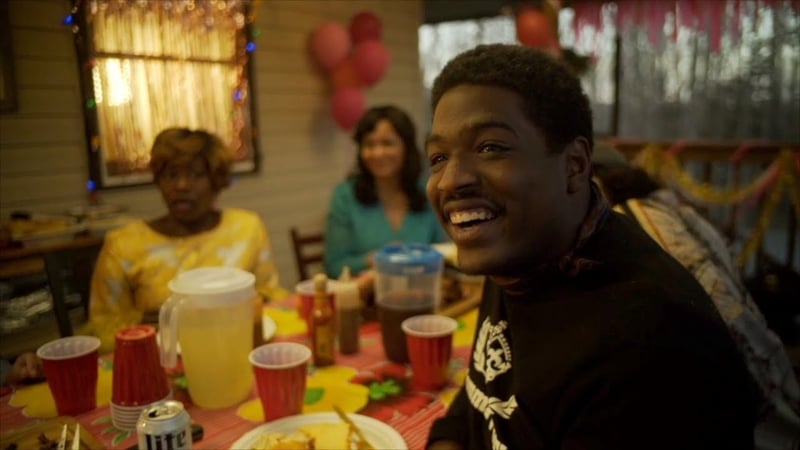
If William Shakespeare woke up today and saw Hamlet turned into a chaotic family barbecue, he would probably throw himself right back into his grave. And that is exactly what Fat Ham, a bold modern adaptation of the Shakespearean tragedy does. With an all Black cast, the story focuses on Juicy, a young, queer, Black man dealing with identity issues inside a highly problematic family. But right from the start, the production avoids the tension of the situation. By forcing constant humor instead of actual feeling, the script downplays the family’s pain, treating a severe crisis like an unserious joke rather than a meaningful tragedy.
The main issue with Fat Ham is that it refuses to take itself seriously, trading deep tragedy for cheap comedy. The adaptation ruins any sense of dramatic weight right from the opening scene. Instead of the creepy, tense, ghost encounter in the original play, we get a crude scene where Tio (the character based on Horatio) is watching porn on his phone right when Juicy finds out his mom and uncle are getting married. Honestly, starting a tragedy with a scene like that just feels completely low effort. By throwing in casual vulgarity and constant jokes during moments that should be emotionally heavy, the play strips away the real grief of the story. It doesn't let the characters actually mourn, treating a serious family blood feud into a casual indifference that makes it hard to care about what happens next.
The second major issue is how the play cuts and changes the core plot of Hamlet until the original story disappears. While it keeps the basic setup of a ghost demanding revenge, it doesn't take long for the production to completely lose the main themes that make Shakespeare’s play work. Juicy is forced to navigate his relationship dynamics inside a problematic family. At the same time, the deep psychological struggles of the original characters are traded for shallow, modern dialogue. For example, Opal (the character meant to be Ophelia) is completely hollowed out. She keeps almost none of the tragic traits or plot importance that Ophelia had in the original play. Even though these modern characters are high energy, the script fails to keep their personalities and storylines true to the original. It alters the core narrative too much, leaving behind a hollow imitation that sacrifices plot consistency just to seem relevant.
But at the same time, if you look at it outside the shadow of Shakespeare, Fat Ham actually works very well on its own as a modern story meant to capture the unique experiences of a Black Southern family. The movie does a great job of showing this specific family’s environment, their traumas, their traits. Because the characters speak and act like real people in the modern day, the audience can easily connect with their own immediate struggles. It feels less like an ancient royal tragedy and more like a realistic look at a family trying to survive their own messy reality. By focusing heavily on the lived experiences of the Black community, the production succeeds at being relatable, even if it has to sacrifice the original Hamlet storyline to get there.
Ultimately, Fat Ham fails as a strict Shakespeare adaptation because of its unserious tone and its failure to follow the original plot. Traditional theatre fans looking for a faithful version of the tragedy will definitely be disappointed. However, I recognize that if you look at Fat Ham entirely on its own, outside the shadow of Hamlet, it holds undeniable value because it includes very important themes that are crucial to the African American experience.
When Tio gives his monologue about the cycles of violence trapping his family, he directly connects their modern pain back to the history of violence. This moment shows a heavy truth, the family is trapped in generational trauma that has been repeated for so long they forget violence shouldn’t be a part of their lives. So, while it is a deeply flawed Shakespeare adaptation, Fat Ham still succeeds as a powerful standalone story about modern Black identity and family healing. It is a worthwhile watch, as long as you don’t expect it to be Hamlet.
Lead photo courtesy of Wilma Theatre.
The TeenTix Press Corps promotes critical thinking, communication, and information literacy through criticism and journalism practice for teens. For more information about the Press Corps program see HERE.
This review was written as part of an Arts Criticism unit at Evergreen High School in Emily Acquino’s Language Arts classes. Press Corps residencies are made possible by a grant from 4Culture.