
What a Piece of Work is "Fat Ham"!
Review of Fat Ham, a Digital Production by the Wilma Theater
Written by Isabel F. during an Arts Criticism workshop at Evergreen High School
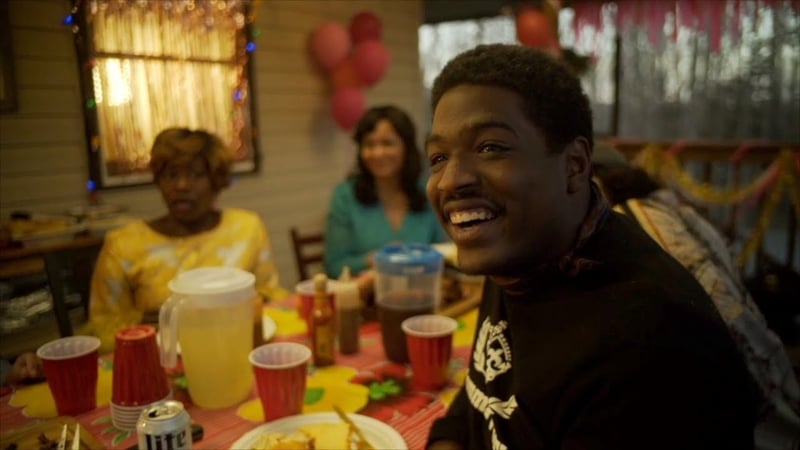
Fat Ham stands out from the traditional adaptations of one of Shakespeare’s most famous plays: Hamlet; its typical dark setting turned into a comedic play full of identity, acceptance, and finding yourself. This modern take on Hamlet is a breath of fresh air among adaptations that feel repetitive.
Written by James Ijames and put on by Wilma Theater, Fat Ham retells the tragedy of Hamlet in the festive and sunlit backyard of a house in the rural South. The story follows Juicy, a queer Black man, who struggles with the death of his father, Pap, and the recent marriage between his mother, Tedra, and his uncle, Rev. When Juicy is outside setting up the barbecue that will celebrate their marriage, he is confronted by the ghost of his dead father. Pap reveals that Juicy’s uncle, Rev, was the one who killed him and tells Juicy to get revenge. From there, Juicy and other members of the family are not only forced to face the chaos at the barbecue, but also their own personal problems. Ijames’ Fat Ham masterfully portrays social issues within the modern age and resistance against cycles of trauma.
In Fat Ham, toxic masculinity plays a role in how characters are pressured to follow traditional gender roles instead of expressing their true self. Juicy is seen as sensitive and soft because of his aspirations to study human resources and his empathetic personality. When Juicy decides to wear a black shirt with the sparkly print ‘Momma’s Boy’ to the barbecue, Rev becomes angry the second he sees him. To teach him to be more tough, Rev punches Juicy, causing him to fall to the ground. This scene shows how the people around Juicy will resort to violence just to get him to be more masculine. This causes Juicy to struggle with his identity, not knowing whether to fit into that role people want him in, or to be true to himself and embrace how he is now. This conflict reflects issues seen today, where young men are being taught with violence that having empathy and not following traditional gender roles is wrong. Fat Ham depicts this message well because of how real the acting and dialogue feels during this scene. Unlike Hamlet, Fat Ham doesn’t use a lot of old English. Instead, it uses language we use today, like slang, which makes the play feel more immersive.
Two other characters who face similar problems are siblings, Larry and Opal, the friends of Juicy. Their churchgoing mom, Rabby, pressures Opal into acting more ladylike by forcing her to wear a dress to the barbecue, even though Opal hates dresses. For Larry, Rabby wants him to stay in the Marines, even though Larry isn’t passionate about that. But what Rabby doesn’t know is that Larry and Opal are both queer, alongside Juicy. Larry hides his true self as a result of not only toxic masculinity, but also because of the taboo surrounding the LGBTQ+ community. When Larry is out in the backyard wearing his Marine uniform, he gets into a fight with Juicy because he revealed to Rabby that Larry was gay in a moment of anger. Larry’s fear of being found out really showed during this scene. He thought that wanting to be “soft” and liking Juicy would affect how he would be treated. Fat Ham makes an effective point on how anxiety-inducing it is for LGBTQ+ people, especially youth, to come out.
But with the help of Tio, Juicy’s cousin, the pressure to conform begins to weaken. Tio wears a bright tracksuit, perfectly matching his laidback and funny personality. Although he seems like just a stoner at first, he’s shown to have a philosophical and wise side to him. In one scene, Tio gives advice to Juicy that helps him realize that he’s trapped in a cycle of trauma passed down from his parents and those before them. Or another, when some of the family feels down, Tio stands up to encourage them to decide who they want to become, instead of fulfilling the expectations of others, where they’ll be unhappy. Tio’s words push Juicy to not follow in his father’s footsteps in using violence. Juicy also refuses to take revenge on Rev, a striking difference in how Hamlet played out. In the last moments of the play, Larry also has character development, where he is finally able to express himself with confidence and without fear of what others like Rabby would think. Fat Ham delivers this compelling message of stopping toxic cycles that will spread to future generations, and choosing happiness for yourself.
Ijames’ Fat Ham succeeds in adapting Hamlet into a play that can balance humor and relevancy. Its exploration of toxic masculinity, identity, and stopping intergenerational trauma are important topics that many people today struggle with. Fat Ham’s brilliant choice in ending the play with a dance party shows how you have the power to reject violence and choose happiness for yourself. On top of that, the characters are complex and relatable, making it a must watch for anyone trying to heal from family trauma. Overall, Fat Ham is a radiant and a one of its kind play that modernizes the tragedy of Hamlet, while at the same time, calls out the societal issues happening in today’s world.
Lead photo courtesy of Wilma Theatre.
The TeenTix Press Corps promotes critical thinking, communication, and information literacy through criticism and journalism practice for teens. For more information about the Press Corps program see HERE.
This review was written as part of an Arts Criticism unit at Evergreen High School in Emily Acquino’s Language Arts classes. Press Corps residencies are made possible by a grant from 4Culture.