TeenTix Logo
Login
Sign Up

Seattle’s Climate Pledge Arena, aka: Laufeyland

Review of Laufey at Climate Pledge Arena

Written by TeenTix Newsroom Writer ZOE PITTMAN

Edited by Teen Editorial Staff Members MARIELA VIDELA and MILO MILLER

Screen Shot 2025 11 10 at 12 59 56 PM

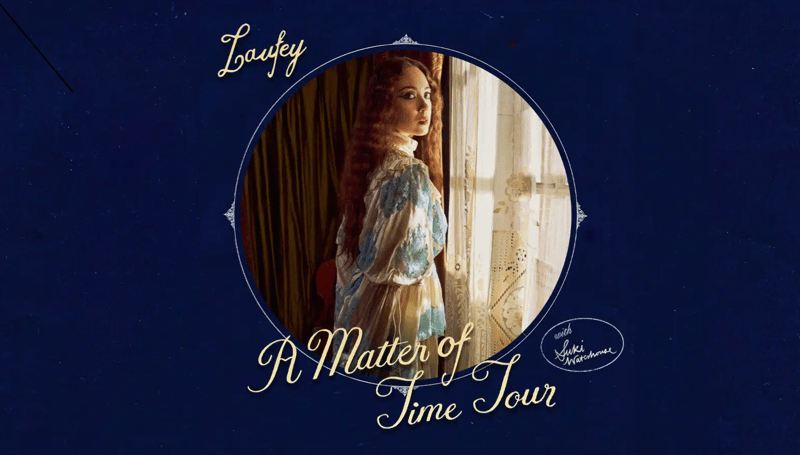
On October 4, 2025, Seattle’s Climate Pledge Arena was packed full of fans of the jazz-pop singer Laufey. Many fans dressed up in long white skirts, bows, and home-made crowns, making the lines perfect for people-watching. 

Laufey showed how much she valued her fans through amazing outfits, a talented live band, and four different acts followed by an energetic encore. Her performance created a warm and personal atmosphere, which encapsulated her intimate musical style perfectly, most of her songs being about yearning and storytelling. 

Read More

Beyond the Table: My Impressions of SAM’s "Farm to Table"

Review of Farm to Table at Seattle Art Museum

Written by Teen Editorial Staff Member MARIELA VIDELA

Farm to Table installation 6

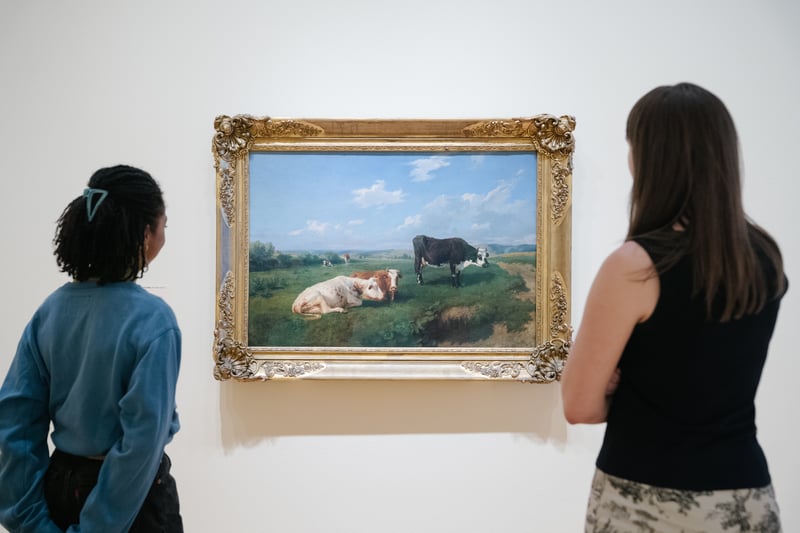
Farm to Table: Art, Food, and Identity in the Age of Impressionism at the Seattle Art Museum is a visual feast that highlights the importance of food during a period of evolving national values in France. I was drawn to Farm to Table by my love of farmers markets, French culture, and Impressionism As an editor for the TeenTix Newsroom, I was lucky enough to attend the press previewwhich turned out to be a perfect mix of my interests: half art lesson and half history lesson. The exhibit of more than 50 Impressionist paintings and sculptures by artists such as Claude Monet, Pierre-Auguste Renoir, Paul Gauguin, and Eva Gonzalès shows how food became a defining symbol of French history, identity, and pride following the Franco-Prussian War in 1870. I was fascinated by this inextricable link between food and culture, which feels just as relevant today as it was in 19th-century France.

On show now through January 18, 2026, Farm to Table is a traveling exhibit organized by The American Federation of Arts and The Chrysler Museum of Art. It has been adapted for presentation at SAM by curator Theresa Papanikolas, who led the press preview along with co-curators Lloyd DeWitt and Andrew Eschelbacher. Filled with details about French history, the tour helped me fully grasp the meaning behind each painting. Papanikolas started by explaining how Charles-Émile Jacque’s The Shepard and His Flock serves as a nostalgic depiction of farming before industrialization—a theme repeated throughout the exhibit. Meanwhile, DeWitt and Eschelbacher highlighted different connections like the link between French writer Émile Zola’s novel The Belly of Paris and Victor Gabriel Gilbert’s The Square in Front of Les Halles, which depicts the famous food markets Zola wrote about. After the tour, I had the opportunity to talk one-on-one with the exhibit curators, who thoughtfully answered all my questions about Impressionism. As DeWitt pointed out the subtle details and beautifully captured light in Étienne Prosper Berne-Bellecour’s The Remains of the Meal, I found myself sharing his enthusiasm. The beauty of the exhibit’s paintings can only be fully appreciated in person. The Gleaners, 1887, Léon Augustin Lhermitte, French, 1844-1925, oil on canvas, 29 1/2 x 37 3/4 in., Philadelphia Museum of Art, The George W. Elkins Collections, 1924, E1974.4.19, Courtesy of the Philadelphia Museum of Art and American Federation of Arts.

Read More

A Sea of Fun at the Seattle Opera’s "The Pirates of Penzance"

Review of The Pirates of Penzance

Written by TeenTix Newsroom Writer KAYLA CHRISTOPHER

Edited by Teen Editorial Staff Member CLARA THORSEN

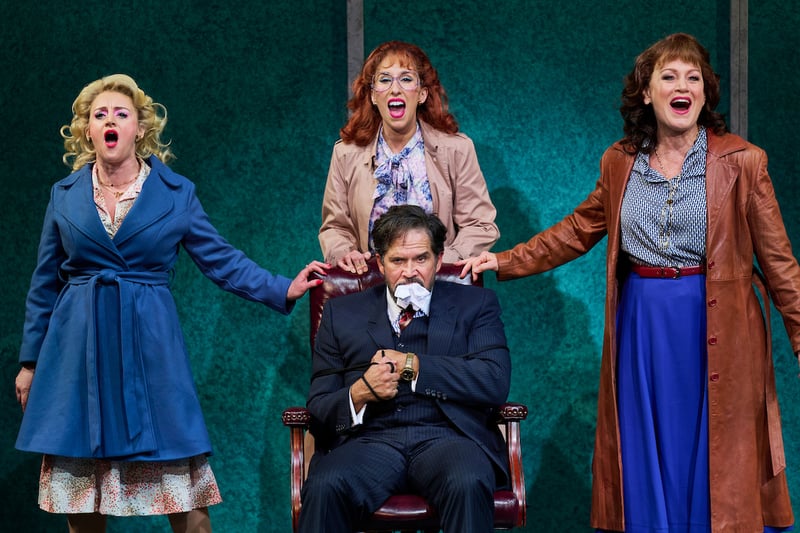
TPOP Dress Rehearsal 10152025 David Jaewon Oh Hi Res JPE Gs 141

As I made my way to my seat in the ever-crowded McCaw Hall theater, I couldn’t help but pay attention to the audience around me. Surrounded by opera-goers in pirate garb, I was immediately immersed in the lively atmosphere—I was clearly not the only one enthusiastic about seeing The Pirates of Penzance. With the show’s 146-year history and countless adaptations, it was obvious that the opera, telling the tale of a young pirate and the daughter of a major general falling in love, has captivated the hearts of many. As the story unfolds, Frederic, a sincere young man who accidentally became an apprentice to a group of pirates, yearns to escape his criminal lifestyle and marry Mabel, the quirky young daughter of the major general. But when a loophole in his contract ruins his chance to break free, Frederic is forced to choose between loyalty and love.

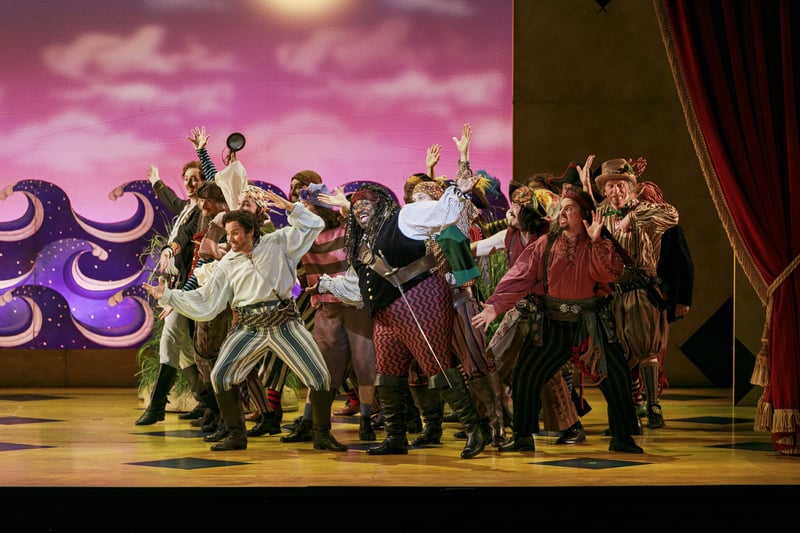
After the crowd settled down, the dynamic, majestic orchestra conducted by David Charles Abell began to play the overture. While I was admiring the orchestra, the curtain whisked open to reveal an incredibly spirited crew of pirates, complete with a large boat which swiftly sailed into place. Led by the Pirate King (Reginald Smith Jr.), the pirates were dressed head-to-toe in clashing yet appealing patterns and were extremely well costumed thanks to costumer James Schuette. The patterns enhanced the swashbuckling and rambunctious nature of each pirate. While the pirates sang about young pirate Frederic’s (David Portillo) birthday, they danced around the stage, riddled with unique props that added to the comedy and characterization of each pirate in the chorus. Some pirates held books, some held teddy bears, and most had an arsenal of weapons, all of which helped me visualize who these pirates truly were.David Portillo (Frederic) and Vanessa Becerra (Mabel) in "The Pirates of Penzance" at Seattle Opera. © David Jaewon Oh.

Read More

“I am the storm”: Ballet and Identity in "Fancy Dancer"

Review of Fancy Dancer at Seattle Repertory Theatre

Written by TeenTix Newsroom Writer IRIS DICKEY

Edited by Teen Editorial Staff Member MARIELA VIDELA

750 X500 FD Slider Mobile

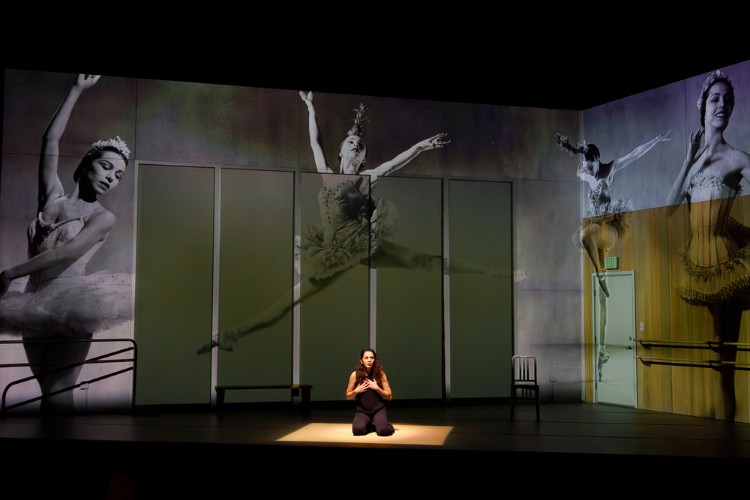
Soft rain echoed through the audience, the noise coming from the stage. On October 12, at 7:30 PM, the empty stage at Leo K. Theater was complete with a ballet barre, window, and glowing exit sign above a door with light streaming through it. It was cozy, if a bit lonely. The theater was set up as a dance studio, but when the performance began, it became clear that the story extended far beyond the aspects of dance. Instead, the world premiere of the play Fancy Dancer feels uniquely like a conversation with a friend, saying, “You are not alone.”

Seattle Rep and Seattle Children’s Theater have collaborated to introduce this autobiographical play, written by Larissa FastHorse and directed by Chay Yew, to a variety of ages. FastHorse and actress Burgandi Trejo Phoenix alternate performances, playing the show’s single role of Lara. Lara grew up in a small town in South Dakota off the Lakota reservation with her adoptive parents. Half Lakota and half white, she spent many of her formative years feeling like she was too much or not enough of both sides of her heritage. This discontent with her identity was mirrored in her body. She struggled with tibial torsion, which made it difficult for her to rotate her legs outward, also known as turnout. Because of this, she was deemed unworthy of dance opportunities again and again, from her second-grade ballet class to her eventual college one. Still, she persevered with her dream and set herself on following the footsteps of Maria Tallchief, a famous prima ballerina, who was also half-Indigenous. This link between identity, emotions, and dance is the core of the production.Larissa FastHorse in Fancy Dancer (2025) at Seattle Rep. Photo by Sayed Alamy.

Read More

How much can one person change the trajectory of your life?

Review of The Roommate at ArtsWest

Written by TeenTix Newsroom Writer BOWIE LOGAN

Edited by Teen Editorial Staff Member MILO MILLER

Roommate 024 edit

The Roommate at ArtsWest is a beautiful play that will make you laugh, cry, and consider the question, how much can a true friendship change you? Written by Jen Silverman and originally debuting at the Actors Theatre of Louisville in 2015, The Roommate follows two middle-aged women, Sharon and Robyn, and the budding friendship that starts when they become roommates. The two women are as opposite as can be. Sharon is a recently divorced, lonely homebody from a small town, while Robyn is free-spirited, from the Bronx, and in search of a new life. This dynamic leads to an emotionally captivating, comedy-rich play that will keep you both on the edge of your seat and contemplating its themes for weeks.

ArtsWest is a perfect venue for this show. It’s a small Black Box theater. No elevated stage. The actresses are only a few feet away from the front row. The only thing separating the stage from the audience are the small vinyl mats that mark the edges of the set. The set, designed by Devin Petersen, is a small kitchen decorated like a typical house from a Disney Channel sitcom. There are a few plants in the window nook above the sink; a small round table you can imagine a family breakfast around; and a fridge with colorful magnets holding up a few pictures of a young boy who no longer lives there. From the beginning to the end of the play, the set only changes as Robyn’s belongings supplant Sharon’s space. Her plants, weed, and boxes upon boxes don’t drastically change the set, but they make it clear that this isn’t just Sharon’s home anymore. It becomes less a stereotypical family home and more Sharon and Robyn’s home, a mix of Sharon’s more traditional values and Robyn’s careless and sometimes cluttered lifestyle. As we watch this change in the set, we also experience the women beginning to connect. They become entwined in each other's lives just as their things intertwine in their new home. Sharon’s house only becomes their home when Robyn and Sharon start to find home in each other. The Roommate is advertised as a dark comedy, so I expected something much less emotional than what I came away with: a bittersweet story about two completely opposite women finding love for each other and changing each other’s lives for the better.Mari Nelson and Sarah Harlett in The Roommate at ArtsWest. Photo by John McLellan.

Read More

Beautiful and Shining "Jewels" Onstage at The Pacific Northwest Ballet

Review of Jewels at Pacific Northwest Ballet

Written by TeenTix Newsroom Writer SAGE LANG-WOODWARD 

Edited by Teen Editorial Staff Member KYLIE LIPPE

Emeralds

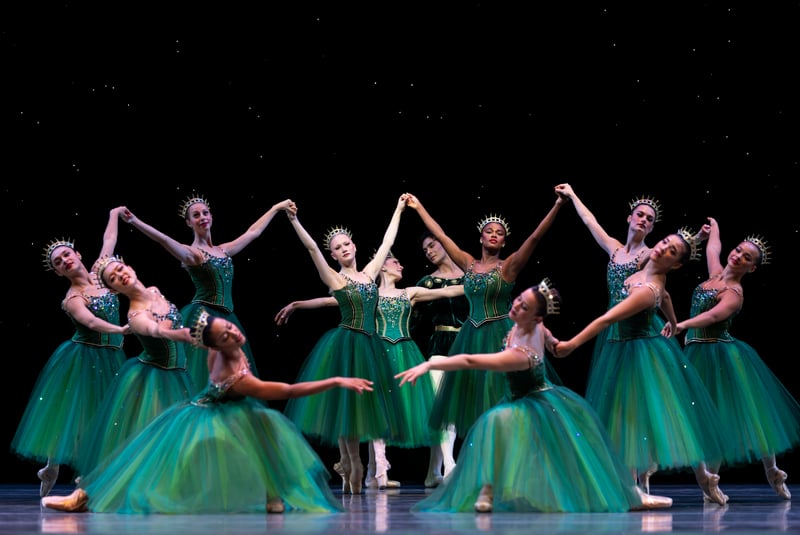
The red curtain sparkled with tiny bedazzled gems, shining like tiny stars, as it opened to reveal long green tutus which sparkled in front of the audience who stared in awe even before the dancers began to move. A little while before entering the theater, I overheard an elderly woman talking about how she thought that the world needed more pure beauty in it; something uncomplicated and idealistically happy. In a world so obsessed with finding meaning in every little thing that it is killing us, maybe what we need is just to see something beautiful for the sake of it being beautiful. After seeing the Pacific Northwest Ballet’s production of Jewels, I understood what she said. A lot of people need to connect to seeing joy in art, and this is part of what makes Jewels such an excellent ballet for both new and returning audiences to the PNB.

George Balanchine’s Jewels is a rare gem of a plotless ballet. One should not discount it on account of its lack of a plot, however. Its focus is on the diversity of beauty and how, even in a specific art form like ballet, there can be many ways to express emotion and beauty. The entire ballet is split into three acts that work as smaller ballets: EmeraldsRubies, and Diamonds. Each ballet has a main color scheme associated with it incorporated in the costumes and background: dazzling green for Emeralds, a roaring red for the unapologetic joy of Rubies, and a classy white with light undertones of several other colors, like pink for Diamonds.

Read More

5 Takes on "Exotic Deadly: Or the MSG Play"

Reviews of Exotic Deadly: Or the MSG Play at Pork Filled Productions and SIS Productions

Written by the 2025-26 Teen Editorial Staff: CLARA THORSEN, KYLIE LIPPE, MARIELA VIDELA, MILO MILLER, and THIEN-NHI NGUYEN

Edited by Guest Mentor WALDEN BARNETT

Thumb Exotic Deadly FULL 16

Exotic Deadly: One Strange History Lessonby Clara Thorsen

Exotic Deadly: Or the MSG Play is an absurd comedy, coming-of-age drama, and historical lesson packed into just under two hours. Exotic Deadly made its Northwest debut at Theatre Off Jackson, a cozy venue nestled in the Chinatown-International District. The play follows an Asian-American high school student, Ami (Karis Ho), whose world comes crashing down after discovering her family invented the flavor enhancer MSG.

Read More

Teen Writers Wanted: Arts Journalism in the TeenTix Newsroom!

By TeenTix Newsroom Writer KYLIE LIPPE

DSC 0380

From September to June, teen writers in Seattle attend and review an array of art events; spanning from comedy to classical ballet and everything in between. They work with Teen Editors to polish, and publish their reviews for the TeenTix blog. The TeenTix Newsroom empowers teen writers to interact with art in a meaningful way, and compensates them for their contribution to the arts. Here’s everything you need to know about the TeenTix Newsroom, plus some advice from last year’s Newsroom members.

How do you know if the TeenTix Newsroom is right for you? 

Read More

Resonant Themes Echo Through Imaginative Storytelling

A book review of The Yomigaeri Tunnel by Kelly Murashige     

Written by TeenTix Newsroom Writer KYLIE LIPPE

81u EI mkqd L UF1000 1000 QL80

A young Monika used to believe that life awaited us at the end of the tunnel, a twist on the common phrase which, to her, meant perseverance through hard times would be rewarded with a better life. Yesterday, Monika graduated from high school and she has changed. She thinks that it would be better to find another life, being another person might be better than grasping at the light or life at the end of the tunnel.

This change in Monika's perspective has been built up on the losses she has experienced during her lifetime. Monika feels unable to move towards her future, unlike her best friend Thea; who is headed to Columbia College in the fall. Monika can’t help but compare herself to her friend, which causes a rift in their relationship. For Monika, Thea is a reminder of a life she is missing out on. This year Monika lost Shun, a classmate who didn’t make it to graduation. When it seems as though nothing else can mend her wounds, Monika turns to legend, her last hope of bringing him back. A tunnel, said to test anyone who wants to resurrect a dead soul. The tests within the tunnel, bring a whirlwind of  memories best not remembered and unspeakable secrets. Its name, accurately given, is the Yomigaeri Tunnel, "yomigaeri" being the Japanese word for resurrection. 

Read More

Pushing the Boundaries of Chamber Music

Review of Evolution of Flute at Emerald City Music

Written by TeenTix Newsroom writer MICKEY FONTAINE and edited by Teen Editorial Staff member ANNA MELOMED

Screen Shot 2025 06 30 at 11 25 53 AM

The not-for-profit chamber music venue Emerald City Music (ECM) delivered a thoughtful retrospection on the oldest instrument in human history, the flute. This concert, curated by Artistic Director Kristin Lee and flutist Sungwoo Kim, was a part of their EVOLUTION series, including examinations of the cello, piano, and improvisation. Furthermore, this series seeks to critically present the history of various instruments and contrast the old and new ends of their repertoire. 

This is highly characteristic of the organization. ECM often takes a particularly creative hand in curating its program, juxtaposing genres, cultures, and time periods with one another to engage listeners more critically. Examples of this unique approach include their concert "Inspired by Gamelan," which featured a suite of modern classical compositions that draw from the distinct sound of the Indonesian classical musical practice. 

Read More

Watch in Wonder: Whim W’him’s Three-in-One Contemporary Show

Review of Spring '25 at Whim W'him Contemporary Dance

Written by TeenTix Newsroom writer CAROLINE COSSETTE and edited by Teen Editorial Staff member SYLVIE JARMAN

Whimwhim1

Whim W’him’s Spring ‘25 left me wonderstruck. The show consisted of three sections, each choreographed by a different artist–Olivier Wevers, Mark Caserta, and Lauren Edson, with Olivier being the founder and artistic director of Whim W’him, a contemporary dance company. The talent of the company’s seven dancers–Jacob Beasley, Owen Fulton, Stella Jacobs, Aliya Janov, Daeyana Moss, Ashley Rivette, and Kyle Sangil–is incredible. From their technique and facial expressions to their execution, they are a treat to view. This show was my very first contemporary dance show, and I was so excited to watch it. Dance is such an expressive and engaging art form, and Whim W’him made my love for it grow. When I left the theater, I felt the need to dance again. 

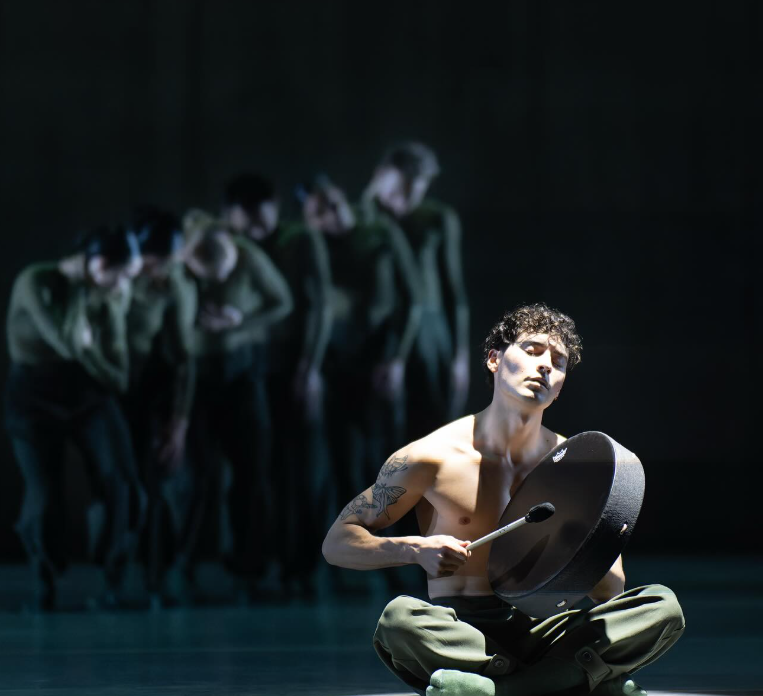
The first piece, Rituals for the Mother, choreographed by Whim W’him founder and Artistic Director Olivier Wevers, was contemplative, peaceful, and spiritual. The dancers were dressed in deep green long-sleeved shirts and formal pants, and the women wore their hair in tight buns. The music was full of percussion and engaging rhythms. The dancers moved together like waves in the sea: frantic yet calm, curious yet peaceful. There were moments of control, playing, and fighting. Throughout, the dancers continuously tormented one of the male dancers. This dancer was the only dancer who was dressed differently (he wasn’t wearing a shirt). They held him above the ground as he struggled to run away, moving in tandem, keeping him confined. The scene transitions to a rectangular white light on stage while everything else goes dark. There were two men on stage (Beasley and Fulton); the first was the one who was being controlled (Beasley), standing in the light, and the second was one of the controllers, standing in the dark. Sometimes they performed synchronized with identical moves, while other times the man in the dark (Fulton) only watched the man on the inside. The two swapped places several times, changing the dynamic of the scene. At first, it seemed like a mirroring effect, but as they went on, it was more watching and interacting with one another, together or apart. No matter what they did, the light was there, though it occasionally changed angles. At one point, they were both together, then back-to-back and separated, dancing to their own rhythms–but once again, they found each other. Whim W'him Spring '25. Photo by Jim Coleman.

Read More

The Weight of Change: Exploring Loss and Identity

A book review of This Side of Falling by Eunice Chan

Written by TeenTix Newsroom Writer THIEN-NHI NGUYEN

8114 b D2cx L AC UF1000 1000 QL80

This Side of Falling by Eunice Chan depicts a story of a high school senior girl named Nina Yeung, a high school senior and talented violinist whose life is thrown into disarray after the suicide of Ethan Travvers — her friend, her maybe-love, and her burst of color in an otherwise monochrome world. As Nina juggles the pressures of college applications, her senior recital, and strained family dynamics, she is haunted by memories of Ethan. She questions her perception of him when he was alive. Chan’s book is a beautifully written book that explores grief, identity, pressure, and relationships between characters, and the importance of moving on.

One of the most unique aspects of this book is its raw portrayal of grief. Nina’s world completely shatters with Ethan’s absence; her reality starts spiraling, her behavior, and her beliefs as well. Before meeting Ethan, Nina had always maintained a strict structure and schedule in her life; however, after meeting him, this structure is shattered, and with his absence, all of what she knows is broken again. The structure of the book mirrors this emotional confusion, with disjointed timelines and blurred transitions between Nina’s memories while she’s reminiscing about the past and dealing with what is going on presently. While the timeline of the book does occasionally become confusing and disorienting, this nonlinear format reflects the way that grief heavily distorts your sense of time, clarity, and reality. 

Read More

Ballet’s Best Comedy at OBT

Review of Coppélia at Olympic Ballet Theatre

Written by Teen Editorial Staff Member SYLVIE JARMAN and edited by Press Corps Mentor HENRY BEHRENS

Unnamed

Inherently, the ballet Coppélia by Leo Delibes is a very silly story. The events following a boy mistakenly falling in love with a doll are undeniably absurd, and they offer a brand of comedy far from the stiff-upper-lip that many associate with ballet. These comedic elements can distract from the fact that Coppélia is an incredibly demanding ballet, with difficult choreography, complicated and multi-faceted roles, a larger-than-usual amount of high energy group numbers, and lots of unforgivingly uptempo songs. Balancing Coppélia’s comedy and technicality is a challenge for any company performing it. Olympic Ballet Theatre gracefully took on this challenge with just the right amount of whimsy, humor, and pure talent to perfect the classic fairy tale, which its company performed May 10 and 11.

OBT dancer Jacqueline Iwamura and guest artist Guillaume Basso fully embody the two leading characters, Swanilda and Franz, right from the jump. They were played with immense energy and sass pouring from both. Iwamura’s Swanilda was sweet, social, and delightfully impish. While Swanilda relishes in the mischief she causes across the story, she is still full of love and energy, wonderfully demonstrated through Iwamura’s buoyant and springy steps in her first variation that teem with joy. Basso brought the perfect energy to Franz, playing him as a boyish, lovable yet absent-minded dope. While the unfortunate situations he gets himself in are entirely predictable and avoidable, one can’t help but pity him with how genuine, open-hearted, and foolish Basso portrays him. 

Read More

Complete Sketches But Incomplete Pictures

Review of Alex Katz: Theater and Dance at the Frye Art Museum

Written by TeenTix Newsroom writer JB JAGOLINO and edited by Teen Editorial Staff member RAIKA ROY CHOUDHURY

Frye 20250225 099

Step backstage with Alex Katz’s Theater and Dance as you’re welcomed into the inner workings of an artist. 

Alex Katz is a painter who over the course of his career, has collaborated with many dancers and choreographers, and has had a grand contribution to theater overall. This exhibit at the Frye allows you to reflect on Katz’s work over the years, featuring anything from thoughtful behind-the-scenes sketches to eye-catching wall-length backdrops. 

Read More

Bringing It All to The Table

Review of The Unfair Advantage at Seattle Repertory Theatre

Written by TeenTix Newsroom writer MARIELA VIDELA and edited by Teen Editorial Staff member KYLE GERSTEL

Unfair at LJP by Rich Soublet 2

Fooling someone from the distance of a traditional stage is one thing. Fooling someone sitting directly in front of you is much more difficult—and astounding. I discovered this when I was ten years old, during my magic trick phase. I spent hours carefully practicing card tricks from books, and yet my demonstrations failed to elicit the awe that I hoped for from my family. In The Unfair Advantage at Seattle Rep, Australian card shark and magician Harry Milas has mastered the ability to fool and amaze his audience up close.

Using a simple but effective format, Milas exposes techniques used to cheat at cards. First, he demonstrates an awe-inspiring card trick, then—unless the trick is strictly for the sake of magic—he explains the secret behind it. Along the way, he sprinkles in anecdotes from his personal magic journey. Audience members must sign a confidentiality agreement before the hour-long show, which is followed by an optional Q&A session. I admit that the NDA made me dubious, but as I soon discovered, The Unfair Advantage is not just a tell-all. Instead, Milas reveals the methods used by card sharks while still preserving the mystery and quiet wonder associated with magic.

Read More

Fast-Paced Fun and Universal Themes at Seattle Rep

Review of Laughs in Spanish at Seattle Repertory Theatre

Written by TeenTix Newsroom writer MARIELA VIDELA and edited by Teen Editorial Staff member KYLE GERSTEL

SREP Laughsin Spanish 11 web

After seeing Seattle Rep’s Laughs in Spanish, I was both energized by its lively humor and left with some challenging questions to ponder.  I attended the 90-minunte play, written by Alexis Scheer and directed by Dámaso Rodríguez, as a Spanish student hoping to practice my listening skills and curious about what a “part telenovela, part whodunit” comedy would be like. Although the Spanish portions of the play turned out to only be brief phrases sprinkled into the dialogue, I could not have asked for a production more chock full of jokes, telenovela tropes, and big questions about identity and decision-making.

The drama begins when Mariana (Beth Pollack) discovers that all the paintings have been stolen from her Miami art gallery on the morning of her biggest show of the year. Juan (Gabriell Salgado), a decidedly unhelpful police officer, is on the scene. Juan also happens to be the boyfriend of Mari’s intern, Carolina (Diana Garle), a graduate student studying painting. Both are more focused on getting Mari to show Caro’s paintings in lieu of the intended artist’s work than on solving the crime. Then, Mari’s theatrical telenovela-star mother Estella (Diana Burbano), with whom she has a fraught relationship, arrives unexpectedly, bringing with her a whole new source of drama. Things get even more complicated when Estella’s assistant, Jenny (Cheyenne Barton), turns out to be Mari’s old crush.

Read More

Love at First Sight: PNB’s "Roméo et Juliette"

Review of Roméo et Juliette at Pacific Northwest Ballet

Written by TeenTix Newsroom writer MARIELA VIDELA and edited by Teen Editorial Staff member SYLVIE JARMAN

R j2

Imagine a performance of Romeo and Juliet without words. Could the tale possibly be as beautiful, as heartbreaking, without Shakespeare’s mastery of language? The answer is yes. Pacific Northwest Ballet’s production of Roméo et Juliette uses the language of dance to convey all the personality and emotion of Shakespeare’s classic play through a medium that is perhaps more moving than words: the body.

Set to Sergei Prokofiev’s wonderfully dramatic score, the tale unfolds over three acts through a blend of contemporary dance and classical ballet, choreographed by Jean-Christophe Maillot in 1996. Maillot’s choreography, combined with a stark, minimalist aesthetic, pulls all focus towards the dancers’ movements. Without the distraction of frills or intricate sets, the skill and expressiveness behind each gesture truly shines. The dancers spun in simple, neutral-toned costumes, designed by Jérôme Kaplan, against the background of large, white, geometric shapes that make up Ernest Pignon-Ernest’s spare scenic design. The Montagues wore lighter colors, and the Capulets mostly wore darker colors, distinguishing the two families. Although Juliet wore several ethereal dresses of shimmering gold and silver, it was clear that neither the costumes nor sets were stars in the show—all the glory went to the dancing itself. The modern, pared-down aesthetic made the production feel more mature than PNB’s recent extravagant, glittery productions like The Sleeping Beauty.

Read More

Centerstage’s Timeless Confrontation of Racial Censorship in Theatre

Review of Trouble in Mind at Centerstage Theatre

Written by TeenTix Newsroom writer CLARA THORSEN and edited by Teen Editorial Staff member SYLVIE JARMAN

Trouble 5919

In June of 2020, in the wake of the rising Black Lives Matter movement, more than 300 theater artists published the statement, “We See You, White American Theater.” This statement tore into the long-established racism within the theater industry: “Our love of theater has often meant surviving an industry-wide culture of fear poisoned by racism [...] Achieve cultural competency in us. Address your vocabulary, behavior, implicit bias, and lack of understanding. We are the experts, not the accessory.” The letter laid out a clear list of changes that needed to be made, highlighting the inadequate worker rights and representation. 65 years before “We See You” was published, playwright Alice Childress addressed near-identical issues through Trouble in Mind, yet the systemic racism of Broadway prevented its production and mainstream success until 2021. Before becoming a playwright, Childress was involved in years of local theatre, eventually making it to Broadway in the ‘40s. Her first-hand experience makes this play an invaluable perspective on Black actors’ experience prior to and during the civil rights movement. Centerstage Theatre’s production highlights the relevance of Trouble in Mind, playing a crucial role in addressing the long-running and unchanging racism within theatre.

Trouble in Mind is a satirical, challenging critique of racism within the theater, following a primarily Black cast in the rehearsal of an “anti-lynching” Broadway production called “Chaos in Belleville,” directed by a white man. Despite the progressive image of “Chaos in Belleville,” the egotistical director’s racism and biases are ingrained in the characterization and plot. The protagonist, Wiletta, is an experienced, strong actress accustomed to complying with stereotypical roles in the theater to make a decent income. Despite giving similar advice to the newer Black actors in the production (“You either do it and stay or don’t do it and get out”), she gradually becomes more openly opposed to the director, culminating in a heated argument that ultimately ends the production of the play. Trouble in Mind follows a variety of characters that differ in perspective on “Chaos in Belleville,” with a satire that still feels very relevant today. The cast of Trouble in Mind. Photo provided by Centerstage Theatre.

Read More

A Nation Echoed. A Note Missed.

Review of Lara Downes' This Land at the Meany Center for Performing Arts

Written by TeenTix Newsroom writer REAGAN RICKER and edited by Teen Editorial Staff member ANNA MELOMED

Lara downes cebru yildiz 3

On April 8th at the UW Meany Center, the black Steinway piano and the iconoclastic pianist Lara Downes stood solitary on stage. Yet, as the classical composition began, it would turn out she was far from alone, accompanied by echoing ghosts of American history and identity.

Covering 14 songs plus one encore in two acts, Downes’ album This Land takes viewers on a cross-country road trip of American roots by paying homage to various musical greats of different time periods, from Scott Joplin’s energetic ragtime to Geroge Gershwin’s jazz-infused classical music to Paul Simon’s folk narratives. By “Reflecting a wide diversity of voices, both new and familiar, illustrating the beauty that resides in the broad landscape of American music,” Downes paints an honest picture of the complexities and beauties of American history. Especially considering the current political climate of the U.S., the arrangement feels like a poignant reminder of what it means to be American and explores a sense of pride that emerges even in a country that has undergone. Perhaps Downes said it best in her opening, right after playing a rendition of Paul Simon’s “America”: “The best place to find America is in music.”  

Read More

And Then There Were Five

Book Review of The Queens of Crime by Marie Benedict

Written by TeenTix Newsroom writer MARIELA VIDELA and edited by Teen Editorial Staff member RAIKA ROY CHOUDHURY

211003830

What if five of the greatest female mystery writers from the 20th century banded together to solve a real-life murder? Marie Benedict explores this question in her historical fiction novel The Queens of Crime, which stars Dorothy L. Sayers and Agatha Christie. I picked up my first Agatha Christie detective novel several years ago, and ever since, I have been hooked. So, when I heard about The Queens of Crime, I was intrigued. I realized that despite my love of Christie’s work, I have never delved into the work of her contemporaries. Would reading Benedict’s novel both shed light on these great women writers and weave a murder investigation worthy of these Queens of Crime?

Set in 1931, The Queens of Crime centers on the respected mystery novelist Dorothy L. Sayers, creator of the detective Lord Peter Wimsey and co-founder of the real-life Detection Club for crime writers. After being shunned by the club’s male members, Sayers bands together with fellow female authors Agatha Christie, Baroness Emma Orczy, Ngaio Marsh, and Margery Allingham. These self-named “Queens of Crime” plan to solve the real-life murder of a young English nurse named May Daniels, showcasing their worth to the men in the club. They conduct their investigation by traveling to France, where May’s body was found, and interviewing women involved in May’s life. These women were overlooked as witnesses by the police due to their gender and working-class status. Solving the murder becomes increasingly urgent when the police and press seem eager to dismiss May as a drug addict and close the case without proper investigation. The Queens soon realize the reality of the situation as “the only ones, aside from her killer, who know the truth,” and “the only ones who will do right by May” (Chapter 45).

Read More

Login

Create an account | Reset your password