TeenTix Logo
Login
Sign Up

The Wing Luke Museum: A Unique View into the Asian Diaspora

Review of Lost and Found: Searching for Home at the Wing Luke Museum

Written by TeenTix Newsroom Writer STEPHEN ZHOU

Edited by Teen Editorial Staff Member MARIELA VIDELA

Untitled

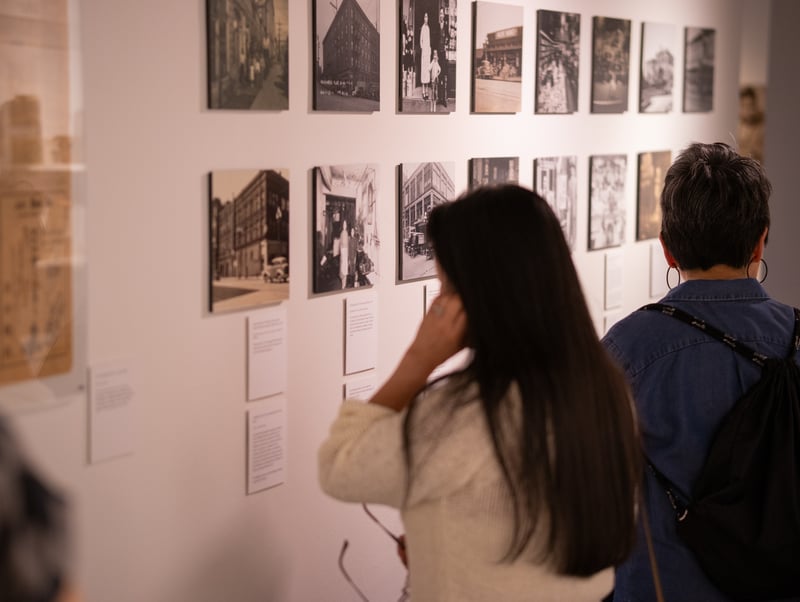
I couldn’t help but notice the signs in Seattle’s Chinatown-International District, which included Chinese translations beside the English street names. The purpose of my visit was to see the Wing Luke Museum—which focuses on the art of the pan-Asian diaspora—and its exhibit “Lost & Found: Searching For Home.” To be completely honest, I was skeptical of the purpose of the museum going in. Why does pan-Asian diaspora art need its own museum? By the time I left, my opinion had completely changed.

The Wing Luke Museum was less conspicuous than I expected. I even walked past it a few times. It was hard to believe such a small place could contain three floors of art and history. I found “Lost & Found” on the first floor, near a sign explaining that the exhibit focuses on the idea of home among the AANHPI (Asian American, Native Hawaiian, and Pacific Islander) community. Entering the exhibit, I immediately noticed a digital screen that displayed the story of Asian immigrants’ lives. This was my first hint that the mediums shown in the exhibit would be unusual. I couldn’t help but notice the Asian diversity on display. The screen not only showed ethnic diversity, but also diversity of experience and background. There were refugees and adoptees, men and women, recent immigrants, and those who had lived in America nearly all their lives. The depth of the museum’s pan-Asian focus began to hit me. 
Read More

Where Life and Death Meet: Representations of Sorrow and Growth in indira allegra’s "Book of Zero"

Review of indira allegra: The Book of Zero at University of Washington School of Art + Art History + Design

Written by TeenTix Newsroom Writer MADDIE ROSALES

Edited by Teen Editorial Staff Member KYLIE LIPPE

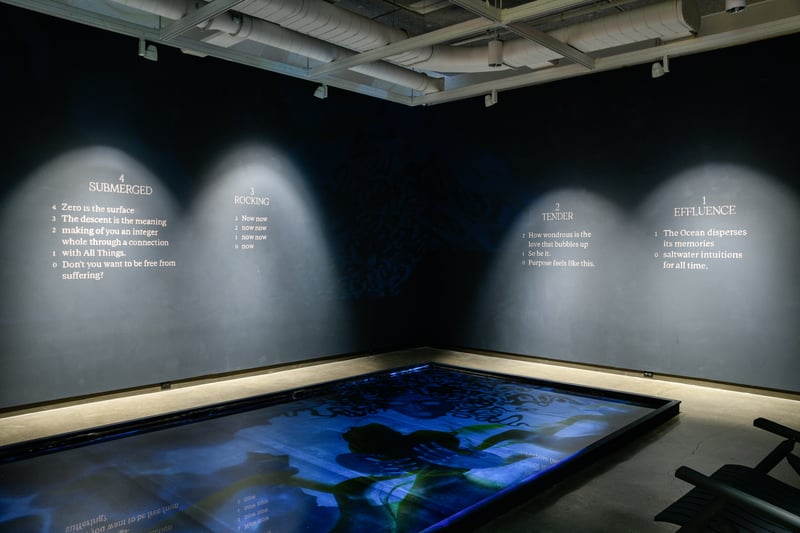
2026 SOA Indira Allegra The Book of Zero Documentation DSC9599

Some art moves you, some art challenges you, and some art strikes you so deeply that you lie awake at night with one vivid image plastered against your skull. Jacob Lawrence Legacy Resident indira allegra’s The Book of Zero does all three. The exhibit presents an immersive experience that steadily leads viewers through a sacred end-of-life ritual for oppressive and violent structures that, in allegra’s own words hand-painted on the walls, “haunt the earth,” as these “imitations of freedom could not keep you alive.”

Established in 2015, the Jacob Lawrence Legacy Residency celebrates Black artists, and aids their transformation of an empty gallery into an active studio space with access to all resources and facilities at the School of Art + Art History + Design and the broader University of Washington community. This year, the gallery welcomed indira allegra, a multidisciplinary visual, tactile, and literary artist.

Read More

"Wallflowers" is a garden through time, not through feeling

Review of Wallflowers at the Frye Art Museum

Written by TeenTix Newsroom Writer ADRIEN HONIG

Edited by Teen Editorial Staff Member CLARA THORSEN

Screenshot 2026 03 30 at 2 17 16 PM

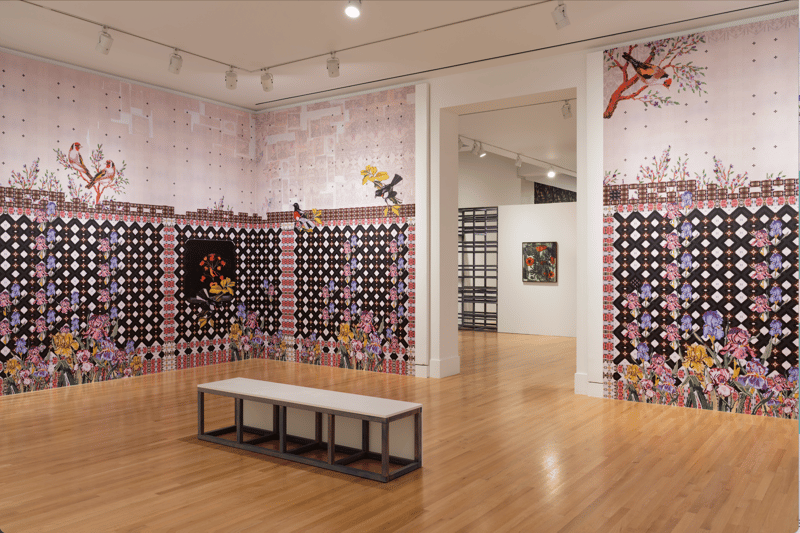
If anyone thought they knew what floral still life is, Wallflowers proves them wrong. At the Frye Art Museum, you will see the traditional oil-painted vase-on-table paintings, but you’ll also notice watercolor splotches reimagined as flowers, intricate wallpapers created on computers, and metal sculptures. Overall, Wallpapers displays art depicting flowers across centuries, artistic styles, and messages in a way that is interesting but difficult to grasp and connect with.

Wallflowers displays a wide variety of visual styles, spanning different artists and time periods, including traditional Dutch still lifes , impressionistic paintings, needle work, and computer distortions. From the Still Life With Tulips, a realistic classic still life depiction of a cactus and lilies, to the brightly colored, cubist Bouquet in Yellow Pot, no matter your artistic taste, you are bound to find something beautiful in the room.John Marshall Gamble . Chrysanthemums , 1889 . Oil on canvas . 28 x 40 in. Frye Art Museum, Gift of George N. Prince, 1999.018.03 . Photo: Jueqian Fang Nick Cave. Grapht , 2024. Vintage metal serving trays, vintage tole on wood panel. 72 x 36 x 10 in. © Nick Cave. Courtesy of the artist and Jack Shainman Gallery, New York

Read More

The Nature of Glass

Review of Chihuly Garden and Glass

Written by TeenTix Newsroom Writer VIOLET SPRAGUE

Screenshot 2026 02 02 at 11 32 22 AM

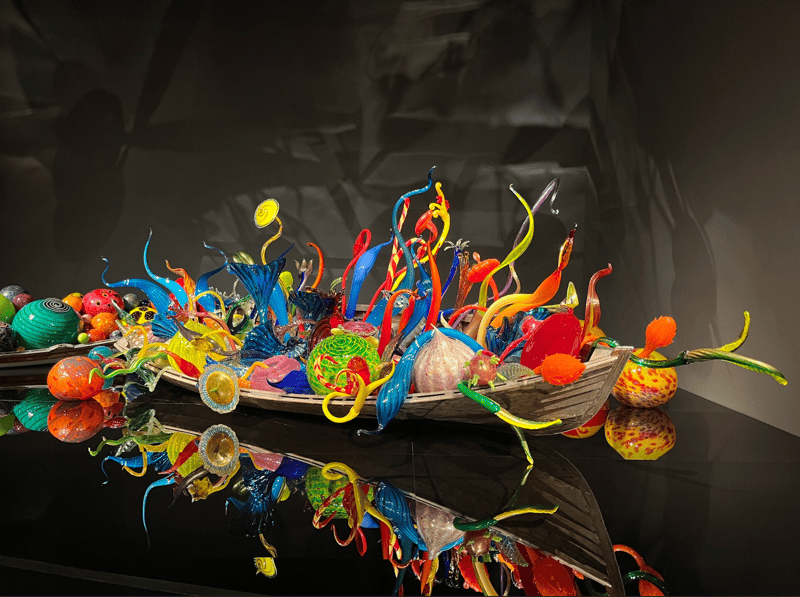
Arguably one of the most famous glassblowers in the world, Seattleite Dale Chihuly is known for pushing the boundaries of glass with his unique style and incredible skill. From intricate sculptures of sea life to grandiose chandeliers, Chihuly Garden and Glass invites the public into Chihuly's world of glassblowing artistry in a truly beautiful and unique way.  

The journey through the museum was truly an adventure, in the way that each turn brought something completely new. Each exhibit had its own unique atmosphere, showcasing the glass art in a different way. The Sealife room centered a huge sculpture representing the Puget sound surrounded by smaller pieces of different underwater elements. The Chandelier room showcased detailed colorful sculptures hanging from the ceiling, each one different from the next. Winter Brilliance highlighted clear, spiky pieces manipulated by colorful lights, conjuring the image of icicles in the winter sun. The variety shown throughout really highlighted Chihuly's versatility as an artist, as well as the versatility of the medium. Glass is essentially a clear, blank canvas, but he brought it to life through shapes and color, conveying complex meaning and sparking emotion in every piece. Winter Brilliance. Photo by Donovan Olsen.

Read More

A Giant Pink Sea Slug Turns Toxicity into Play

Review of Toxic Beauty at Cannonball Arts

Written by TeenTix Newsroom Writer CARTER WONG

Edited by Teen Editorial Staff Member MILO MILLER

Screenshot 2025 12 22 at 11 28 36 AM

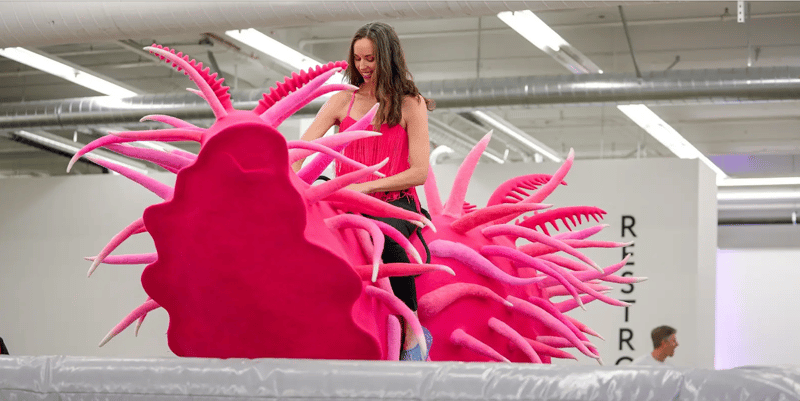
The creature looks strange at first—its pink felt body stretches across the exhibition like a soft form from a fever dream. Although initially daunting, I take a seat on its back area and grip the rope; the creature begins to move back and forth. The room stays quiet but the mood changes as soon as the experience starts. This is Toxic Beauty: Okenia Rosacea Nudibranch at Cannonball Arts.

Cannonball Arts has an open layout. The bare walls, concrete floors, and expansive area makes the space feel easy to move through. There is no pressure to stay quiet or act formal. Visitors drift from piece to piece, as if they are swimming under the sea. The gallery gives room for curiosity without judgment through contemporary art.

Read More

“The MiG-21 Project”: A Jet That Refuses to Be What It Was Built For

Review of The MiG-21 Project at The Museum of Flight

Written by TeenTix Newsroom Writer ELAINE ZHANG

Edited by Teen Editorial Staff Member MILO MILLER

Mi G 21 Lead photo

As I made my way across the Museum of Flight aircraft pavilion, I couldn't help but be awestruck by the vibrant, kaleidoscopic plane standing among the Boeing 727, fighter jets, and various other aircrafts. In front of me was an MiG-21—but not the typical supersonic jet you would expect to see. This one was covered in intricate, colorful beadwork with a story behind it that transcends the mere history of the plane. The jet shimmered as if lit from within, its surface catching every stray beam of light and casting it into something soft and captivating. Its unique form of art repurposes violence into representations of peace by drawing from recurring icons of history and militarization, and through this process, his art becomes both a confrontation with collective memory and a call for cultural healing.

On show now through January 26, 2026, the MiG-21 Project is the culmination of South African artist Ralf Ziman’s 3-part series called Weapons of Mass Production. To understand how a fighter jet can become a monumental beadwork sculpture, we have to understand the evolution of the trilogy itself: first came the AK-47 project and then the Casspir project. Ziman grew up in South Africa during the dark days of Apartheid, a period marked by state-enforced racial divide and an increased militarized police force. His work emerges from witnessing the government's use of violence as means to control, exploit, and separate communities.Photo courtesy of The Museum of Flight.

Read More

Art That Transcends Time: “Water Carries the Stories of Our Stars”

Review of Water Carries the Stories of Our Stars at the Frye Art Museum

Written by TeenTix Newsroom Writer YESSICA OSORIO DURAN

Edited by Teen Editorial Staff Member MARIELA VIDELA

Screenshot 2025 11 24 at 12 42 00 PM

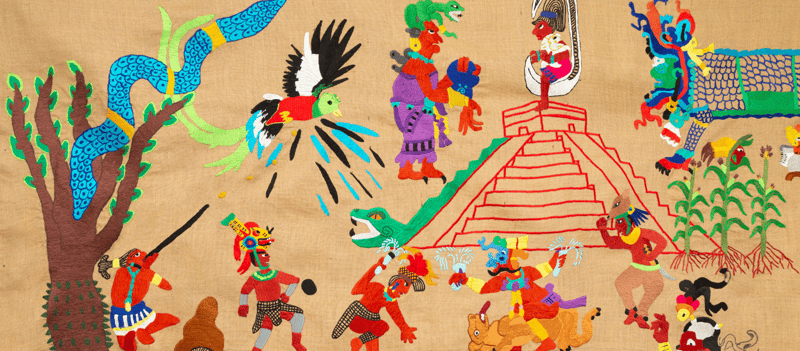
As I stood in Priscilla Dobler Dzul’s exhibition “Water Carries the Stories of Our Stars” at the Frye Art Museum, a memory rose to my mind: “I don’t want to do this anymore. I’m going to watch TV instead,” I said as I abandoned my cloth napkin, with a few threads poorly placed in an effort to form a flower. Sitting beside me, my grandmother only laughed as she adjusted her needle and re-pierced the delicate fabric, decorating her napkin with strands of vibrant blue and neon pink. With no thimble, her calloused hands worked for hours to create the intricately designed napkins, which would hold the fresh tortillas we ate with every meal. Bright flower bouquets and groups of butterflies adorned her napkin by the end, while I was never able to finish a single napkin. Embroidery is one of many fading practices that have fallen victim to the passage of time–something that Dobler Dzul uses art to actively fight against.Priscilla Dobler Dzul. The guardians remind us of what we have forgotten, 2025. Oregon red clay with grog. Dimensions variable. Courtesy of the artist. Photo: Jueqian Fang

In “Water Carries the Stories of Our Stars”, Dobler Dzul presents the viewer with stunning multi-media pieces that bridge the gap between time, nature, and humans, all while telling the story of water loss and environmental injustice that has persisted for generations. Dobler Dzul is an artist from Yucatan, Mexico, and Tacoma, Washington, who uses passed-down techniques to create art that shares her experiences and struggles as a cultural activist. Retaining cultural knowledge is difficult for those who are multicultural, as they are commonly left feeling as if they are “neither from here nor from there”. However, Dobler Dzul manages to maintain a deep connection to her Maya roots. Concentrating on the exploitation of living waters, Dobler Dzul’s art educates the viewer on the abuse faced by both the Maya people and land, while calling attention to the environmental discrimination and ecological crises occurring in both Yucatan and Tacoma. Her work is not limited to a place or style, as she presents the viewer with pieces made from various art mediums, including handblown glass vessels, ceramic sculptures, fiber art, and backstrap weaving, all executed in a way that honors traditional Maya culture. 

Read More

Beyond the Table: My Impressions of SAM’s "Farm to Table"

Review of Farm to Table at Seattle Art Museum

Written by Teen Editorial Staff Member MARIELA VIDELA

Farm to Table installation 6

Farm to Table: Art, Food, and Identity in the Age of Impressionism at the Seattle Art Museum is a visual feast that highlights the importance of food during a period of evolving national values in France. I was drawn to Farm to Table by my love of farmers markets, French culture, and Impressionism As an editor for the TeenTix Newsroom, I was lucky enough to attend the press previewwhich turned out to be a perfect mix of my interests: half art lesson and half history lesson. The exhibit of more than 50 Impressionist paintings and sculptures by artists such as Claude Monet, Pierre-Auguste Renoir, Paul Gauguin, and Eva Gonzalès shows how food became a defining symbol of French history, identity, and pride following the Franco-Prussian War in 1870. I was fascinated by this inextricable link between food and culture, which feels just as relevant today as it was in 19th-century France.

On show now through January 18, 2026, Farm to Table is a traveling exhibit organized by The American Federation of Arts and The Chrysler Museum of Art. It has been adapted for presentation at SAM by curator Theresa Papanikolas, who led the press preview along with co-curators Lloyd DeWitt and Andrew Eschelbacher. Filled with details about French history, the tour helped me fully grasp the meaning behind each painting. Papanikolas started by explaining how Charles-Émile Jacque’s The Shepard and His Flock serves as a nostalgic depiction of farming before industrialization—a theme repeated throughout the exhibit. Meanwhile, DeWitt and Eschelbacher highlighted different connections like the link between French writer Émile Zola’s novel The Belly of Paris and Victor Gabriel Gilbert’s The Square in Front of Les Halles, which depicts the famous food markets Zola wrote about. After the tour, I had the opportunity to talk one-on-one with the exhibit curators, who thoughtfully answered all my questions about Impressionism. As DeWitt pointed out the subtle details and beautifully captured light in Étienne Prosper Berne-Bellecour’s The Remains of the Meal, I found myself sharing his enthusiasm. The beauty of the exhibit’s paintings can only be fully appreciated in person. The Gleaners, 1887, Léon Augustin Lhermitte, French, 1844-1925, oil on canvas, 29 1/2 x 37 3/4 in., Philadelphia Museum of Art, The George W. Elkins Collections, 1924, E1974.4.19, Courtesy of the Philadelphia Museum of Art and American Federation of Arts.

Read More

Complete Sketches But Incomplete Pictures

Review of Alex Katz: Theater and Dance at the Frye Art Museum

Written by TeenTix Newsroom writer JB JAGOLINO and edited by Teen Editorial Staff member RAIKA ROY CHOUDHURY

Frye 20250225 099

Step backstage with Alex Katz’s Theater and Dance as you’re welcomed into the inner workings of an artist. 

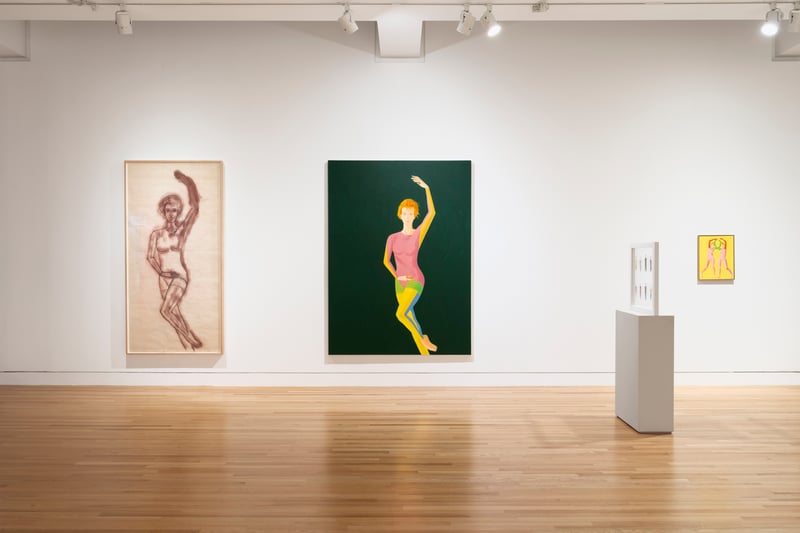
Alex Katz is a painter who over the course of his career, has collaborated with many dancers and choreographers, and has had a grand contribution to theater overall. This exhibit at the Frye allows you to reflect on Katz’s work over the years, featuring anything from thoughtful behind-the-scenes sketches to eye-catching wall-length backdrops. 

Read More

Perfect Imperfection: Pottery Across Generations at the Seattle Art Museum

Review of Meot: Korean Art from the Frank Bayley Collection

Written by TeenTix Newsroom writer CLARA THORSEN and edited by Teen Editorial Staff member JULIANA AGUDELO ARIZA

DSC01514 CC

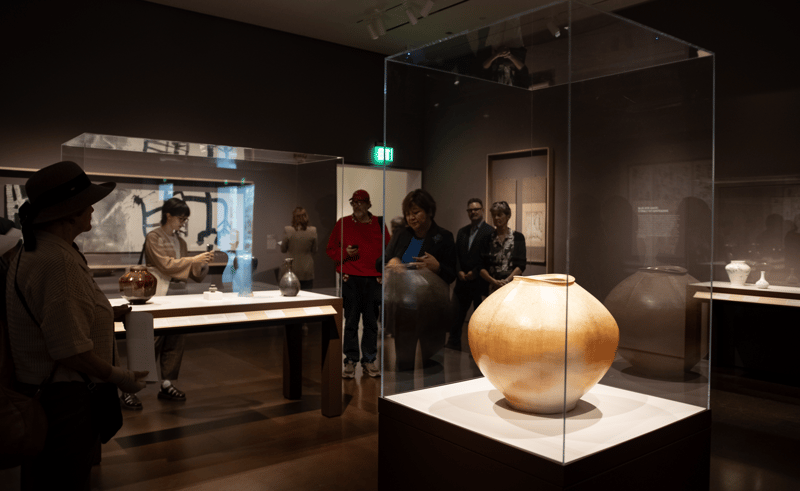
The Seattle Art Museum’s exhibit Meot (멋) displays an impressive assortment of traditional and contemporary works of Korean art, with a focus on pottery. The collection exhibits an array of Korean art: contemporary porcelain jars, 13th century vases and bottles, and ink-on-paper hanging scrolls. Despite the wide, open rooms of the gallery, the exhibit feels intimate and focused, accentuating the intricate details of the pieces. Meot, however, is most distinctive in its focus on the craft, humanity, and history behind its curation and collection. Meot, meaning elegance, beauty, and refined aesthetic sensibility, primarily exhibits Seattle-local Frank Bayley’s donated collection. Bayley (1939 - 2022) was a prolific art collector with an admirable, lasting impact on the community: besides being a longtime trustee and donor of hundreds of works to the Seattle Art Museum, he also co-founded the San Juan Preservation Trust in 1979, which continues to prevent thousands of acres of shoreline from further development on the San Juan Islands. 

Meot’s design is very intentional. Many of the featured artists emulate techniques and elements from the Korean Joseon dynasty (1392 - 1897), from the use of cobalt and white slip to implementing traditional calligraphy, symbolism, and even poetry. The exhibit’s curator, Hyonjeong Kim, is deliberate in her layout design; contemporary pieces are placed adjacent to traditional Joseon dynasty pieces, juxtaposing the time period while simultaneously emphasising the common motifs and influences. One of the exhibit’s stand-out pieces, Younsook PARK’s towering Moon Jar, directly imitates the Joseon “moon jar,” using traditional methods to replicate the pure-white harmonious form. The exhibit places traditional Joseon moon jars in close proximity, allowing the viewer to directly observe the influences and emulated techniques. Moon Jar, 2007, Youngsook PARK,South Korean, b. 1947, porcelain withclear glaze, 20 x 19 1/2 in. (50.8 x 49.5cm), Gift of Frank S. Bayley III, in honorof the 75th Anniversary of the SeattleArt Museum, 2007.86© Young SookPark. Photo: Susan Cole

Read More

Blooming into Human: Faux Flora

Review of Fischersund: Faux Flora at The National Nordic Museum

Written by TeenTix Newsroom writer ELSIE REA and edited by Teen Editorial Staff member RAIKA ROY CHOUDHURY

20241108 fischersund 001

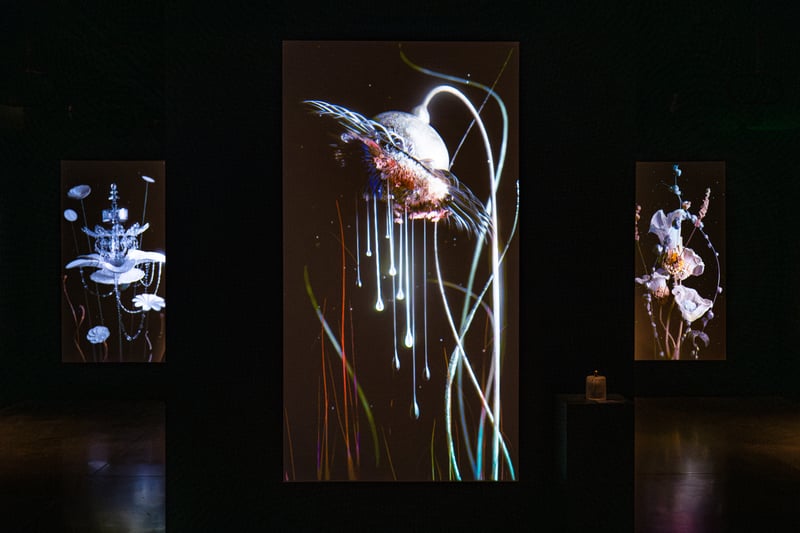
Faux Flora is an all-encompassing, multisensory exhibit at the National Nordic Museum. Fischersund, the creator, is an Icelandic artist collective that creates using sound, scent, light, and visual art. Faux Flora incorporates these elements to tell the story of human life through made-up plants. The viewer is transported to a place where bouquets grow from cereal boxes and glass tears clink together as they hang from the downturned face of a flower. The exhibition covers four stages of life: birth, childhood, adolescence, and death. These stages are represented through the plant life cycle. It is a story that is foreign in its presentation yet all too familiar. There are many words I could use to describe Faux Flora, yet none quite feel adequate. The exhibit felt like an essay, with masterful prose and a vise grip on tonal shifts. 

The exhibit starts eerie and dark. Neutral-toned goo drips from the petals of an alien-like plant species as it sways with a breeze you can almost feel. Birth, represented by germination, is the beginning of the cycle, shown by only two animated flowers. The flowers are mostly shades of light pink and beige. As the smallest section, I found this stage the least memorable part of the exhibition. However, the darkness and overall biological ‘goopiness’ of the section captured the silence and essence of that stage of life in a way that felt a little uncomfortable. Image courtesy of Fischersund.

Read More

Twentieth century Seattle through the eyes of three Japanese-American painters

Review of Side by Side at The Wing Luke Museum

Written by TeenTix Newsroom writer MICKEY FONTAINE and edited by Teen Editorial Staff member SYLVIE JARMAN

2024 Exhibit Side By Side Opening PC Wing Luke Museum 44

In a humble exhibit spanning only three rooms, the Wing Luke Museum brought to light the storied work of 20th century Japanese-American Seattle artists Kamekichi Tokita, Kenjiro Nomura, and Tukuichi Fujii. Although highly regarded in their time, their work has since fallen into relative obscurity. Their burgeoning careers were cut short and their lives shattered by the internment of Japanese-Americans during WWII, from which only Nomura recovered and rebuilt his artistic life. Although their work has reemerged in recent years, their stories remain ones of tragedy that will forever be incomplete. One cannot help but feel frustration at the injustice they faced, and the toll it took on their art. But, along with this lost potential, there is undoubtable beauty and historical significance that we must be grateful for. In a better world, each artist would have soared to greater heights, but in this one all we can do is appreciate what we are left with. 

After coming to the US during a major period of Japanese immigration, these three painters settled in Nihonmachi –or Japantown– during the peak of its artistic ethos. In this cultural microcosm, over 900 businesses operated, five Japanese newspapers were in print, and a vast world of theater, poetry, dance, and music flourished. Nomura and Tokita opened a sign-painting shop on the steep hillside of 6th Avenue, which grew from a small business to a studio and meeting place for local artists. Fujii also started a small business nearby, becoming a fish merchant with his family. The men would often meet one another on weekend sketching trips outside of Nihonmachi.

Read More

Eye Contact: the Assertion of Identity in "Look Me in the Eyes"

Review of Look Me in the Eyes at The Frye Art Museum

Written by Teen Editorial Staff member SYLVIE JARMAN and edited by Teen Editorial Staff member KAYLEE YU

Love Me Love Me Not

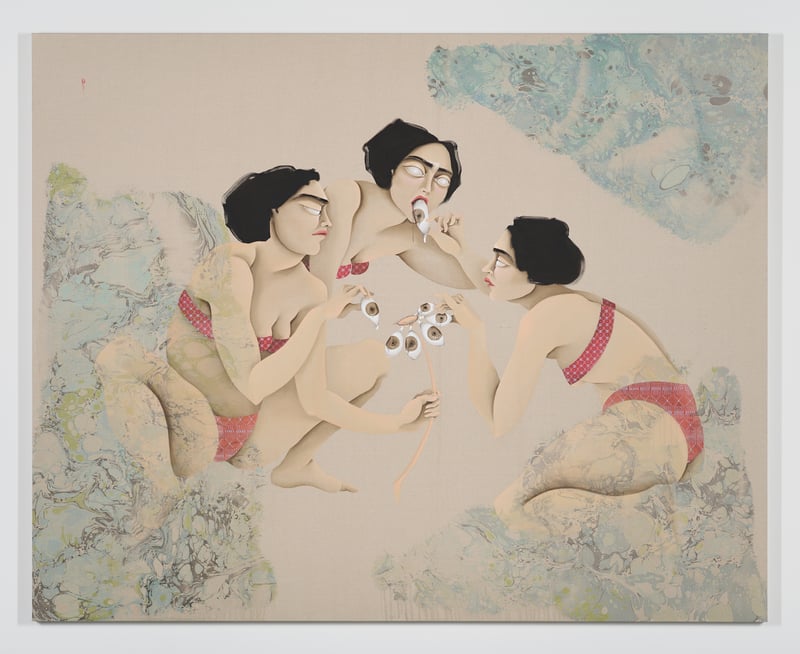
Eyes are always present in Hayv Kahraman’s work. The viewer is confronted as the walls of the Frye Art Gallery stare back at them: contorted figures with empty scleras and plants sprouting eyes as if they were fruits all gaze attentively at attendants of Kahraman’s exhibit Look Me in the Eyes. Kahraman’s work is heavily autobiographical, drawing from her experiences as an Iraqi refugee in Sweden and incorporating the isolation, dehumanization, and perpetual surveillance she endured as an immigrant. Look Me in the Eyes makes the viewer feel as Kahraman felt; watched, scrutinized, and standing opposite a wall of unfeeling onlookers. While one might assume this makes for an uncomfortable gallery experience, Kahraman’s undeniable artistry, sincere emotional honesty, and control over her themes formed an enrapturing exhibit.

Look Me in the Eyes sprawls across three rooms of the Frye’s gallery, walls lined with Kahraman’s portraits of distorted, blank-eyed women. These figures huddle together and grasp for branches pullulating with eyes and mouths, an attempt to reassemble themselves by claiming the irises and bright lips they lack. Her paintings are countered by large sculptures utilizing industrial materials like brick and metal beams. 

Read More

Icons and Ideals: Celebrating the Life and Legacy of Keith Haring

Review of Keith Haring: A Radiant Legacy at the Museum of Pop Culture

Written by TeenTix Newsroom Writer AICHA SINHA-KHAN and edited by Teen Editorial Staff member SYLVIE JARMAN

Haring Header

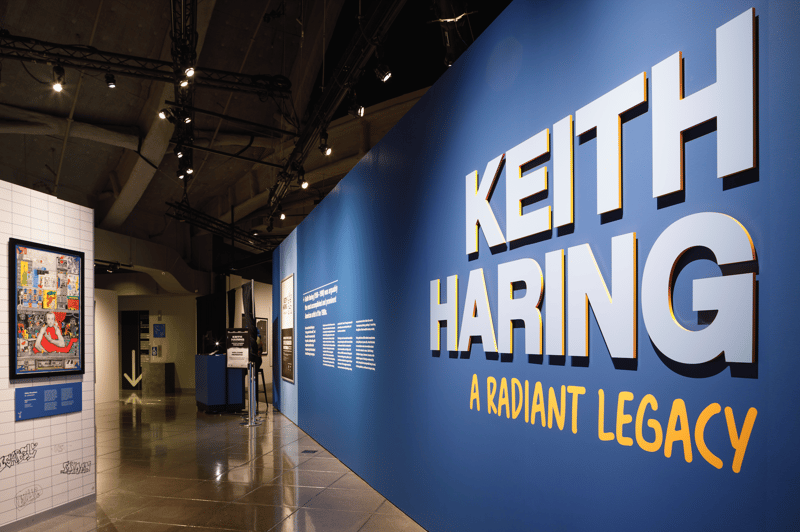
Whether you know it or not, you’ve certainly seen Keith Haring’s art. From being plastered on the subways of New York in the ‘80s to the classic motifs of his featured on brands like Converse and Uniqlo today, it’s no doubt that Haring is a household name, despite the tragic brevity of his career; Haring unfortunately passed away at 30 from complications due to AIDS, only 10 years into his career. The Museum of Pop Culture recently presented a special exhibition called Keith Haring: A Radiant Legacy, with over 240 pieces of his artwork on display, as well as selections from Haring’s personal art collection and work from his close friend and inspiration Angel Ortiz. The exhibit is a thorough, comprehensive overview of the artist’s life, if sometimes improperly structured. 

The first room acts as a landing depot, transporting you straight into the ‘80s.  Cyndi Lauper plays as you walk around the first room and read about Haring in his childhood, early career and life as an art student. Haring’s work is famously recognized for its iconic lexicons, so it’s no surprise that the exhibits start with the early forms of his classic figures, such as his Smiling Face, an iconic early piece which appears in many iterations throughout the gallery. The first room provides context needed to appreciate the rest of his featured work, and elaborates on his signature styles through the three sections of the gallery. Keith Haring: A Radiant Legacy. Photo courtesy of MoPOP.

Read More

They Will Sing Forever: Musical Immersion at Positive Frequencies

Review of Positive Frequencies at Northwest African American Museum

Written by TeenTix Newsroom Writer Callaghan Crook and edited by Teen Editorial Staff Member Aamina Mughal

Copy of PK4 A8968 Large

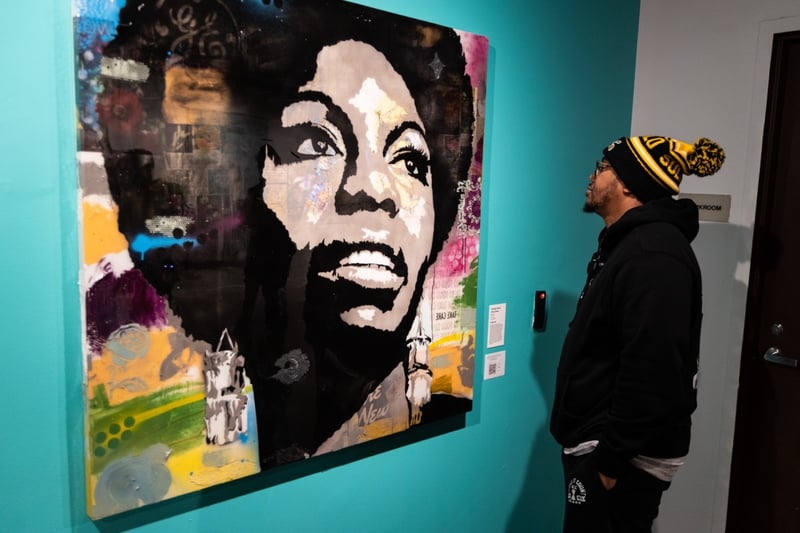
How many museums not only tell grounded stories with honesty and celebration but welcome their visitors with a community living room and a book vending machine? The Northwest African American Museum is advertised as a “museum that uses Black heritage to cultivate healing and hope for all,” and I sensed that as soon as I walked in. In the main exhibit, screens flash with students and community members naming their heroes, claiming the museum as “ours,” and offering it to all as “yours.” Plaques, posters, and art document Black Americans’ victories, setbacks, injustices, pain, joy, and resilience with respect and love. NAAM is a welcoming, celebratory, healing space, and the art and artists of the exhibit Positive Frequencies embody that.

Positive Frequencies features “iconic Neo-POP artist” C. Bennett, along with local artists Eric D. Salisbury, Myron Curry, and Samuel Blackwell. Bennett’s mixed media pieces line half the gallery, while paintings by Salisbury, Curry, and Blackwell line the other half. Music by artists like Aretha Franklin, Ray Charles, and Nina Simone plays, immersing the viewer in the exhibit’s thesis: music can heal by “transcending societal and cultural boundaries.” All four featured visual artists approached that theme differently, but when all the pieces are viewed as a collection, with the music they sought to capture and elevate playing around them, their connection and power are deep and palpable. Photo courtesy of Elite Collective

Read More

The Mundane Made Holy

Review of Raúl de Nieves: A window to the see, a spirit star chiming in the wind of wonder… at Henry Art Gallery

Written by TeenTix Newsroom Writer Sylvia Jarman and edited by Teen Editorial Staff Member Aamina Mughal

20231004 Raúl de Nieves 0093 Medium

“A window to the see, a spirit star chiming in the wind of wonder as you crown me with your iron, aid me on my flight…” it began. It felt like eavesdropping as I listened to the poem be read aloud by the artist himself, Raúl de Nieves, just as I had wandered into the gallery. It was a perfect illustration of de Nieves’ theology: an eclectic blend of spiritualism, Catholicism, self-expression, the cycle of rebirth, life, and death, and the belief that there is wonder to be found in the everyday. I was entirely enchanted by the small fragment that I had seen of de Nieves’ world, enamored by how exuberant it all seemed. The gallery demands that you see it in its entirety for you to see “a glimpse of infinity,” the “foliage of the light,” and “the unreality of the unseen” as the poem outlines.

A Window to the See prompts you to walk through the gallery circularly. Following the 21 stanzas lining the walls leads you in a full circle encompassing the gallery, past each of the three sculptures, beneath the arches of stained glass, with the final stanza leading back into the first seamlessly. The way that the curation plays into the themes becomes even more clear when considering the placement of the three sculptures. Following the poems in order takes you past “Deaths of the Everyday” first, followed by “The Gift” in the middle and “Celebration (Mother)” on the opposite end, nearing the last stanza. The three sculptures are representative of the three stages of life that de Nieves has identified: rebirth, life, and death, and they are presented in that order. This is yet another subversion of commonly held beliefs in Western canon. De Nieves skews this idea by presenting a nonlinear journey through the stages of life, beginning with rebirth and ending in death. Raúl de Nieves: A window to the see, a spirit star chiming in the wind of wonder… [Installation view, Henry Art Gallery, University of Washington, Seattle. 2023]. Photo: Jonathan Vanderweit.

Read More

Resolutions for Arts Consumption


Teen Editorial Staff January 2024 Editorial

Written by Teen Editorial Staff Members Audrey Gray and Kyle Grestel

Laura adai 5 H2ket FL1 LE unsplash

Happy New Year from the TeenTix Newsroom! This year, we challenge you to explore new artistic mediums, genres, and subjects, all for $5 with your TeenTix pass.

If you’re interested in branching into the visual arts, the Henry Art Gallery has more engrossing, novel exhibitions coming through 2024. Raúl de Nieves’s A window to the see, a spirit star chiming in the wind of wonder… opened at the Henry in September of 2023 and will continue well into summer. We suggest opening your year with the one-of-a-kind multimedia experience to set the tone for many more explosive experiences to come. Music’s rich but often-unexplored history is getting a spotlight at the Northwest African American Museum through their Positive Frequencies exhibit. Check it out to learn more about how music plays a role in Black History.

Read More

Elegance in Aluminum

Review of Steinunn Þórarinsdóttir: Wayfinders at National Nordic Museum
Written by TeenTix Newsroom Writer Eme Graunke and edited by Teen Editorial Staff Member Daphne Bunker

Wayfinders 1

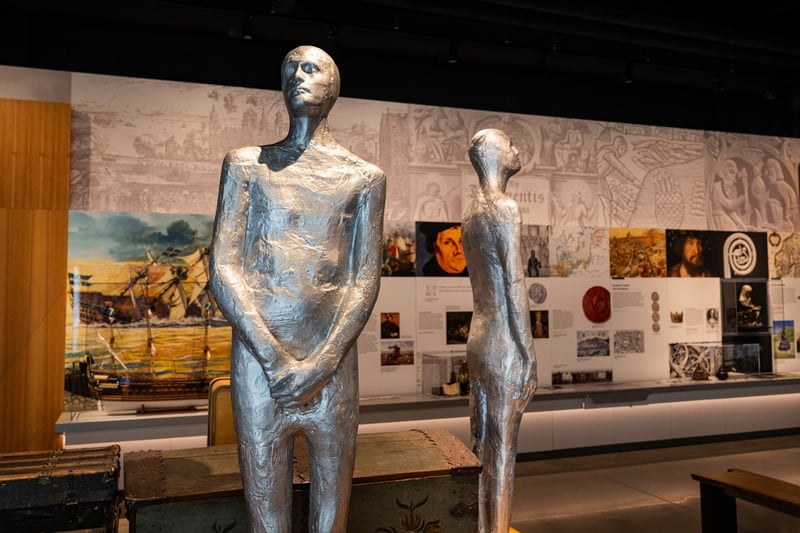
Steinunn Þórarinsdóttir: Wayfinders, showing at the National Nordic Museum until January 28, is an abstract exhibition about humankind's connection with nature. It features aluminum humanoid statues scattered throughout the museum; some are on the second-floor bridges, surveying the entrance like sentries. Some are worked into other exhibitions, hidden in plain sight; others are secreted away in alcoves, and others still are out in the open or bracing themselves on the wall, waiting for viewers to notice them.

The exhibition also includes a collection of rough watercolors and the artist's summary of what these figures are meant to show. This summary and the watercolors add crucial context; without the information in the overview, the sculptures would still be beautiful, but their intended message wouldn't be as clear. The watercolors depict the statues interacting with invisible forces of nature. photo credit: @photobakery

Read More

De/Reconstruction - How Positive Fragmentation Challenges High Art

Review of Positive Fragmentation at Bellevue Art Museum
Written by TeenTix Newsroom Writer Sylvia Jarman and edited by Teen Editorial Staff Member Aamina Mughal

BAM Positive Fragmentations

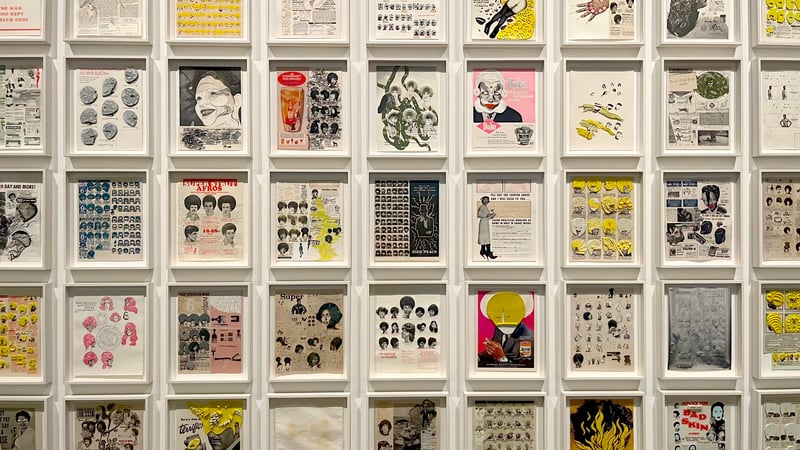
The concept of “positive fragmentation” existed long before the exhibition at the Bellevue Art Museum. The term was coined by the feminist art critic Lucy Lippard, in her 1978 essay, Making Something from Nothing. Lippard’s essay dissects the disparity in male and female representation in high art. Lippard notes that art produced by women tends to be labeled as hobbyist and nothing more by those discussing high art. She goes on to state that the same can be said for certain art mediums, specifically printmaking, as it is seen as replicable and, thus, less rare or valuable. With Lippard’s idea here in mind, there is a clear intersection for female artists whose primary medium is printmaking, who have gone almost entirely overlooked because of this. Enter “positive fragmentation,” a term Lippard uses to describe the aesthetic of these artists and what their work accomplishes. “Positive fragmentation” is described as eclectic, bombastic, the “collage aesthetic,” and Lippard posits that it lends itself incredibly well to marginalized artists because of its inherent willingness to deconstruct and then reconstruct the notions of high and low art. The exhibit Positive Fragmentation, bearing the same name as Lippard’s theory, aims to the ideas she had outlined, showcasing over 200 prints by 21 contemporary women printmakers that demonstrate the sheer power of the medium, totally averting the preconceived notion that prints are incapable of being expressive and unique.

The exhibition is found on the third floor of the Bellevue Art Museum (BAM), a sprawling space lined wall-to-wall with prints from remarkable artists such as Betye Saar, Wendy Red Star, Louise Bourgeois, and many more. Exhibiting so many pieces in a relatively small space is a difficult task. For many other gallery spaces, the exhibition would have felt confusing and hectic, yet the BAM handles it incredibly well. There is a good flow to the gallery, with the pieces displayed in groups of several smaller subcategories: time, bodies, art history, meaning, subtext, and critique. With this method of display, the viewer feels a sense of cohesion, and it makes the task of displaying such a sheer number of pieces much less daunting. BAM is a smaller space, but this is by no means a negative quality. To an exhibition such as Positive Fragmentation, such a small and intimate setting lends itself well. It makes the exhibition feel all the more personal like the viewer has a greater opportunity to connect with the art, and it neatly avoids the hollow or empty feeling that certain larger spaces often have. Photo courtesy of Coco Allred

Read More

Go Beyond the Great Wave: Hokusai, History, and the Art of Curation

Review of Hokusai: Inspiration and Influence at Seattle Art Museum
Written by TeenTix Newsroom Writer Kaylee Yu and edited by Teen Editorial Staff Members Anna Melomed and Kyle Grestel

P1311042 CC 1

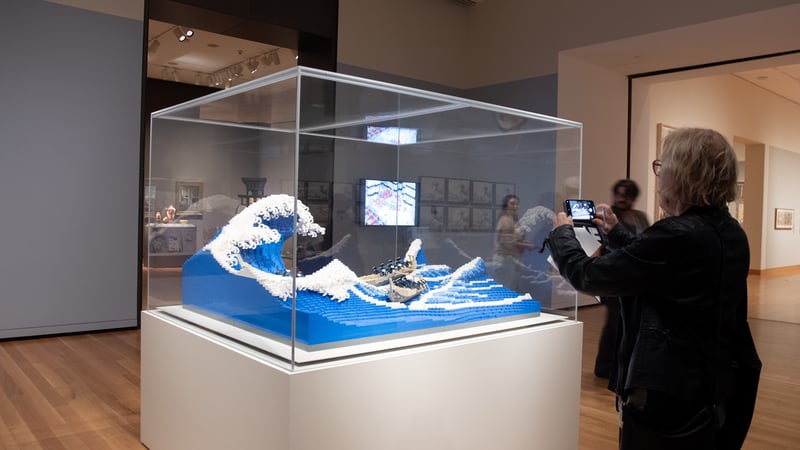
Katsuhika Hokusai’s The Great Wave off Kanagawa (known more widely as The Great Wave) is an instantly recognizable icon of pop culture. Everyone knows the deep Prussian blue waves, crested with curling white seafoam, standing stark against a tan-tinted sky. In the nearly 200 years since the 1830-‘31 production of the piece, it has been studied, recreated, and studied again, with The Wall Street Journal even calling it “possibly the most reproduced image in the history of all art.”

But there is infinitely more to Hokusai’s legacy than this 10-by-15-inch woodblock print. Katsushika Hokusai, Under the Wave off Kanagawa(Kanagawa-oki nami-ura), also known as theGreat Wave, from the series Thirty-six Views of Mount Fuji (Fugaku sanjûrokkei), about1830–31 (Tenpô 1–2)Museum of Fine Arts, Boston, William Sturgis Bigelow Collection, 11.17652Woodblock print (nishiki-e); ink and color on paper

Read More

Login

Create an account | Reset your password