
Blast Off Into Space with Sun Ra and the SRJO
Review of The Music of Sun Ra at Seattle Repertory Jazz Orchestra
Written by TeenTix Newsroom Writer ALICE CHEN
Edited by Teen Editorial Staff Member THIEN-NHI NGUYEN

As a self-proclaimed newbie at jazz music, I have had little experience with seeing live jazz. But when I caught wind that the Seattle Repertory Jazz Orchestra (SRJO) was hosting a concert at the Illsley Ball Nordstrom Recital Hall in mid-April, I jumped at the chance to finally see live jazz for the first time—a change from my usual jazz Spotify playlists or classical music concerts. This concert, The Music of Sun Ra, featured both the music of Sun Ra and songs by other musicians like Orrin Evans and Trudy Pitts.
Raised in Birmingham, Sun Ra was a one-of-a-kind jazz composer. Famous for his distinctive and elaborate wardrobe, Sun Ra meticulously designed his costumes to reflect the interstellar theme of his music while simultaneously incorporating African and Egyptian motifs in his draping robes and space helmets. His music reflects both interspacial themes and “free jazz”—a jazz style that encourages improvisation instead of strictly playing written notes.
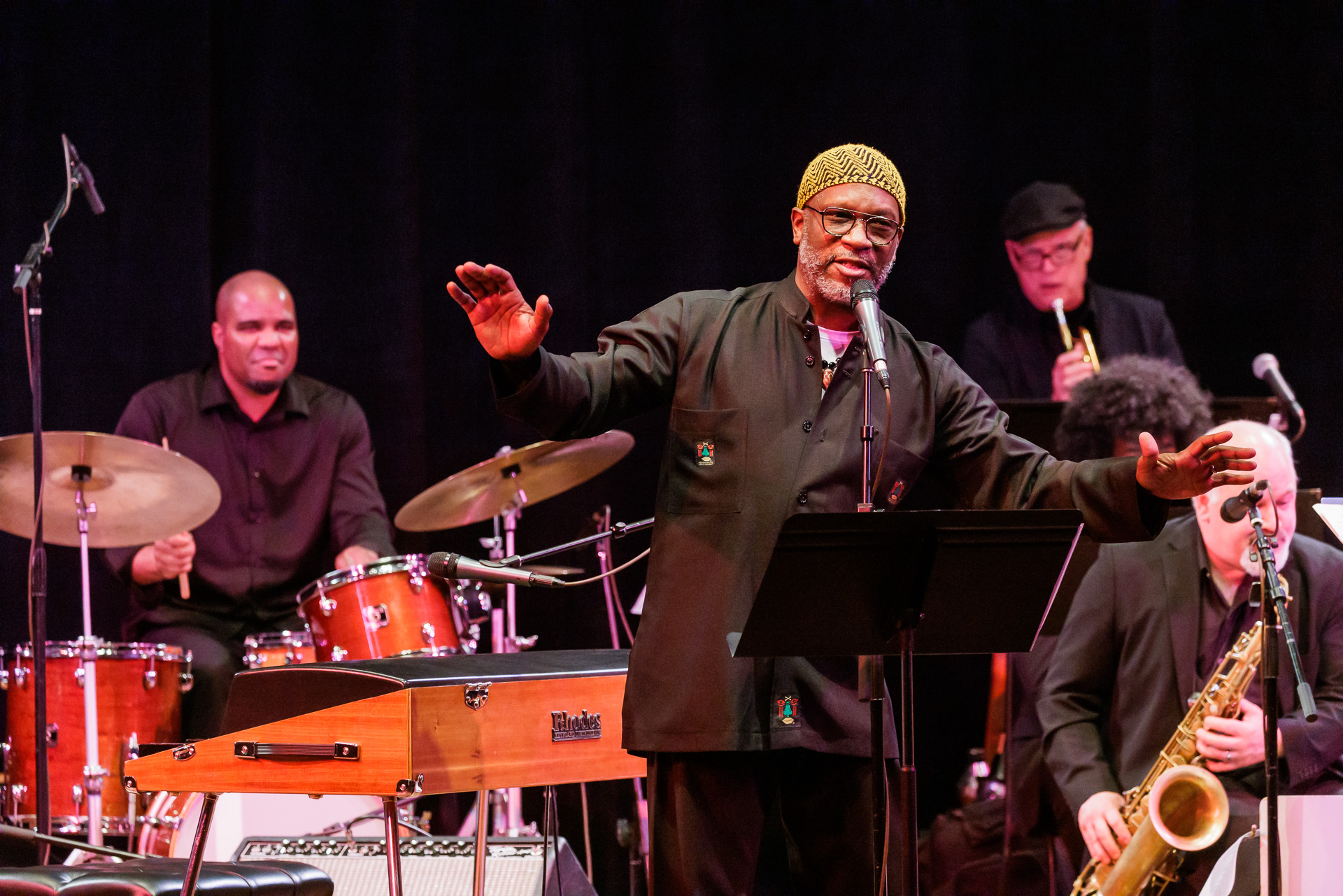
The SRJO was guest directed by Orrin Evans, who composed several of the songs performed that afternoon. A conductor, composer, and pianist, Evans brought an infectious atmosphere to the hall through his brief anecdotes, claps, and snaps. An arrangement by David Gibson of Blessed One by Trudy Pitts, a jazz pianist from Philadelphia who Evans admires, closed off the afternoon.
As I sat in my seat that Saturday afternoon, I could not help but take in the electric atmosphere—buzzing with anticipation and ready to finally see the guest conductor. Conversations flowed around me: some by experienced jazz players, and some by newbie jazz enthusiasts, just like me. When the lights began to dim, conversations tapered off. Then, we blasted off into space.
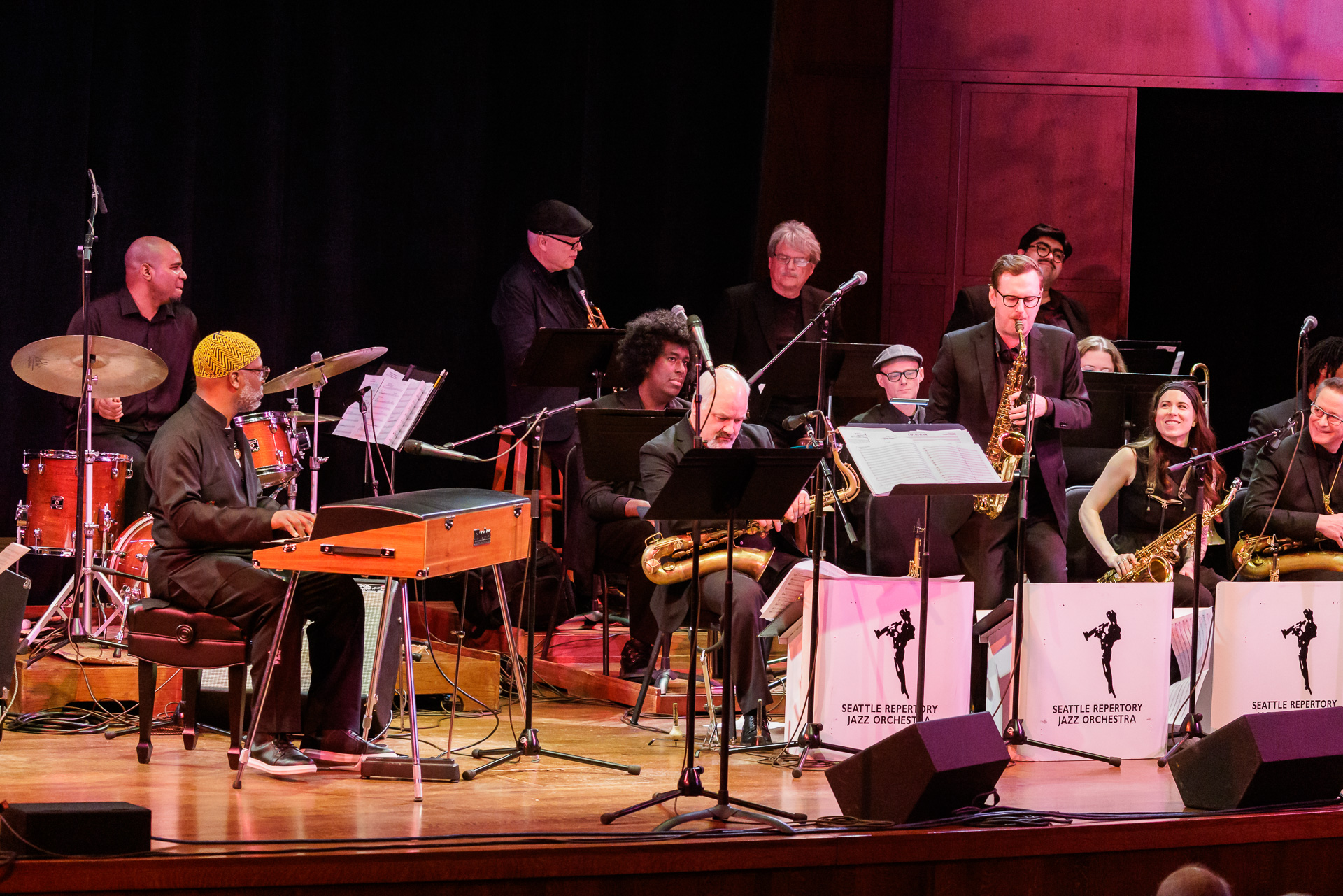
A single musician walked to the piano that sat on the left of the stage. He adjusted his music and bench, before abruptly strumming the uncovered strings of the piano, catching the audience off guard. Startled, I jumped back in my seat — and ended up sitting at the edge of my seat for the remainder of the show, ready for any other surprises that might suddenly appear.
The Sun Ra Suite began with an ambiguous introduction by Evans, which contributed to the mysterious atmosphere of the music. The suite began with “Space Is the Place”, during which the audience was transported to, well, space. The phrase “space is the place” was repeated throughout the band, from the director, Orrin Evans, to the other instrument groups, like the brass section. The music reflected the interstellar atmosphere: A nasally sound from the synthesizer, coupled with the drumset’s steady beat and bass notes from the trombones, transported me into what I felt outer space would sound like.
My personal favorite was “Hour of Parting” from the Sun Ra Suite, which was a laid-back, almost lyrical song, contrasting with the two heavy-hitting songs that preceded it. The solos blended well with the instruments backing them, feeling like a conversation with the ensemble instead of a direct confrontation, like the solos in “Space is the Place” or “Rocket Number Nine”.
I also loved the interactivity of the show. In the music concerts I’ve attended at Benaroya Hall, I’ve rarely ever experienced a time when the audience was encouraged to participate and sing along. But as “Interplanetary Music” played during this concert, I found myself clapping along to the rhythm of the song and soloists. As the concert came to an end, Evans motioned for the audience to join the band in singing the phrase “Space is the place,” neatly wrapping up the show.
Despite the engaging atmosphere , I did struggle with maintaining focus throughout some songs. As a classical musician, I am used to recurring melodies, stark dynamic contrast, and subtle interplay between various sections of the orchestra. But in songs like “Rocket Number Nine,” where the overall dynamic was loud and contained many distinct melodies from different soloists, I found myself getting lost in the sound and overwhelmed by the sheer amount of different notes that were being played at once.
Yet through it all, I gained a stronger appreciation for jazz music: every musician in the band had their own moment to shine and experiment with the types of sounds their instruments could play. For example, the clarinetist took off their mouthpiece to create a distinct, angled sound, and the bassist used their bow in circular, rather than horizontal, motions to achieve a scratchy sound.
These solos and improvisations made Sun Ra’s emphasis on “free jazz” stand out to me. Unlike classical music, where musicians are confined to the notes on scores, jazz music enables musicians to truly explore not only the music, but themselves in the process. In hindsight, the theme of “space” was perfect. The concert subtly highlighted the exploration musicians could take with jazz, in tandem with the exploratory characteristic of space itself.
While I had a fantastic time at the show, I noticed little to no youth attendance, which was disheartening because I felt the show could appeal to a diverse set of audiences, young and old. TeenTix allows teens to explore and experience new forms of art, like jazz, for only 5 dollars. Furthermore, events like these—where arts organizations like the SRJO personally partner with TeenTix—exemplify how much arts programs care about youth engagement. I had an unforgettable time exploring jazz music alongside an incredibly welcoming SRJO. So next time, do not be afraid to step into the unknown realm of jazz: Sometimes, all you have to do is to take a trip to outer space.
Lead photo: SRJO with Orrin Evans, April 2026. Photo by Jim Levitt.
The TeenTix Newsroom is a group of teen writers led by the Teen Editorial Staff. The Teen Editorial Staff is made up of 5 teens who curate the review portion of the TeenTix blog. For each review, Newsroom writers work individually with a teen editor to polish their writing for publication. Every month, Newsroom writers have the opportunity to pitch additional arts events like this one, expanding the TeenTix Blog's coverage.
The TeenTix Press Corps promotes critical thinking, communication, and information literacy through criticism and journalism practice for teens. For more information about the Press Corps program see HERE.