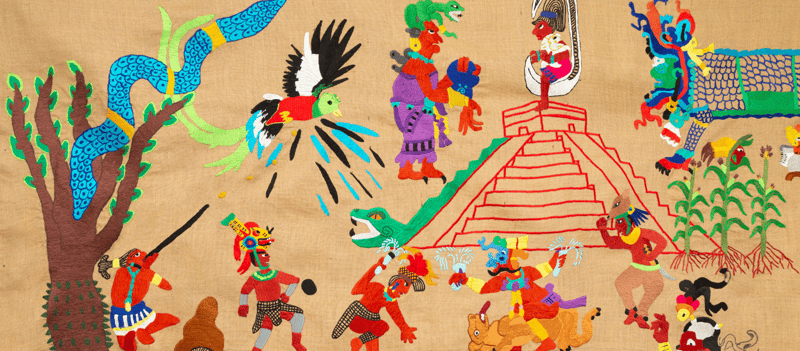
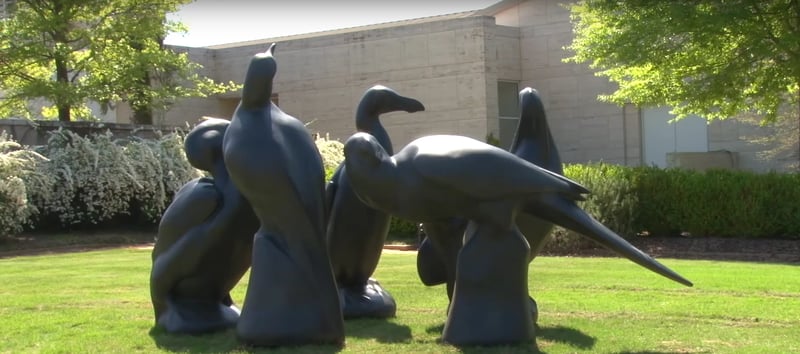
As I stood in Priscilla Dobler Dzul’s exhibition “Water Carries the Stories of Our Stars” at the Frye Art Museum, a memory rose to my mind: “I don’t want to do this anymore. I’m going to watch TV instead,” I said as I abandoned my cloth napkin, with a few threads poorly placed in an effort to form a flower. Sitting beside me, my grandmother only laughed as she adjusted her needle and re-pierced the delicate fabric, decorating her napkin with strands of vibrant blue and neon pink. With no thimble, her calloused hands worked for hours to create the intricately designed napkins, which would hold the fresh tortillas we ate with every meal. Bright flower bouquets and groups of butterflies adorned her napkin by the end, while I was never able to finish a single napkin. Embroidery is one of many fading practices that have fallen victim to the passage of time–something that Dobler Dzul uses art to actively fight against.Priscilla Dobler Dzul. The guardians remind us of what we have forgotten, 2025. Oregon red clay with grog. Dimensions variable. Courtesy of the artist. Photo: Jueqian Fang
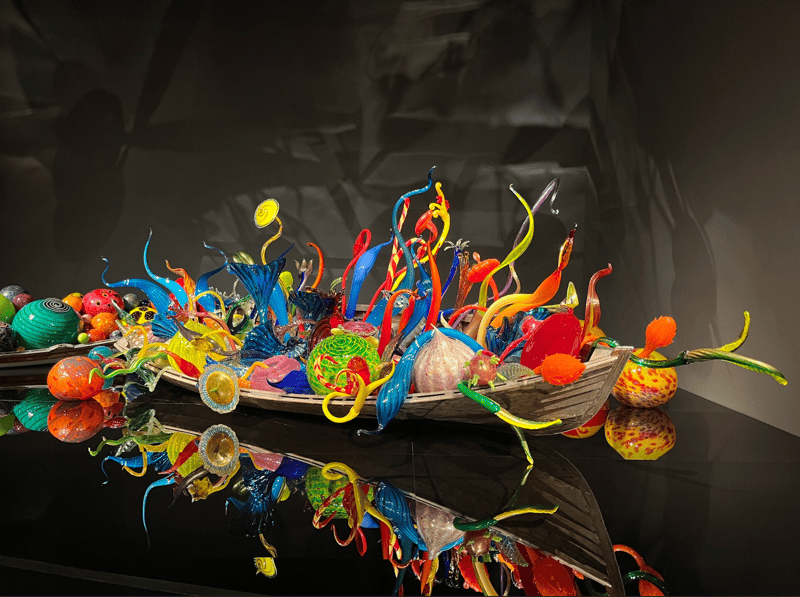
In “Water Carries the Stories of Our Stars”, Dobler Dzul presents the viewer with stunning multi-media pieces that bridge the gap between time, nature, and humans, all while telling the story of water loss and environmental injustice that has persisted for generations. Dobler Dzul is an artist from Yucatan, Mexico, and Tacoma, Washington, who uses passed-down techniques to create art that shares her experiences and struggles as a cultural activist. Retaining cultural knowledge is difficult for those who are multicultural, as they are commonly left feeling as if they are “neither from here nor from there”. However, Dobler Dzul manages to maintain a deep connection to her Maya roots. Concentrating on the exploitation of living waters, Dobler Dzul’s art educates the viewer on the abuse faced by both the Maya people and land, while calling attention to the environmental discrimination and ecological crises occurring in both Yucatan and Tacoma. Her work is not limited to a place or style, as she presents the viewer with pieces made from various art mediums, including handblown glass vessels, ceramic sculptures, fiber art, and backstrap weaving, all executed in a way that honors traditional Maya culture.