
Flight Risk: The Soaring Acrobatics of Circa
Review of Circa: Duck Pond at the Meany Center for the Performing Arts
Written by TeenTix Newsroom Writer ELENA MILLER
Edited by Teen Editorial Staff Member MARIELA VIDELA
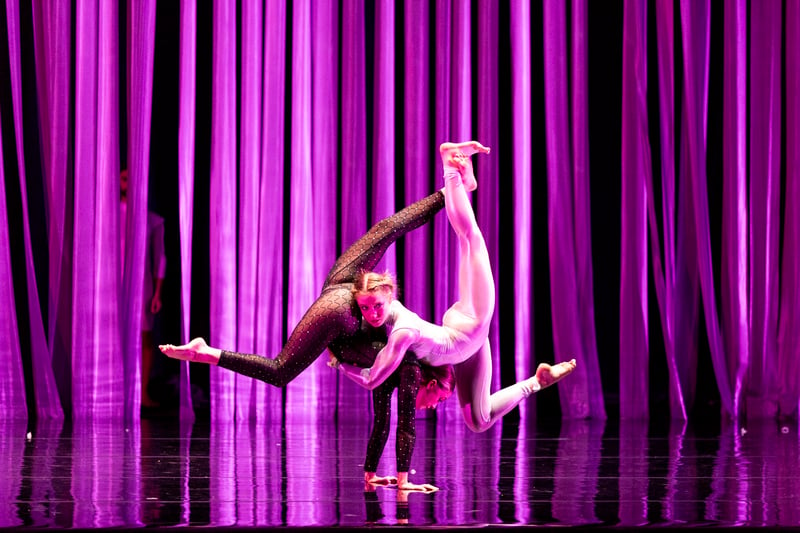
Duck Pond is a high-flying acrobatic mashup of the beloved ballet classic Swan Lake and the fairy tale “The Ugly Duckling.” Performed by Circa, a very talented group of Australian circus acrobats, Duck Pond captures the drama and emotion of trying to find your place in the world through stunning acrobatic feats.
The hopeful Ugly Duckling catapults her way into the Prince’s party, seeking to gain respect from the court and the attention of the Prince. She catches the Prince’s eye, but also the critical gaze of the court. Her friendly gift of a tower of pillows ends with a pillow fight and her being left alone to clean up a feathery mess. Abandoned by the glamorous court, the Ugly Duckling is consoled by her loyal tribe of mop-wielding, oversized-overall-wearing duck companions. Hilarity ensues. When the Prince comes to find the Ugly Duckling, he is captivated by a new arrival: the elegant and dangerous Black Swan and her solitary aerial acrobatics. Fueled by her desire for belonging, the Ugly Duckling throws herself into a group of swans and attempts to fly. She tries again and again until the swans accept her and she takes flight, discovering she has been a swan the whole time. Then, in a twist from the anticipated storyline, the Black and White Swans choose each other over the Prince, leaving him confused and self-pitying. The show pares down the plot of the original ballet to focus on daring acrobatic feats, which show inner dialogues and passionate emotions between the characters. Just when the plot seems to be resolved, an unexpected third act begins with an acrobatic swan fight. After this, the performers dismantle the set and perform a series of delightful circus acts entirely unrelated to the story.
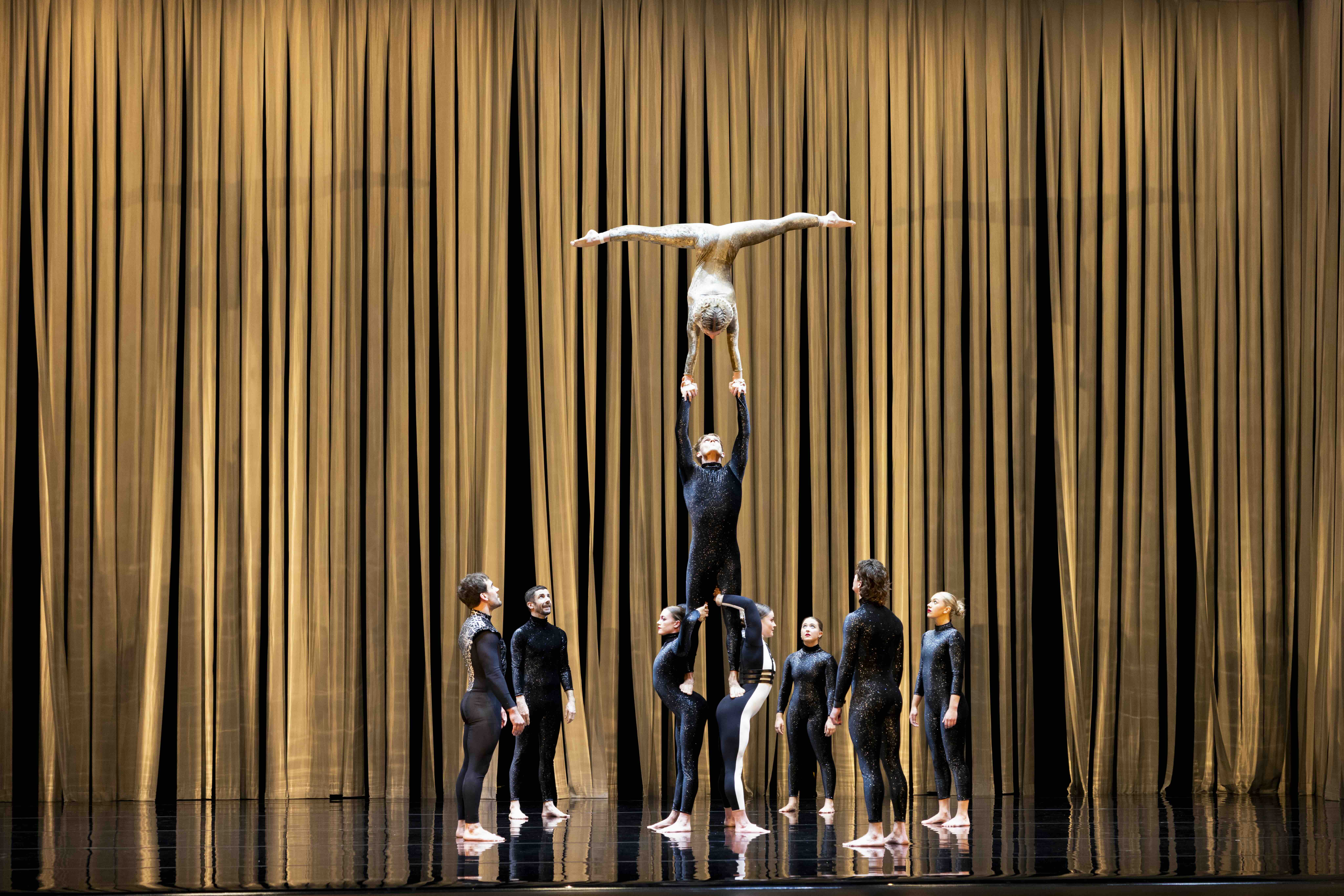
The minimalism of Duck Pond’s technical aspects focused attention on the strength and talent of the performers. The props consisted almost entirely of a few different trapezes, some fabric, a pole, and duck feet, which gave the performance a feeling of simplicity and authenticity. The constant acrobatic feats mimicked the equally constant movement of nature—its unpredictability, freedom, and strength—which made every moment without acrobatics more dramatic and charged with anticipation. Emphatic and beat driven, the music was punctuated by brief, highly recognizable refrains from Swan Lake, which signified the most emotional and triumphant moments in the show.
While the technical aspects emphasized the drama of Duck Pond, the costuming revealed major themes, such as opposition and choosing sides. Half way through the show, the ensemble changed their leotard color from black to white, showing the shift of power from the Black Swan to the White Swan. This dynamic was emphasized by the character of Cupid, whose costume was both black and white. Instead of an arrow, Cupid used a gray feather to cause the characters to fall in love. The exception to this dramatic color scheme was the duck army—the primary comic relief in the show. Their oversized yellow overalls and giant feet gave them grounded, floppy movements that were a direct contrast to the gracefully airy motions of the swans. However, during the dismantling of the third act, these sharp contrasts fell away as the performers stripped down to beige leotards—returning to nature themselves, with nothing between them, the audience, and their abilities.
While dramatic and humorous, to me this work was also deeply emotional. The Ugly Duckling’s journey through rejection and her eventual achievement of flight showed the power of the human body and the beauty of nature. The scenes where the Black Swan performed her lone aerial trapeze performance gave depth to her character, showing that she was not merely a cruel and alluring trickster, but a lonely and intensely emotional being. When the Black and White Swans chose each other instead of reducing themselves to be with a flightless prince, it spoke of the power of overcoming prejudice. Flight, a major theme throughout the story, was shown beautifully through seemingly effortless acrobatics. Often, it seemed like the acrobats were hardly touching the ground.
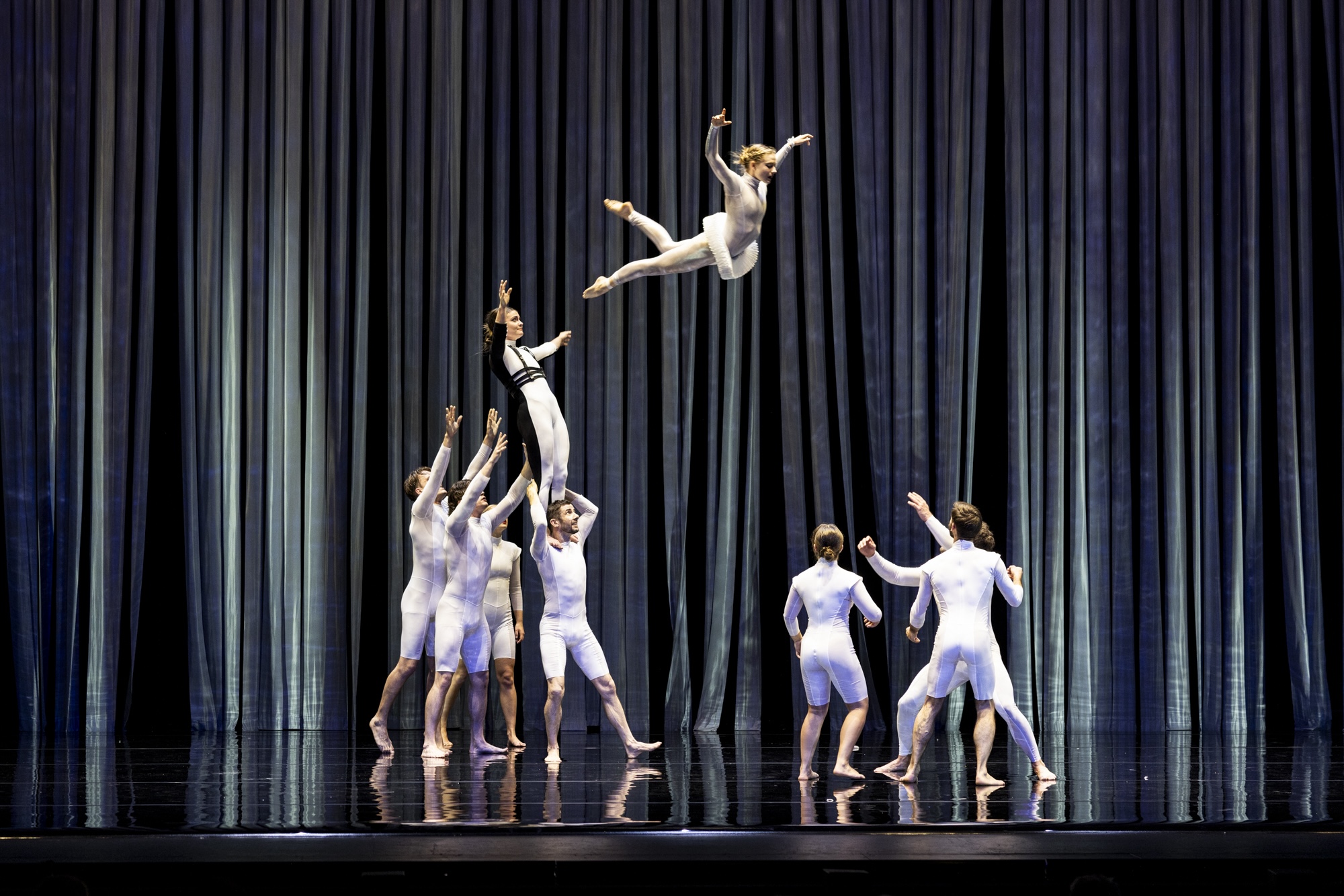
One of the deepest impressions I was left with was the emphasis on risk. Not only were the acrobats taking a risk every time they performed a stunt, but the narrative also highlighted the importance of taking risks to create connections with others. The recurring motif of feathers symbolized this risk. When the White Swan brought her feathers to the court, she was rejected and the feathers were left on the stage, introducing a risk to the acrobats. Similarly, Cupid’s feather showed the risk of love and trying to form connections: It is risky to try to fly and to show yourself to others. However, despite its dangers, Duck Pond reminds us of the necessity of connection and belonging. Without other acrobats, many of the amazing feats would not have been possible. The acrobats relied on and trusted each other to perform, embodying the story’s message about the importance of finding people who understand, support, and uplift you.
Questions often arise about the relevance of traditional art forms such as ballet and opera. Acrobatics are just as old of an art form as ballet and opera, yet Duck Pond seemed fresh and relevant to me. In the age of CGI and artificial intelligence, stunts can easily be faked, and the emotional experience of viewing virtual content is lessened by the fact that we know it isn’t real. To see people in real life who are able to perform seemingly impossible feats was an emotional experience wholly different from anything I have ever felt before. I felt deeply connected to the performers. I felt joy when they triumphed, I felt awe at their accomplishments, and I even felt nervous when they attempted a particularly challenging trick. It isn’t just the timelessness of the stories that these art forms tell, but the use of extraordinary, real human bodies to tell them that makes acrobatics just as, if not more, important now than they were before the age of artificial content. Through both its medium and story, Duck Pond provides the raw, human connection that seems to be missing from so much of the content we consume today. Becoming your own swan is a flight and a risk we can all connect to.
Lead photo: Circa in Duck Pond. Photo by Pia Johnson.
The TeenTix Newsroom is a group of teen writers led by the Teen Editorial Staff. The Teen Editorial Staff is made up of 5 teens who curate the review portion of the TeenTix blog. For each review, Newsroom writers work individually with a teen editor to polish their writing for publication.
The TeenTix Press Corps promotes critical thinking, communication, and information literacy through criticism and journalism practice for teens. For more information about the Press Corps program see HERE.