
"Legendary Children" Defying Gravity in Heels: Where Runway Becomes Resistance
Review of Legendary Children at Seattle Art Museum
Written by TeenTix Newsroom Writer ROWAN SANTOS
Edited by Teen Editorial Staff Members MARIELA VIDELA and KYLIE LIPPE
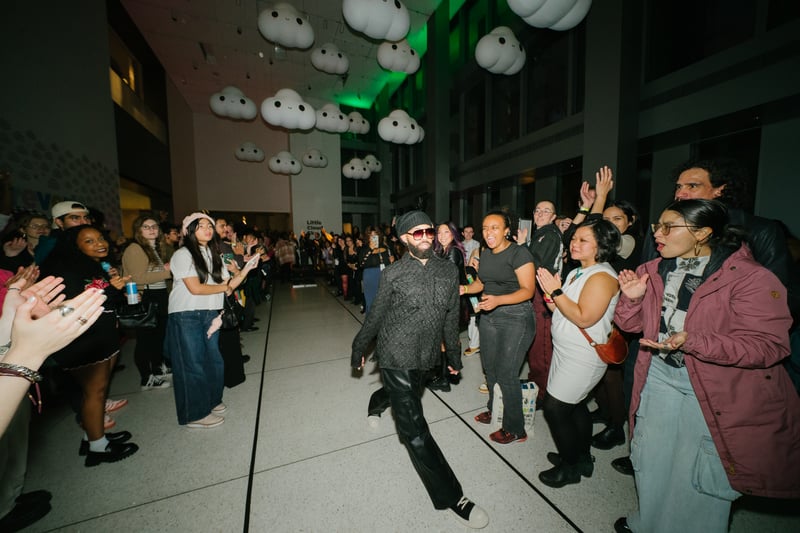
Legendary Children are fearless—beaming endlessly with confidence and stride, shaping the conversation of art—while pioneering unflinching change. Legendary children rise under any circumstances.
As I entered the Seattle Art Museum, I was immediately enraptured by the garments surrounding me. Every attendee was adorned in eloquent, vibrant clothing. Beside them, I felt almost undressed, standing in quiet awe. I had never witnessed a crowd so effortlessly fashionable. Even before the night began, I knew the Legendary Children would be sensational—but once the music swelled and the crowd parted, anticipation gave way to reverence as the legendary performances unfolded before me.
On November 21, the Seattle Museum held the 10th Annual Legendary Children event. Legendary Children depicts the beauties of queer Black and Indigenous People of Color. This year’s theme was “Wicked” to reflect Queer BIPOC individuals defying gravity and instilling brilliance. This free celebration for all ages conjured an unforgettable night of drag royalty, ballroom enchantment, DJs, art, and unapologetic queer joy. Over seventeen artists performed their multi-dimensional art forms—each occurring spontaneously. Julian Everett and Alexa Manilla served as engaging MCs, keeping the energy electric throughout the night. Every moment overflowed with queer brilliance as performances erupted across the museum—onstage and within art galleries.
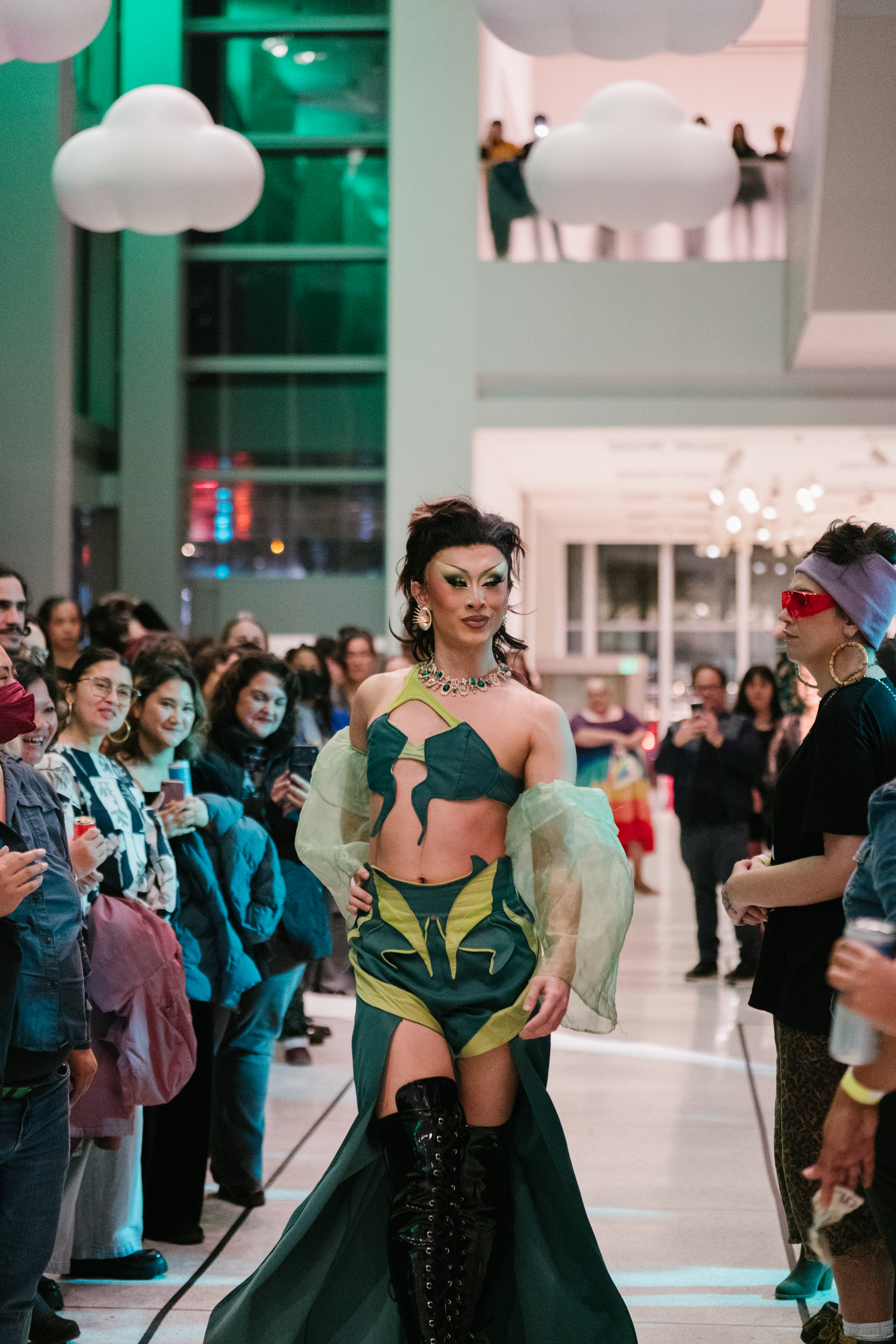
Ball and Drag were the central inspirations throughout the performances. Drag involves dressing in clothes and makeup that emphasize gender identity. Ball culture and the fierce art of drag that flourished within it emerged as a radiant act of resistance and reinvention within queer communities, particularly among Black and Latinx LGBTQ+ people in Harlem, during the early 20th century. What began as small clandestine gatherings evolved into dazzling underground balls where participants crafted their own “houses” and strutted, vogued, and performed in displays of style, gender play, and self-defined beauty. It was one of the first spaces that fostered agency and expression in queer communities—still thriving as of today.
I began by exploring the performances in the upstairs art gallery. The first performance was by vocalist-songwriter Jayza, who sang her own melody. Her voice was beautifully resonant. Every note she sang pierced through the walls boundlessly. Performing with riffs and vibrato, she possessed a rich tone, which was soulful and powerful. Her song conveyed freedom and the practice of commemorating those that came before us. Jayza called back her ancestors with her silky hymn.
The second performance was by Benji Hart, a queer multimedia artist, dancer, and educator. Hart conducted a dance-poetry hybrid titled How To Vogue. Hart taught the audience the history and process of voguing while also demonstrating its impact today. Their movement was slow and deliberate, with each movement a new verse. As Hart melodically twisted their hands around, they shared the procedure, ranging from “Moving to the melody” to “Moving without fear” and “Remembering the activists before us.” Each of these stanzas–matched with Hart’s flowing motion–created an image of power and resilience. Their performance embodied activism, weaving lessons and contemporary dance together.
The last gallery performance was a poem performed and written by J Mase III, a renowned activist and author. Mase’s poem elaborated on the moon and their connection to it. They situated the moon as a powerful entity—a boundless interchangeable force. They shared how the moon existed even before the hatred and prejudice against BIPOC and LGBTQ folk. Mase’s poem offered a profound exploration of the moon’s compassionate and accepting nature, a perspective that resonates deeply with me. Particularly striking was Mase’s personification of the moon as an entity marked by vitiligo. As an individual living with vitiligo, I frequently find myself searching for meaningful representation in contemporary media—a search often met with silence. Mase’s inclusion of this condition fostered a sense of validation, affirming my own experience. Through this metaphor, the poem deepened my connection to the moon, illustrating how it, too, is imperfect yet radiant—a testament to beauty and resilience in the face of perceived flaws.
Drag stood at the heart of Legendary Children, pulsating with artistry and expression. Each performance was electrifying, marked by sharp vocals, commanding dance, and undeniable stage presence. The first performer I encountered on stage was Viper Fengz, a Seattle-based Asian American drag artist. Fengz danced to Korean pop, performing “Money” by Lisa from BLACKPINK. The performance radiated confidence; Fengz’s pop-styled choreography was exhilarating to watch as they soared across both the stage and dance floor. Their makeup was striking: bold green tones that felt fearless and intentional.
Shortly after, Zsilas Michael Hughes took the stage, presenting original music and dance. A ballerina with the Pacific Northwest Ballet, Hughes appeared in flowing red garments paired with soft, understated makeup. Their sound was captivating, blending hyperpop with R&B in a way that felt fresh and emotionally charged. The crisp pop elements and innovative production held my attention completely. Fellow ballerina Ashton Edwards later joined Hughes for a ballet duet, performed with breathtaking elegance and passion.
The most unforgettable moment of Legendary Children occurred during the interactive vogue performances, where movement, audience, and narrative fused in a powerful act of self-expression. After the conclusion of the stunning performances, the audience had the chance to walk the runway. This public runway was brought to life by the presence of Notorious Telfar, an internationally recognized vogue commentator, whose infectious energy elevated every performance. Autonomy was granted: individuals could choose to strut fiercely or vogue. Those who merely walked the runway were beautifully confident. As every audience member was stylish, their walks exuded pride and autonomy. It was a runway set in a utopia where everyone was free. Each of their walks was art itself, reflecting individuality and beauty.
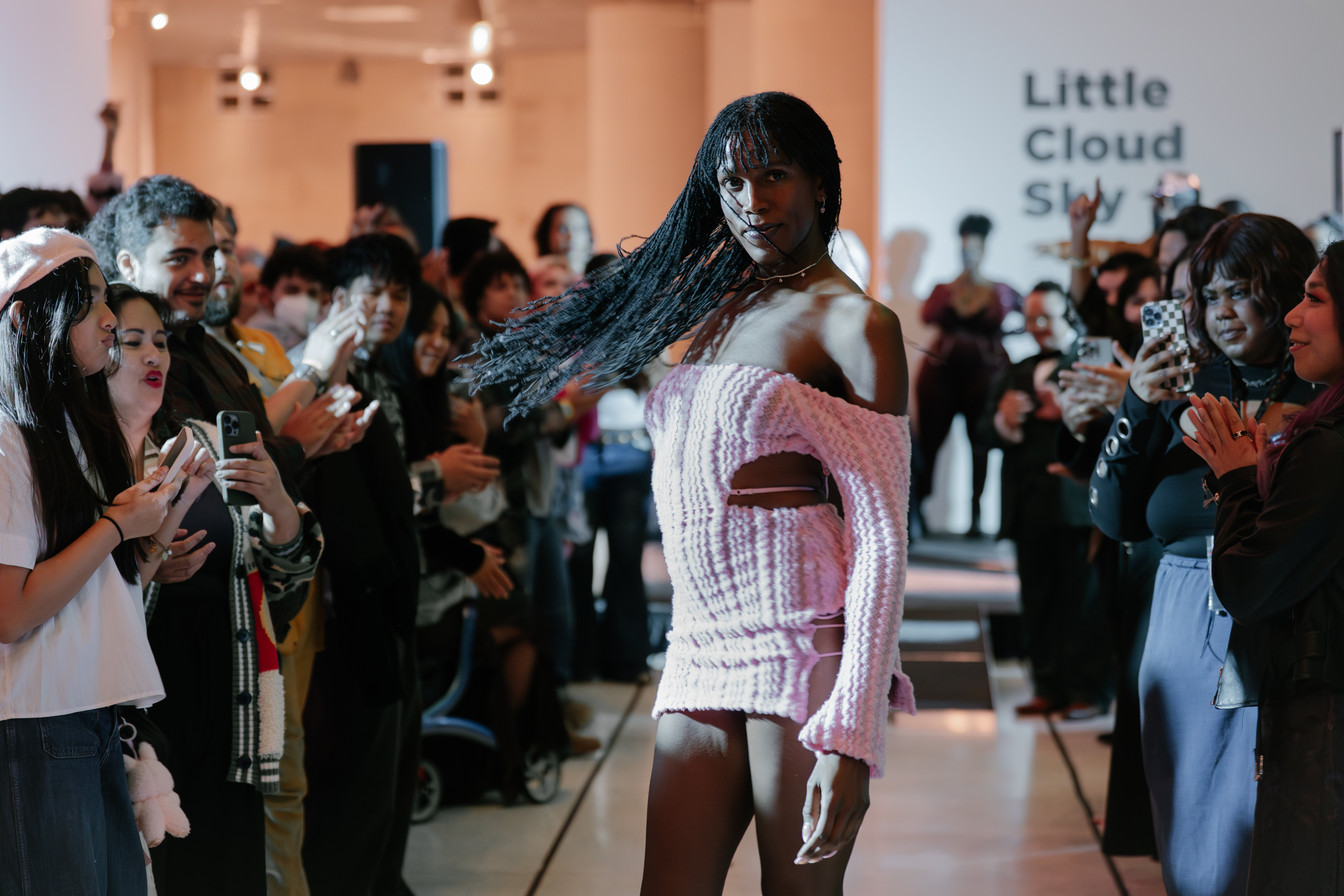
The vogue performances crystallized the virtuosity and expressive power of the event. Those who vogued were immensely skillful, and almost every audience member could vogue. Performers seized the runway with undeniable authority. They each performed with complex movement and flexibility, hitting one death drop (where a performer dramatically falls backward into a split or onto their back) after another. They danced with unrestrained intensity, repeatedly dropping into splits and executing impressive flips, all while remaining rhythmically attuned to the spokesperson’s chant. Adrenaline coursed through me as the performances unfolded, each one powerfully claiming the runway.
As a queer youth, I was overwhelmed with joy and awe at every performance. Each act reflected a piece of me—a part of myself I am often forced to hide or suppress in a world that doesn’t always make space for people like me. In that moment, at Legendary Children, I felt seen in a way I rarely do. I could shine unapologetically, fully claiming my identity without fear or hesitation. For once, the constant weight of doubt, the quiet anxiety of being “too much” or “not enough,” melted away. I was enveloped in a space of pure queer BIPOC brilliance, where creativity, courage, and authenticity were celebrated. Every flip, every death drop, every note, and every flourish resonated deep within me, leaving a mark on my heart I will never forget. For one fleeting, magical night, I belonged completely, fiercely, and joyfully.
As I observed the crowd, I noticed a striking absence of youth. I had expected to see many more of my peers, and I sincerely hope that more young people will engage with Legendary Children in the future. Especially in times of pervasive hatred, it is critical that events like these assert themselves boldly and reach all members of the Seattle community. It is imperative to support and engage with queer art—performance is resistance. Beyond activism, the 10th Annual Legendary Children shone with gorgeous performances that will linger in my memory forever.
Lead photo by Chloe Collyer.
The TeenTix Newsroom is a group of teen writers led by the Teen Editorial Staff. The Teen Editorial Staff is made up of 5 teens who curate the review portion of the TeenTix blog. For each review, Newsroom writers work individually with a teen editor to polish their writing for publication. Each month, Newsroom writers have the opportunity to pitch additional arts events like this one, expanding the TeenTix Blog's coverage.
The TeenTix Press Corps promotes critical thinking, communication, and information literacy through criticism and journalism practice for teens. For more information about the Press Corps program see HERE.