
"Wallflowers" is a garden through time, not through feeling
Review of Wallflowers at the Frye Art Museum
Written by TeenTix Newsroom Writer ADRIEN HONIG
Edited by Teen Editorial Staff Member CLARA THORSEN
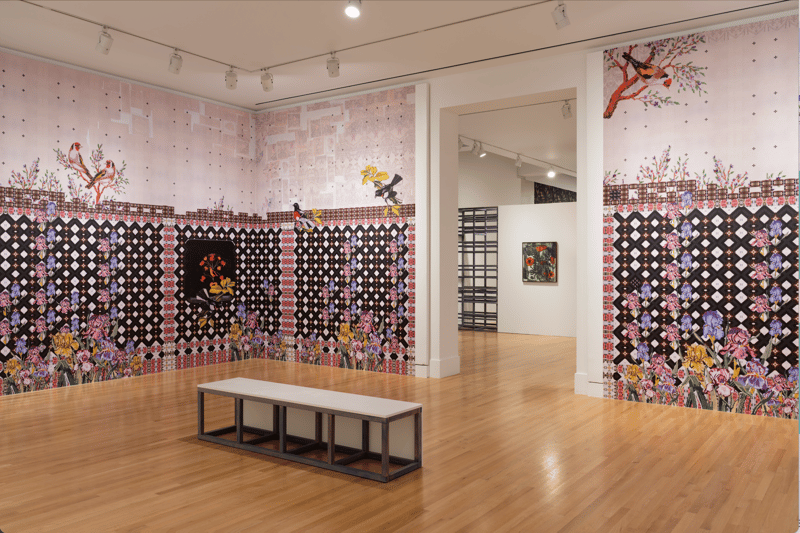
If anyone thought they knew what floral still life is, Wallflowers proves them wrong. At the Frye Art Museum, you will see the traditional oil-painted vase-on-table paintings, but you’ll also notice watercolor splotches reimagined as flowers, intricate wallpapers created on computers, and metal sculptures. Overall, Wallpapers displays art depicting flowers across centuries, artistic styles, and messages in a way that is interesting but difficult to grasp and connect with.
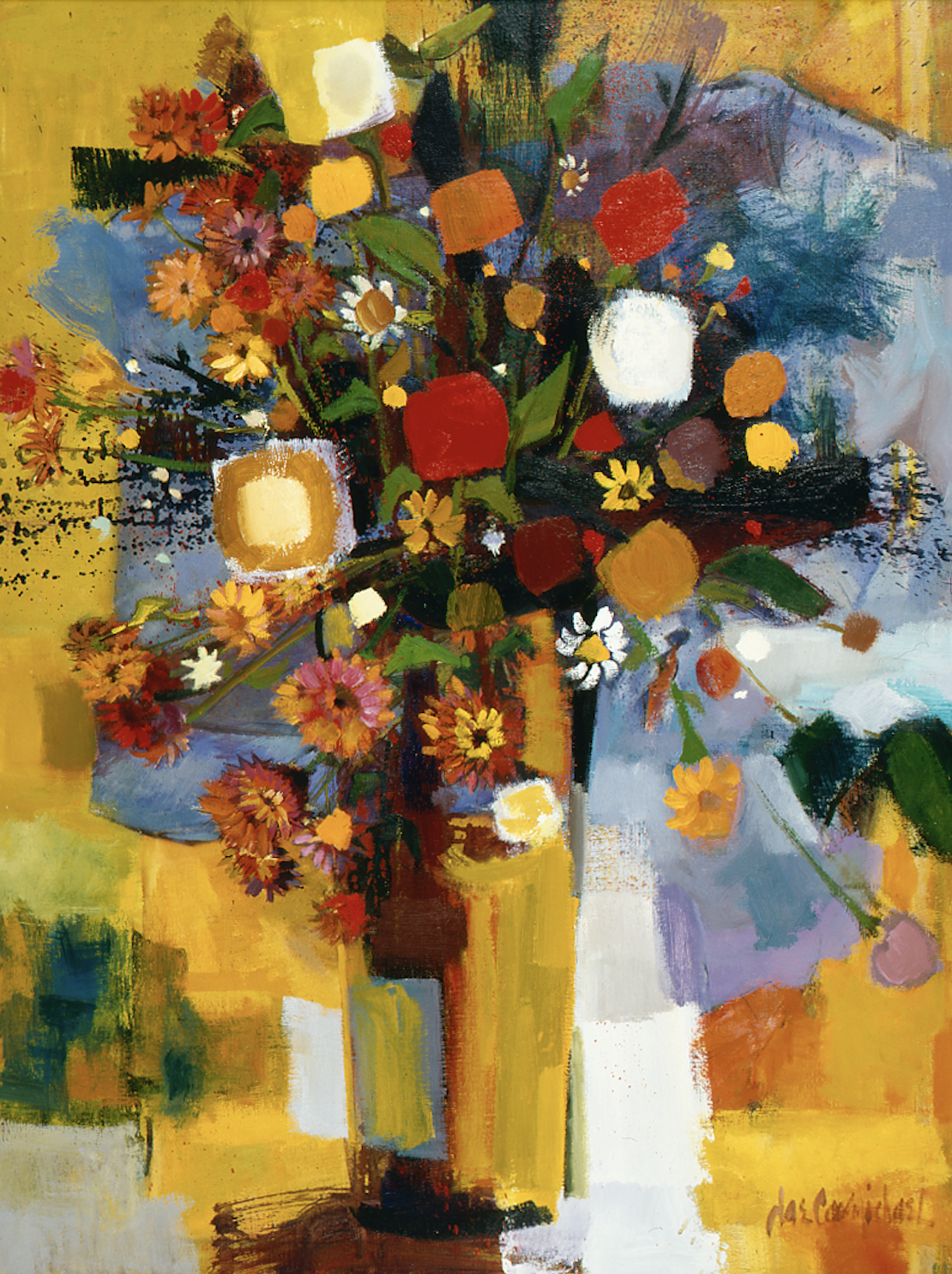
Wallflowers displays a wide variety of visual styles, spanning different artists and time periods, including traditional Dutch still lifes , impressionistic paintings, needle work, and computer distortions. From the Still Life With Tulips, a realistic classic still life depiction of a cactus and lilies, to the brightly colored, cubist Bouquet in Yellow Pot, no matter your artistic taste, you are bound to find something beautiful in the room.
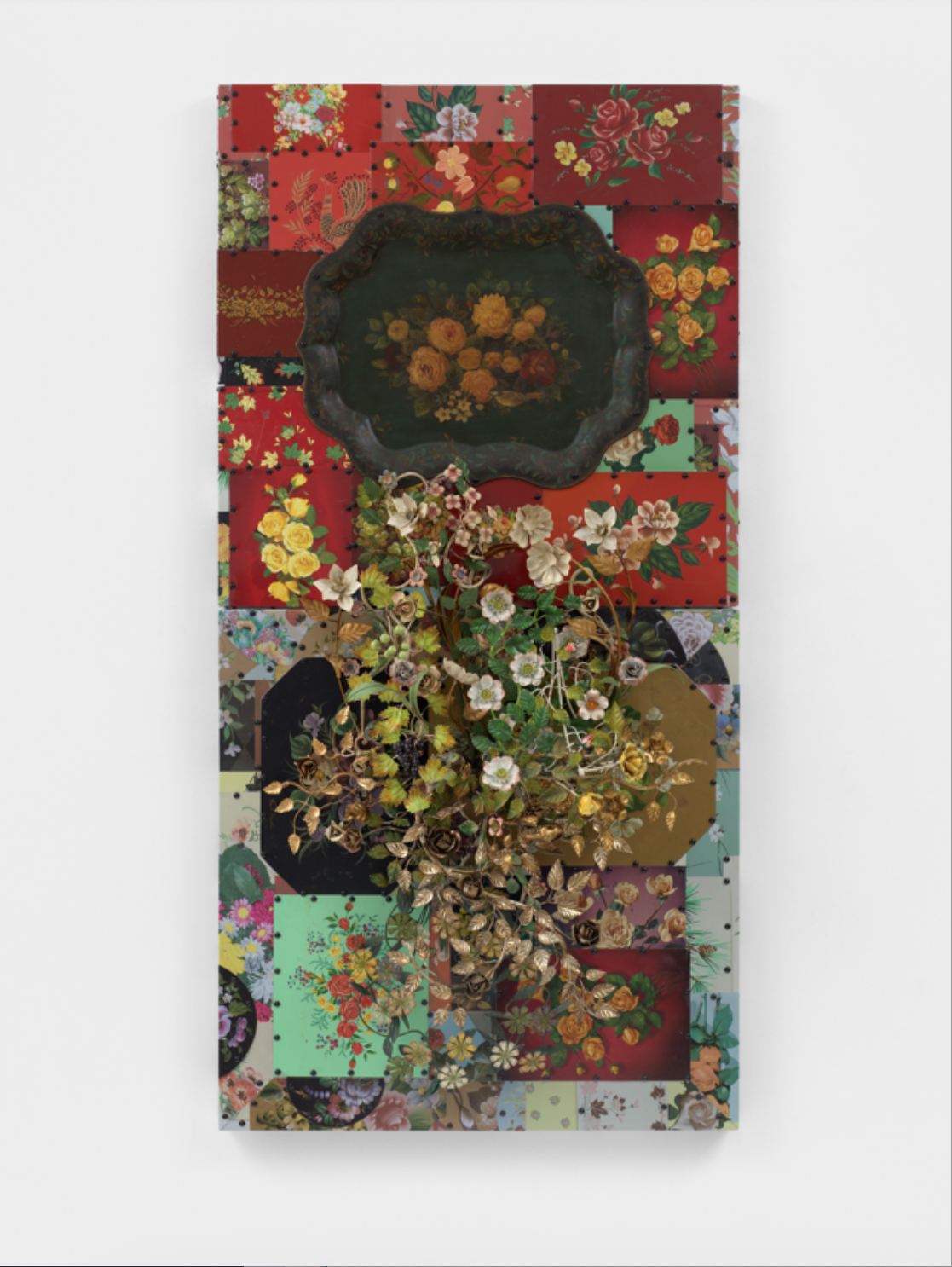
By the nature of different time periods and perspectives of the artists, Wallflowers comments on a variety of themes, as well as displaying a variety of visuals. Grapht, which stood out to me for its use of metal, combines floral-decorated serving trays into a beautiful sculpture, reflecting on the decorated but laborious lives of domestic workers. Full Blown fills a small canvas with bursting red flowers concealing a painting-within-a-painting nude, that evokes a strong sense of passion and feeling. Some of the oldest still lifes in the exhibit include flowers, both rotting on the table and propped up on a vase, expressing the transience of life and beauty. One of my biggest takeaways was just how many things can be said with a flower. The vastly differing messages and topics create an overall impression that the natural world connects with every aspect of human life. Even the works designed with computers, which some might say is the furthest thing from nature, connects with and depicts it.
This exhibit is made from a combination of works the Frye already possessed and commissioned wallpapers. These wallpapers add greatly to the variety and creativity of the exhibit, even with some of the less visually appealing pieces. While they were all produced onto the walls like inkjet prints on vinyl wallpaper, they used a variety of mediums and processes to creatively depict flowers. Interior Aperture Flowers, for example, uses digitally copied camera apertures to create a floor-to-ceiling flower pattern. This experimentation was interesting, but not remarkable. It is a new way to depict a flower, but it was not beautiful to look at or that insightful. For the Love of Mary Garside created flowers by blowing up watercolor sketchbook studies in a tribute to another artist. This was my favorite out of the wallpapers. The vivid beauty of the watercolors was emphasized by their size, making the work a lovely tribute. Wallwork combined needlework and digital distortions to create a landscape. With the variety of textures involved, it was interesting, but again, mixed in its beauty. In some instances, the wallpapers were used as actual wallpapers: paintings were layered on top of them. This was a fun touch that reminds the viewer that the capital-A art they are looking at is the same type they might find at home. These wallpapers gave the exhibit a modern styling that, when complementing some of the older paintings, completed the variety of the show. Despite this, I could not fully bring myself to like them.
While the art was incredibly visually diverse, the full intricacies of the exhibit are hard to understand. Each artist is coming to their canvas with a different style and perspective, sometimes even a century apart from one another. The musings and styles are compelling, but easily missed. Knowledge of specific flower species and a variety of symbols are needed for each artwork to be fully understood. This knowledge is mostly provided, if you didn’t get it from the work itself, by the plaques next to it. However, as a teen with a limited knowledge of the visual art world, reading plaques to understand a piece is not a fun experience. The extra effort needed is not necessarily a bad thing. It’s important to have art that doesn’t click automatically, or that benefits from additional context. But this makes the exhibit very hard to connect to emotionally. If you are thinking about seeing Wallflowers as your first time in an art museum, this might not be the exhibit for you.
Overall, Wallflowers offers a complex journey across time and styles, rewarding those who stop to smell the flowers. It is smart, and potentially mind-opening, but hardly enjoyable.
Lead photo: Installation view of Wallflowers, Frye Art Museum, Seattle, February 7, 2026 – May 17, 2026. Photo: Jueqian Fang
The TeenTix Newsroom is a group of teen writers led by the Teen Editorial Staff. The Teen Editorial Staff is made up of 5 teens who curate the review portion of the TeenTix blog. For each review, Newsroom writers work individually with a teen editor to polish their writing for publication.
The TeenTix Press Corps promotes critical thinking, communication, and information literacy through criticism and journalism practice for teens. For more information about the Press Corps program see HERE.

