
Where Life and Death Meet: Representations of Sorrow and Growth in indira allegra’s 'Book of Zero'
Review of indira allegra: The Book of Zero at University of Washington School of Art + Art History + Design
Written by TeenTix Newsroom Writer MADDIE ROSALES
Edited by Teen Editorial Staff Member KYLIE LIPPE
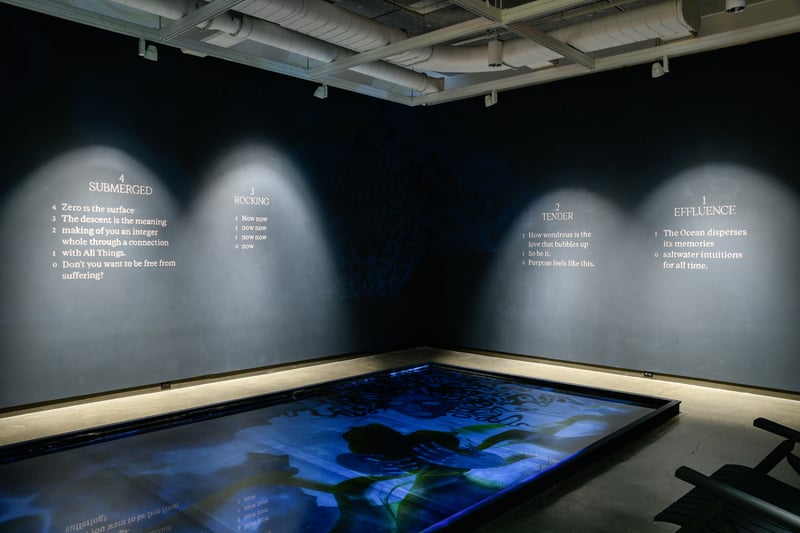
Some art moves you, some art challenges you, and some art strikes you so deeply that you lie awake at night with one vivid image plastered against your skull. Jacob Lawrence Legacy Resident indira allegra’s The Book of Zero does all three. The exhibit presents an immersive experience that steadily leads viewers through a sacred end-of-life ritual for oppressive and violent structures that, in allegra’s own words hand-painted on the walls, “haunt the earth,” as these “imitations of freedom could not keep you alive.”
Established in 2015, the Jacob Lawrence Legacy Residency celebrates Black artists, and aids their transformation of an empty gallery into an active studio space with access to all resources and facilities at the School of Art + Art History + Design and the broader University of Washington community. This year, the gallery welcomed indira allegra, a multidisciplinary visual, tactile, and literary artist.
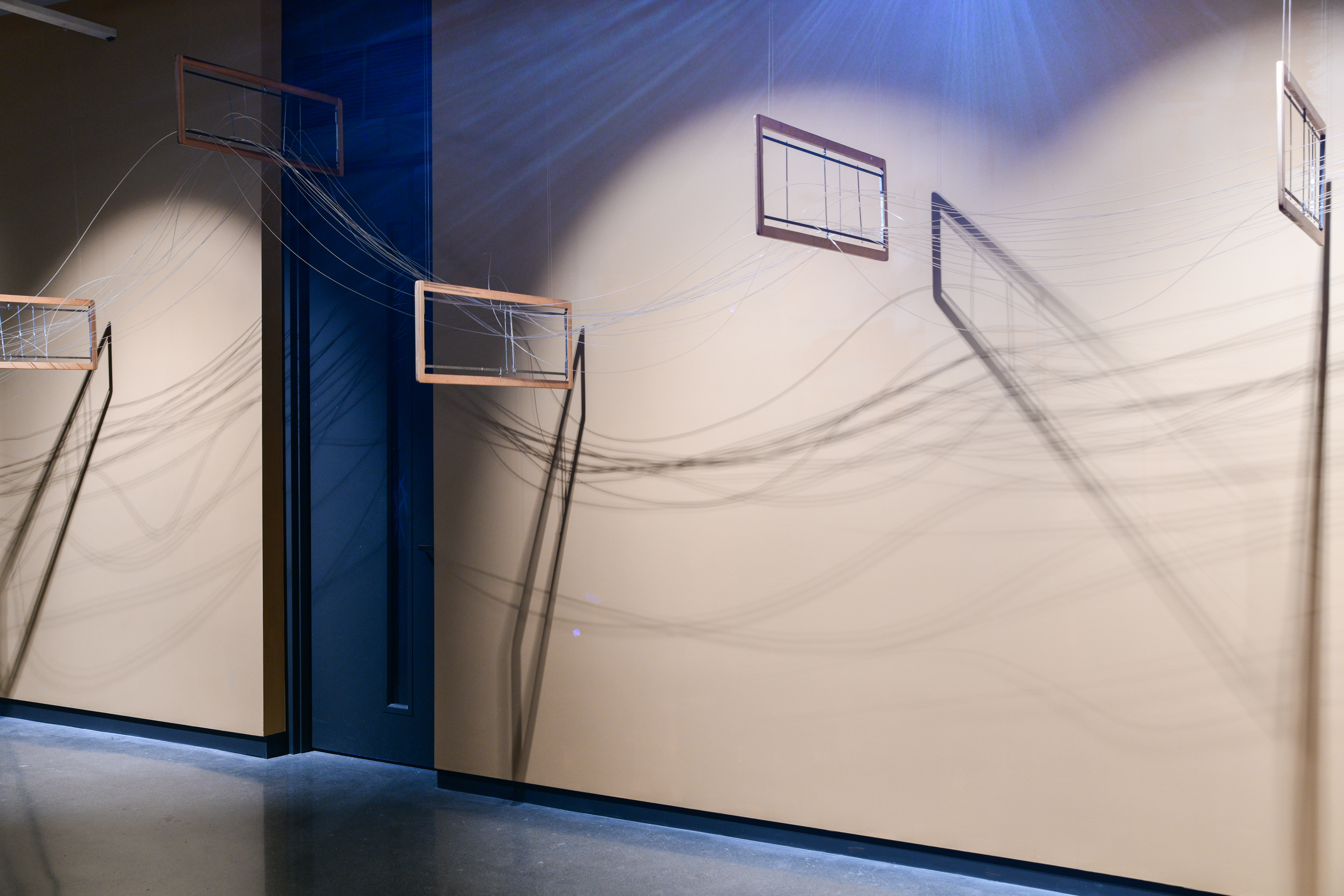
allegra’s sophisticated presentation of life and death has been traced to their background as a skilled weaver, which is evident as one aim of the project was to “thread the stories of people from all walks of life into the exhibition.” This meaning manifests visually in the gallery itself as, for example, one of the first room’s focuses is an interlaced work of thin string connecting the entrance to the next room, or another stage in the process of growth and purification. While the meaning behind the string isn’t necessarily clear, it seems to appear as various lifelines connecting into one another, beginning and ending at different points while following similar patterns and cycles.
More striking, however, is allegra's evident appreciation for humanity and resilience shining through every room of the gallery, a feature put into perspective upon learning about their experience as a youth advocate in a domestic violence shelter, a union organizer, sign language interpreter, and sex worker. They’ve developed genuine empathy and appreciation for those coming from marginalized communities and unique backgrounds and abilities. This unique and multi-faceted background translates beautifully into their art as viewers are led through a maze-like but familiar story.
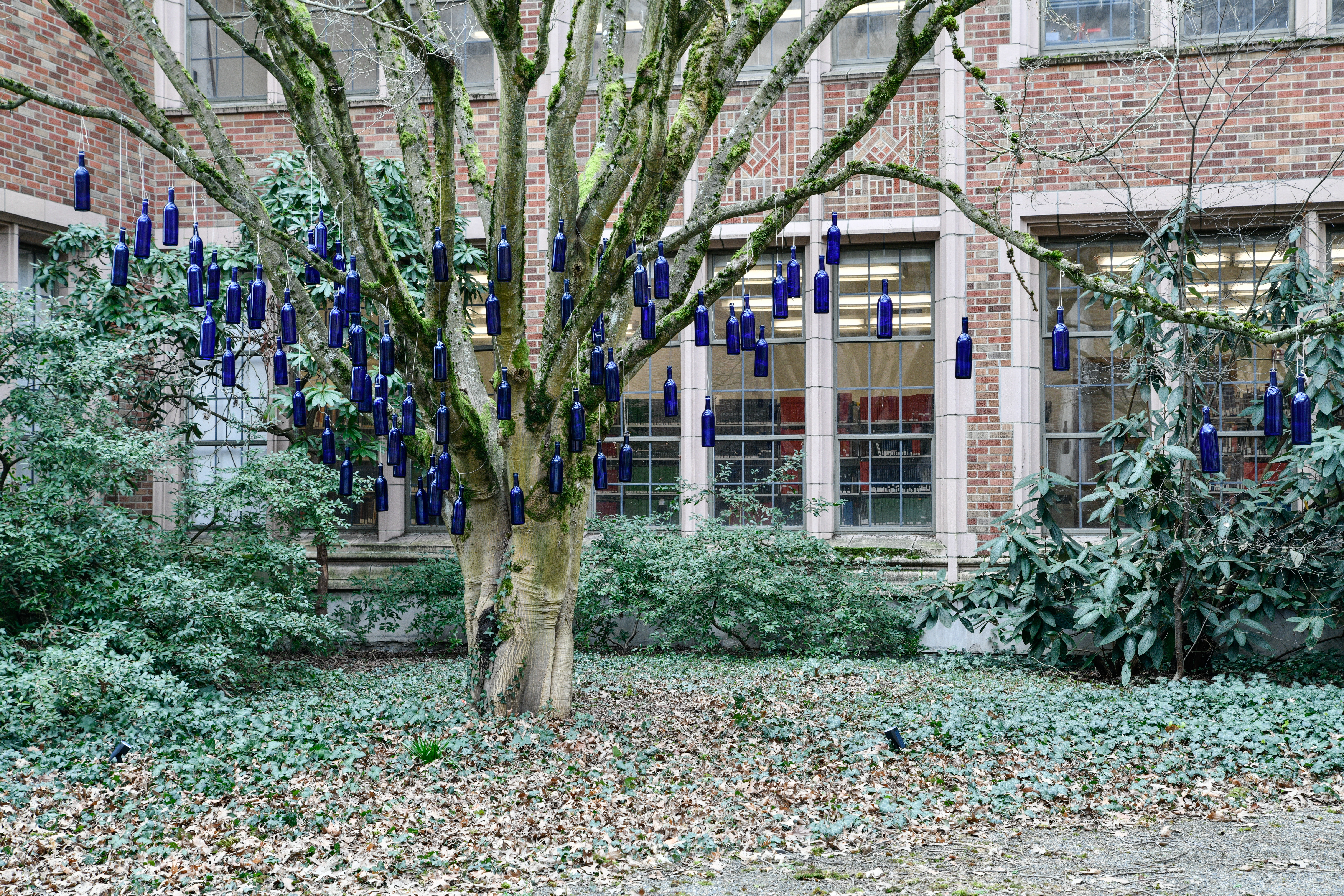
The exhibit draws audiences in from a nearby courtyard, where blue glass bottles hang down from the branches of two trees facing each other from opposite ends of the space. According to allegra’s artist statement, the bottles intend to “capture troubled spirits.” As I walked between the trees, I felt an eeriness. The area was nearly empty, while the dark colors swaying on either side of me created a weight that absolutely established the feeling of troubled spirits roaming about. And yet there seemed to be a layer of beauty at play, like a simple meditative serenity in the silence. The atmosphere establishes a clarified headspace that preps you efficiently for the poetry ahead.
Once inside the first room, a massive projection behind a thin layer of blue mesh tells a story that masterfully showcases the triumph of humanity’s embrace of natural elements —sunlight, wind, and earth—against an unnamed enemy who quivers with every movement.
To the viewer’s right, a poem mapping the acts of the story poetically details the origins and endings of the enemy, identified as harmful societal structures including capitalism, sexism, and white supremacy. The narrator appears as a deity, with some transcended understanding that the origins of all violence is found in one’s "resistance to the acknowledgement of death” and that one may cleanse themself of “this affliction through the sacred act of weeping.” Their words almost seem to be pitying the enemy for its acknowledgement of its weaknesses and fears.
In the second room, the exhibit’s namesake, Zero, is identified as a “surface,” perhaps the transition point between life and death, positive and negative, as the poetry on the walls frames a reflective pool, featuring a continuation of the first room’s story as humanity purges itself of harm. The room reminds viewers of the time-worn tradition of finding power in water, such as the Hindu and Incan beliefs in water’s ability to absorb prayers and purify life, emphasizing the “wisdom of water” leading the charge against the dismantling of oppression.
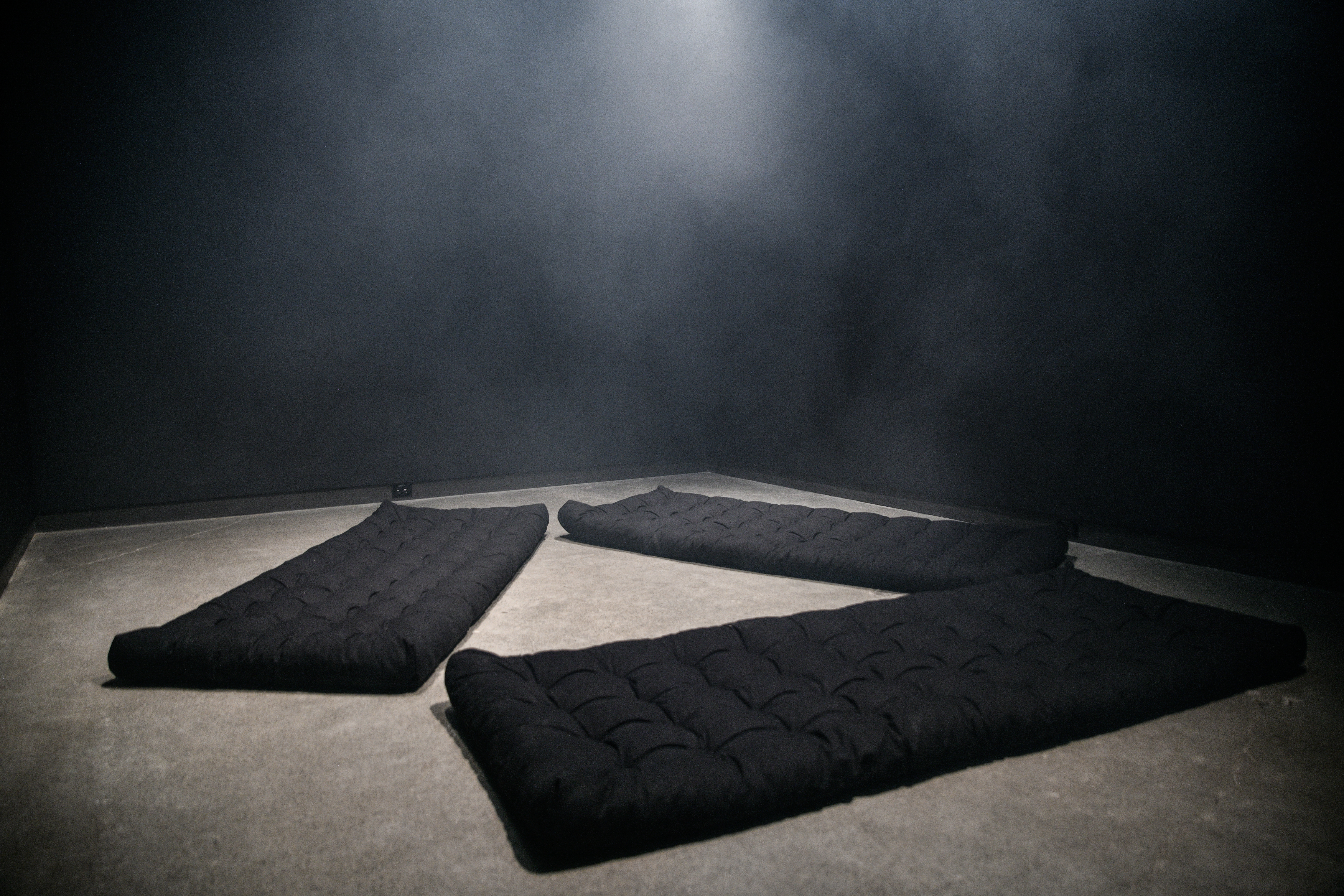
The third room is the most fascinating, though the least adorned. It consists entirely of three black mattresses arranged in a triangle formation. The poetry has been replaced with black walls, and any calming bird chirping or gentle winds from the courtyard meet their stark opposite, as a deep rumbling sound that periodically grows into the room. And while there’s definitively less art to look at, there’s undoubtedly much for the reader to consider and take away: a feeling of emptiness, of new beginnings found only in death and absence. The room exemplifies the concept of less is more.
Upon just opening the door, all I felt was an odd sense of doom. I remember walking into my grandparents’ apartment after my grandfather died and freezing at the sight of his bed and his clothes, still in the closet. Everywhere I looked, there was nothing but stillness, and I saw and felt firsthand an absolute absence of life. That feeling returned to me in this room. It felt like death, like a black hole or a pitch-black cave. No other portrayal of death in any other media has created such a feeling for me before.
The Book of Zero is a masterful concept. It reflects a unique sensitivity one can only achieve through an immersion of humanity like that which allegra experienced themself. At its core, it's simply an expression of appreciation for the human condition. It encourages understanding and meditation over anger and judgment. It challenges the horrors of oppression while still portraying the oppressor in a very human image as a trembling and ever-changing organism projected onto a wavy surface, reminding the audience that fear is what drives the transition through life and into death. Therefore, rather than triumph over evil, The Book of Zero represents the emergence of unity as we all struggle against the harsh realities of struggling for power and purpose in a world without clear answers. For, in allegra’s own words, “don’t you want to be free from suffering?”
Lead photo: indira allegra: The Book of Zero. Photo by August Mazzara.
The TeenTix Newsroom is a group of teen writers led by the Teen Editorial Staff. The Teen Editorial Staff is made up of 5 teens who curate the review portion of the TeenTix blog. For each review, Newsroom writers work individually with a teen editor to polish their writing for publication.
The TeenTix Press Corps promotes critical thinking, communication, and information literacy through criticism and journalism practice for teens. For more information about the Press Corps program see HERE.

