TeenTix Logo
Login
Sign Up

Controversial Opinion: Country Music Isn’t Always Bad

Review of Radney Foster at Fremont Abbey Arts. Written by Teen Editorial Staff Member Hannah Schoettmer, and edited by Teen Editorial Staff Member Josh Fernandes!

Radney Guitar

There’s a stigma against country music. Everyone has the same assumption—a twangy assortment of half-clothed women, guns, and an unusual, unnatural love for one’s truck set over a backdrop of rolling wheat fields and cattle herds. And those assumptions lead to changing the radio station at the first hint of mandolin—something I am guilty of too. And while there is certainly country music that fits that description, there’s a whole other side to the genre that is often ignored, set to sunsets over the open plains, a deep sense of family, and, often, a longing for something more. The evening’s acoustic set, headlined by Radney Foster, captured the longing of a quirky small town life, and how that deep sense of belonging, while comfortable and familiar, can sometimes be strangling.

The evening began with a set by Luke Martin, a long-haired man who reminded me vaguely of a wood elf. The stage was set as a living room, complete with an armchair and side table with a pitcher of water. He languished on a wooden stool and seemed very comfortable with the guitar in his hands. He sang of longing and of love, set to a masterfully finger-picked acoustic backdrop. His slight lean and big eyes only lended to the aura he cast, of desire and a fierce compassion. After all, as he sang, “it ain’t no use being alone, this I know."

Read More

Sikh Captain America Combats Discrimination

Review of "Wham! Bam! Pow!” at the Wing Luke Museum and of “Vishavjit Singh: Sikh Captain America” at Seattle Town Hall, Written by Teen Editorial Staff Member Lily W, and edited by Teen Editorial Staff Member Hannah S!
Libraryhighestpoint L

When I think about America, especially in our current political climate, I think about prejudice. Bigotry seems to have infected every part our nation and, as a teen, it often feels like reducing the amount of discrimination in our country is simply impossible. Many current events and happenings in the news pile on, spreading hate and contributing towards a perpetual feeling of political stagnation and ambivalence. But Vishavjit Singh, in both his exhibit, “Wham! Bam! Pow!” at the Wing Luke Museum, and talk, “Vishavjit Singh: Sikh Captain America” at Town Hall Seattle, shows that combating discrimination, while not an easy task, is something each and everyone of us can and should be working towards.

Singh, a self-described “accidental cartoonist” and former software engineer, was pressured by his parents to pursue a career in the sciences. He was inspired to start drawing in the aftermath of 9/11, after experiencing and witnessing harassment and discrimination against anyone who looked similar to the perpetrating terrorists. Singh remembers finding out that the towers had been attacked—he was at work when he saw it on TV. Immediately, another employee was staring at him. Singh states that “his angry, bloodshot eyes was my first introduction of things to come.” And things only got worse—as Singh was driving home, “just about every driver on the road… took time to flip [me] off or scream at [me] in anger.” In the period directly after the attack, Singh had to work from home in order to avoid harassment.

Read More

The Fantastically Dark “Dark Fantastic”

Review of 18th & Union's Dark Fantastic, written by Teen Editorial Staff Member Josh F, and edited by Teen Editorial Staff Member Huma A!
The Dark Fantastic 3

I'm not someone who's really into horror. It's just not something I grew up having, and nowadays, it seems to be rapidly dropping in quality. I’m also not someone who's really into improv. I've always liked the idea, but, as a newcomer, the thought of audience interaction always seemed too intimidating. So when I went to see Dark Fantastic, a horror improv show, I really had no idea what to expect. I only knew the show combined horror with improv, a primarily humour driven art, so it interested me quite a bit.

The theatre was small—49-max-occupants-small, to be specific—with sheets of cellophane covering brick walls, foreshadowing the gory fates that lay ahead. When the show started, the audience was asked two questions. First, “What is your biggest fear?” (to which someone replied, “A Roomba”), and, second, “What is an object you would find in your grandmother's house?” Answer? “ A Doily.”

Read More

What Happens When You Give Dancers A Say?

Review of Whim W'Him's Choreographic Shindig IV, written by Teen Editorial Staff Member Anya S, and edited by Teen Editorial Staff Member Hannah S!
Dscf2739

I used to be a dancer. When I danced, however, I never felt closely connected with what I was asked to perform. Sure, The Nutcracker and Sleeping Beauty were classics, but their stories didn’t represent my identity. I didn’t feel that my dancing reflected who I was.

At Whim W’Him’s Choreographic Shindig IV, however, the company could choose pieces and choreographers that reflected them. For the Choreographic Shindig IV, the dancers chose three choreographers—Alice Klock, Brendan Duggan, and Omar Román de Jesús. These artists, using the dancers’ input, created three 20-minute pieces: "Before After," "Stephanie Knows Some Great People," and "Welcome to Barrio Ataxia." Klock’s piece, "Before After," dealt with the death of one world and the birth of the next. It began with the end: a spotlight illuminated a soloist clad in grey, slowly rubbing his hands together. He then moved about the space, clearly suffering. When he was spent, he collapsed to the ground. His death sharply contrasted with what came next. Two dancers, wearing green, created life through fluid extensions and expansive gestures, their movements reminiscent of youthful deer running across a field.

Read More

Reader, She Married Him

Review of Jane Eyre at Book-It Repertory Theatre, written by Teen Editorial Staff Member Huma A, and edited by Teen Editorial Staff Member Anya S!

Opening night at Book-It's production of Jane Eyre was a memorable experience. The place was bustling with an activity and vibrancy synonymous with champagne, cupcakes, and opening night.

The play began with a girl, Jane, holding a candle in the dark and singing an eerie song —replicating the Gothic Romanticism portrayed in Brontë’s novel. As the night progressed, full and rich with English accents, the story switched perspectives from the first, second, and third person. Parts of the show embodied Brontë’s novel, with characters even quoting iconic lines, like “Reader, I married him.”

Read More

Storytelling That Transcends Boundaries

Review of Richard III at Seattle Shakespeare Company, written by TeenTix Press Corps Member Emily B, and edited by the Teen Editorial Staff!
Richard Iii 305

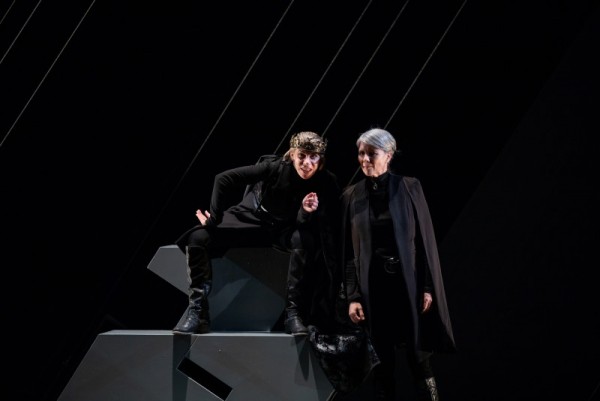
Rarely do I enter a play with as many thoughts and questions as I had going into Richard III at Seattle Shakespeare Company. There was so much to be explored: would a historical play remain accessible not only 400 years after it was written, but 500 years after its events occurred? And what would it be like to see this play – with 21 male characters and 4 female characters – presented by an all-female cast? The answers I found are a testament to the power of Shakespeare’s words to cross boundaries of gender and time, and a testament to what amazing, powerful theatre Seattle Shakespeare Company’s actresses can create when they bring life to all his words – not only those of his few female characters.

One feature which makes all-female productions so exciting, particularly when it comes to all-female productions of Shakespeare, are the opportunities offered for female performing artists, who tend to have fewer opportunities than their male counterparts in the world of Shakespeare. The bard’s plays contain far more roles for men than for women, perhaps because they were originally performed by all-male casts. All-female productions like this open the door for audiences to experience the unique talent and perspectives that female performers can bring to the full array of magnificent roles Shakespeare created. And works of art placing women in positions of power, onstage and behind the scenes, are much-needed today and always. So naturally, I was excited that Seattle Shakespeare Company had chosen to collaborate again with the upstart crow collective to present this sequel to Bring Down the House, their highly-praised all-female adaptation of the Henry VI trilogy.

Read More

Login

Create an account | Reset your password