TeenTix Logo
Login
Sign Up

A Gender-bending Comedy of Love

Review of Twelfth Night at Seattle Shakespeare Company by Indigo Trigg-Hauger

12Th Night

For many people, the biggest hurdle faced when reading Shakespeare is the language. It can be impenetrable on the page, and consequently very boring. Many of the words he uses are unfamiliar, and so much of the humor, meaning, and plot gets lost behind that. If that is your biggest problem with Shakespeare, though, this production of Twelfth Night will be a huge relief. The acting is near-impeccable, making it easy to discern the plot (though if you need a little more context, the synopsis in the program helps). Even better than simply knowing what is going on, you will actually understand some of that archaic humor. Turns out people were making jokes back then about the same things we do now: love, drunkenness, and fools.

Twelfth Night tells the story of Viola and Sebastian, twins who have been shipwrecked in an unfamiliar kingdom. Most of the play focuses on Viola (Allie Pratt), who disguises herself as a boy, and immediately everything gets turned around, with various people falling in love, not realizing who the object of their affections really is.

Read More

A Feast for the Senses

Review of the common S E N S E at Henry Art Gallery by Indigo Trigg-Hauger

Hamilton

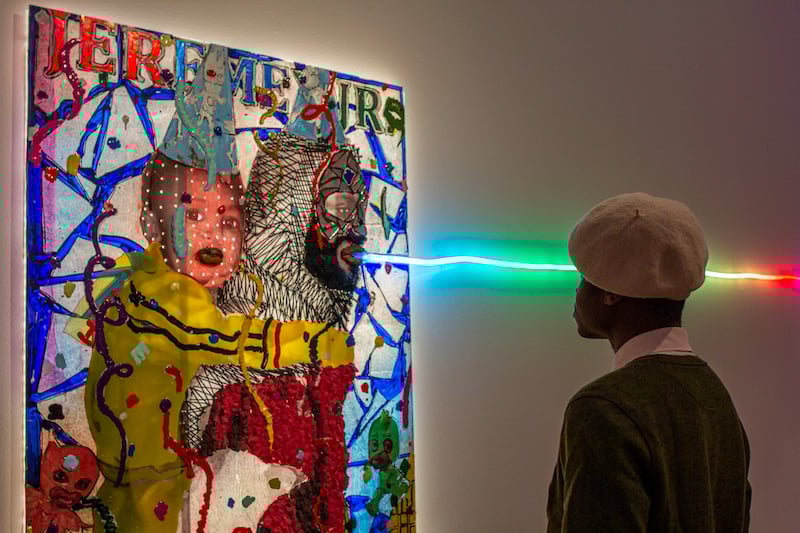
A fully immersive experience is rare when it comes to art. More often viewers are separated by glass and velvet ropes. When one gets the opportunity to leave a trace, it invokes a visceral response. With the common S E N S E, Ann Hamilton asks viewers to go beyond viewing and achieves a highly intimate relationship between the work and the viewer. Artist Ann Hamilton has been given the unusual chance to take over the entire Henry Art Gallery. The exhibition is site-specific, created for the space using the resources the gallery and surrounding area could offer. The resulting work weaves old and new, buoyed by her collaboration with the nearby Burke Museum. The scans of dead animals from their collections have an intensely eerie quality. The garments made of animal skin and fur, laid out reverently, are practically funereal. In the brightest room downstairs, where skylights have been opened for the first time since 2001, machines approximate animal-like flapping or calls. At times it feels like a mausoleum, at others a place of worship. The choral singers wandering through add to this ambience, as do the readers sitting here and there, transcribing from a book while muttering the words to themselves. It’s odd – but also oddly calming. There are so many layers to the common S E N S E, at first it may appear impenetrable, the pieces disparate or disconnected. Allow a little time though, wander through the successive rooms, and it will give up its secrets. The lighting lends it a dream-like, surreal atmosphere. What seems random or odd at first slowly becomes clear the more you explore. Hamilton facilitates a process of finding and discovery. Though everyone starts with the same “conditions,” as she put it, each visitor excavates individually. Different senses jump out in each room; touch, sight, sound. The signs of compression and human wear on a coat. The air vents gently disturbing stacks of paper on the walls. The act of drawing aside a curtain to view an artifact. To walk through the gallery is to meditate on your own mortality and the effect of humans on their environments. As the viewer moves through the exhibition, connections reveal themselves naturally. Papers line the walls in stacks, and you are invited to read these photos and snippets of text, taking ones you connect with. By the end of the visit, you have curated your experience. In doing so though, the visitor takes away from the exhibition in a tangible way: The photos on the wall of three of the rooms will never be replaced, and the texts will ebb away to be replaced by new ones. Knowing this, there is an urge to tread lightly, to consider carefully what matters enough to take. Be prepared: the common S E N S E requires a certain level of commitment that most exhibitions do not ask of us. For some, this might feel overwhelming. The choice to participate in the exhibition is not so much a choice as a prerequisite if you want to fully engage with it. Ultimately, what makes the common S E N S E stunning is how it drives the viewer to self-examination. What you find depends on you.

the common S E N S E Henry Art Gallery October 11, 2014 - April 26, 2015

Read More

Two and a Half Hours of Irresistible, Tubular Fun

Review of Kinky Boots at 5th Avenue Theatre by Vivian Lappenbusch

Photo4 Kinkybootstour Photobymatthewmurphy 600X401

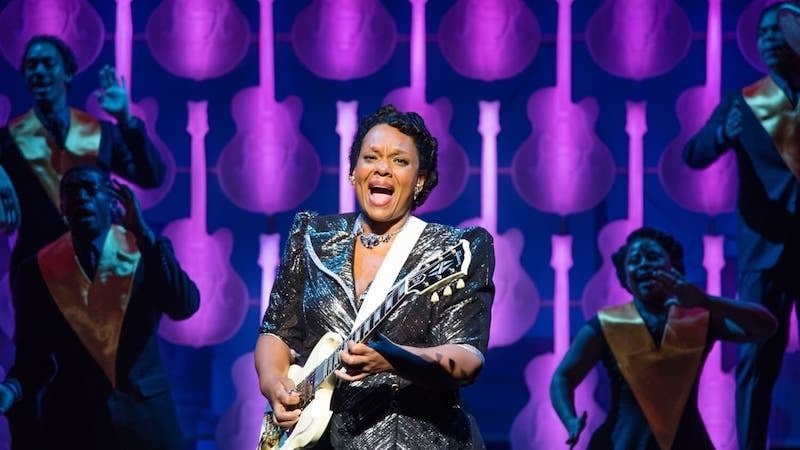
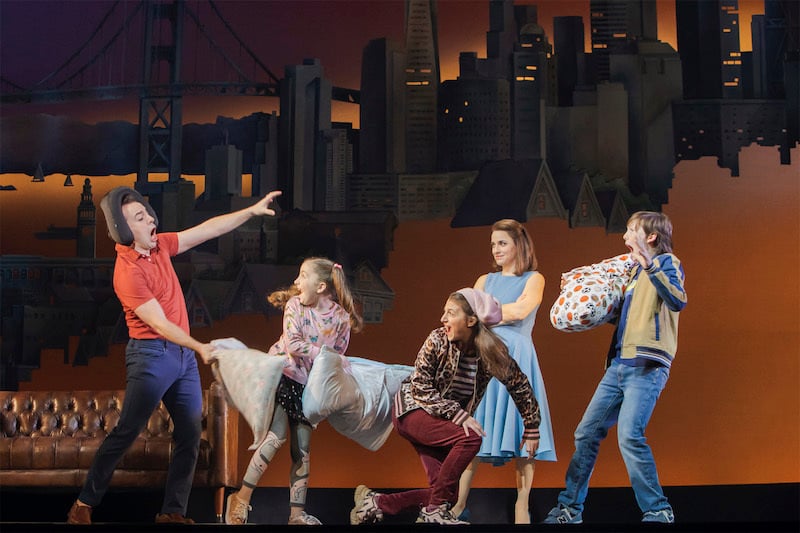
According to Kinky Boots’ tagline, sometimes the best way to fit in is to stand out. In the case of the production at 5th Avenue Theatre, the musical just stands out — no fitting in required.

If you’re into the musical theater scene, you’ve probably already heard of Kinky Boots. The musical first came onto the scene in a big way in 2012, winning six Tonys — including Best Musical and Best Original Score — and nominated for seven more after that. It even won a Grammy for Cyndi Lauper’s incredible score.

Read More

How to Follow Your Heart

Review of Sarah Prefers to Run at Seattle Lesbian and Gay Film Festival by K. Gibbs

Running is the focus of Sarah’s life, as much a part of it as breathing or sleeping. She cannot imagine life without it and wants to continue running at college in Montreal. But standing in her way is a lack of money and opposition from her mother. As Sarah fights to keep running, Sarah Prefers to Run portrays the struggle of doing what you love, no matter the cost.

When asked why she does track and field, Sarah simply states that she loves to run. It’s that simple. Finding her way to college, though? Not so much. Since her parents don’t have the money to pay for college, Sarah has to come up with another plan. The solution presents itself in her coworker, Antoine, who is also heading to Montreal. In order to get money from the government to help pay for school, the two decide to get married despite the fact that they barely know each other.

Read More

An Engaging Love Story

Review of Mary's Wedding at New Century Theatre Company by Hattie Sanders

Marys Wedding

Mary’s Wedding by New Century Theatre Company is an engaging, fantastic love story.

With only two actors in the whole production, a phenomenal performance is created between them. There’s a young British girl, Mary (played by Maya Sugarman), who moved to Canada with her family and the Canadian soldier (played by Conner Neddersen) who she fell in love with during the time of World War I. The whole play is a combination of scenes from their time together and scenes from his time at war based on letters he sent, melded together seamlessly.

Read More

Parallel Lives, Unparalleled Tension

Review of Slip/Shot at Seattle Public Theater by Evelyn Seo

2 Spt Slipshot Hi Res Quinn Armstrong As Clem

BANG! With a single gunshot, many lives change. Seattle Public Theater’s Pacific Northwest premiere of Slip/Shot evokes serious thought about the truth behind racial tension both in the 1960s and now. Written by Jacqueline Goldfinger in 2012, the play takes place in the racially divided town of Tallahassee in 1963, where a white security guard accidentally kills an innocent young black man. The first part of the play emphasizes the ideals of the American Dream as the characters look optimistically forward to the future with their families. Clem, a white security guard (played by Quinn Armstrong), attempts to establish an independent household away from his depressive father with his new wife Kitty (played by Jocelyn Maher). Likewise, couple Monroe and Euphrasie (played by Treavor Boykin and Marquicia Dominguez) look forward to their own future together as Euphrasie plans to attend college in the coming year. Bright stage lighting and fast-paced music evoke a sense of joy and giddiness within the audience. But the atmosphere changes when Clem accidentally fatally shoots Monroe. Everything becomes dark and turns into a blur; it’s as if time physically stops as the characters are unable to move on from the accident. Faith Russell, who plays Miz Athey, Monroe’s mother, does an exceptional job of showing the pain and angst of a mother losing her child. Her performance brings the audience to tears, including myself. Russell’s lingering eyes resting upon the spot where her son used to be arouses a sense of emptiness that cannot be filled again. Clem and Kitty seem to be caught up in the accident as well, unable to move on from the incident due to the fear of repercussions from the black population. They are unable to do anything without having to make sure that no harm would come to them. Their eventual fall into paranoia emphasizes one of the messages that the play is attempting to get across to its audience: Everyone needs to walk away from the past and work toward the future. Goldfinger also uses parallelism between the two families to illustrate the need for change in racial relationships. She shows that there is no difference between the two races when it comes down to their everyday lives. The blatant hatred and fear that both races have toward each other seem to be superficial as the play goes on to show how similar the characters of different races actually are. This effectively shows that one must have the courage to make choices for a better future for everyone, of all races, without having to fear each other. Slip/Shot prompts the audience to ponder whether we are caught up in false perceptions of the society today and make assumptions without learning the truth. Racial tension have been allowed to go on until now maybe due to lack of attempts to understand one another. In conclusion, this play offers a fresh perspective on still very present on social problems.

Slip/Shot Seattle Public Theater September 26 - October 12

Read More

Shining Bright

Review of Jewels at Pacific Northwest Ballet by Megan R.

Jewels14 0015

The show starts off with a bang — or rather, with a timpani. With the glittering curtain still down, the sound of Tchaikovsky soars from the orchestra pit and fills the concert hall. Then the curtain lifts and more then a dozen dancers come into view. As they leap and twirl across the stage, the dancers, dressed in sparkly bodices and flowing green skirts, truly become jewels.

Jewels at Pacific Northwest Ballet doesn’t set out to tell a story. When it premiered in 1967, George Balanchine’s Jewels became the first full-length plotless ballet and its three parts — “Emeralds,” “Rubies,” and “Diamonds” — are linked only by their jewel-toned costumes.

Read More

Like Watching a Musician Destroy His Guitar

Reveiw of Germinal at On the Boards by Tigerlily Cooley

Germinal

From the beginning of Germinal, one can tell it's an unconventional production. The stage lights flash repeatedly into the audience, followed by a mysterious light display on stage, all narrated by bursts of nervous laughter from the audience. After the stage lights finally come fully on, one expects the actors to talk, but they can't. Rather their thoughts are projected onto the back wall of the stage, a concept which later morphs into the natural use of subtitles. Both English and French are used throughout the play, and the dialogue is sophisticated.

Watching Germinal unfold is like watching a musician destroy his guitar at the end of the show, as the actors take pickaxes to the stage and rip down the curtains. And yet, somehow in all the chaos the creators, Antoine Defoort and Halory Goerger, manage to slip in profound thoughts regarding the laws of physics, existentialism, and philosophy.

Read More

Throwback Thursday

Review of A Chorus Line at 5th Avenue Theatre by Bella A.

A Chorus Line

Two hours and 10 minutes of sitting in the gorgeous 5th Avenue Theatre with no intermission immerses you in the stories of each character encountered. A Chorus Line has the elaborate dance numbers of a Broadway showstopper, but also the intimate feel of underground theater as characters twist, twirl, yell, and even weep before you.

Winner of nine Tony Awards, this musical is regarded as a classic in the world of theater. With its age in mind — it first opened in 1975 — the storyline seems notably edgy as it wrestles with questions of sexuality and daddy issues, and presents a brand new look into the grueling showbiz audition procedure through the eyes of 17 young dancers auditioning for a coveted place in a Broadway chorus line. You’ll meet Mike, the youngest of 12 siblings, who learned to dance to prove himself; Richie, an almost kindergarten teacher turned dancer; and Cassie, the desperately ambitious fallen starlet. These and other young men and women bravely step up and share their life stories. The show ends up being more of a process than the unfolding of a gripping plot.

Read More

The Reimagining of an American Hero

Review of The Mountaintop at ArtsWest by Griffin Scott-Rifer

Mountaintop

As I took my seat in the ArtsWest’s beautiful theater I was immediately was entranced by the set of The Mountaintop. Rain falling down windows transported me to another time and place. If I was at all distracted before, as soon as the lights dimmed in the theater, my mind was nowhere but right there in the Lorraine Motel with Dr. Martin Luther King, Jr. and the angel who comes to visit him the night before he is to die.

The lights come up on the well-known American hero, played by Reginald Andre Jackson. The Mountaintop begins as a raucous period comedy, complete with clever repartee between the two characters. But then about halfway through, it switches to an entrancing drama about the meaning of being a hero.

Read More

A Provocative Conversation Starter

Review of The Invisible Hand at ACT by Vida Behar

The Invisible Hand

At once thought-provoking, action-packed, and moving, The Invisible Hand opens up a conversation. It tells the story of an American economist held captive in Pakistan and tackles hefty themes — the role of journalism, the relationship between money and God, tensions between America and the Middle East, the nature of greed, racial issues, political corruption, and the desire for power — along the way. As the play unfolds, it proves to be a study of the relationship between the protagonist and his captors, both in terms of prisoner versus warden and their larger, thematic representations, namely capitalism versus Islam.

To amplify the intensity of the setting, The Invisible Hand uses some very original techniques on stage. Immediately noticeable is the circular format of the stage, with the audience seated a full 360 degrees around it, creating an up-close-and-personal feel. Additionally, before the play even begins, the scene is set when the pre-play reminder to turn off cellphones is spoken in Punjabi with accompanying subtitles on a mounted TV screen. This preemptively gets the audience into the world of the play, setting the scene in a very impactful and original way.

Read More

Nothing and Everything

Review of Waiting for Godot by Seattle Shakespeare Company by Lin G.

Waiting For Godot

The set is a stage within a stage. Red curtains flank a stark rock and tree — sparse and pathetic like a Charlie Brown tree — on a dull road. “There is no lack of void.” This is true of both the stage and the show. Waiting for Godot, written by Samuel Beckett, is a bizarre play in which nothing and everything happens. The plot goes in many circles from a nonsensical and hopeless beginning through many strange events and unexpected turns to an absurd but dismal end that in some ways leaves the audience wondering.

The story goes like this: Two miserable men, Didi and Gogo (played by Todd Jefferson Moore and Darragh Kennan respectively), find themselves waiting, endlessly, for someone named Godot. These two men try to pass the time in many ways, none of which seem to make time go any quicker. After a while, Pozzo (Chris Ensweiler), a proud and ridiculous merchant, arrives along with his exhausted and mistreated slave, Lucky (Jim Hamerlinck), who does Pozzo’s every bidding. A ton of crazy things happen, and Pozzo and Lucky leave. Soon a boy (Alex Silva) comes to tell Didi and Gogo that Godot cannot come today, but will surely come tomorrow.

Read More

The Saddest and Hardest-Hitting Fantasia Around

Review of Angels in America, Part 1: Millenium Approaches at Intiman Theatre by Vivian Lappenbusch

Angels In America

It's America circa 1986, the land of the guilt-ridden and home of the closeted homosexual people. And it's the world of Tony Kushner's award-winning play, Angels in America. Subtitled “A Gay Fantasia on National Themes,” Angels in America might just be the saddest and hardest-hitting fantasia around – and it’s fantastic.

Part 1 of the play, Millennium Approaches, follows two couples in mid-1980s New York City. The first is Prior (Adam Standley) and Louis (Quinn Franzen), a gay couple working to keep Prior alive in his fight against AIDS and keep Louis from leaving in fear of what the future may bring. The second couple, Joe (Ty Boice) and Harper (Alex Highsmith), fight over Harper’s agoraphobia and Valium addiction, along with Joe’s emotional and sexual distance in light of a recent promotion at work. Along with other family and friends, these characters are forced into making unwinnable decisions in the face of death, infidelity, religion, and sexual orientation.

Read More

Decidedly Northwestern

Review of Modernism in the Pacific Northwest at Seattle Art Museum by Hattie Sanders

Mark Tobey Forms Follow Man

Unsurprisingly, the Seattle Art Museum does not fail to impress with their current Modernism in the Pacific Northwest exhibition.

Even with no knowledge of the title and just a few minutes in the gallery, anyone would know that this is artwork from the Pacific Northwest. There is a miraculous similarity in colors, mainly featuring darker earth tones that scream Pacific Northwestern. I was actually quite surprised at the overall completeness of the color scheme, even between artists.

Read More

Chocolate: From Bean to Bar

Review of Chocolate: The Exhibition at Museum of History and Industry by Abby Searight

Choc

Chocolate: The Exhibition is a treat for one’s senses. The exhibition takes a ticketholder from bean to bar while chronicling chocolate’s history throughout civilization.

The first sense to be treated is smell. Entering the exhibition, one’s nose is met by the sweet scent distinct to cocoa. Eventually the aroma fades as one becomes accustomed to the sweetness, though a hint remains ever present. Having noted the exhibit’s scent, one adjusts their eyes. The lighting is dim, creating a relaxing sort of mood to offset that sugar buzz one’s bound to experience simply from the site of it all.

Read More

The Hacktivist Crusader

Review of The Internet's Own Boy: The Story of Aaron Swartz at Northwest Film Forum by Kally Patz

It’s clear throughout The Internet’s Own Boy: The Story of Aaron Swartz that director Brian Knappenberger is partial to his documentary’s subject. But who can blame him? The blossoming programming prodigy turned enemy of the system is lovable from the moment he steps on screen.

Though Swartz has all the makings of a hero, he carries it with dorky accessibility. Friends and family describe him encouraging his brother to dress as a computer for Halloween, predating Wikipedia in his bedroom, and collaborating to develop Creative Commons at 14 years old.

Read More

Rocked

Review of We Will Rock You at 5th Avenue Theatre by Mobird

Walking into the 5th Avenue Theatre, I thought that I would be sitting down for a concert with small bits of scripting between songs, so I was not ready at all for what I saw, and I was, quite literally, overwhelmed. Lights flashed, disco balls spun, and then the curtain rose, revealing a screen that carried a message of hope. By this point I was completely curious as to what would happen next, and I wasn’t disappointed. Swinging from one Queen tune to the next with witty quips, pop-culture references, sassy dancing, and fantastic set changes, I enjoyed myself and felt quite entertained by this take on one of the most classic, beloved bands in the history of rock and roll.

The outlawing of music has been a plot point in a few musicals, namely Footloose. That is repeated again in We Will Rock You. However, the thing that sets this apart from having a stereotypical plot and expectedly feel-good dance numbers is the rock-solid directing, the classic music from Queen, the concert-like lighting, and the fact that the lead characters — Galileo and Scaramouche — don’t know what they are supposed to do about Galileo’s dreams and differences until almost halfway through the musical.

Read More

The Complete Ai Weiwei

Review of Ai Weiwei: The Fake Case at Northwest Film Forum by Kally Patz

The photo on Ai Weiwei’s Wikipedia page is reverent. Luminous against a stony backdrop, he looks stoic, resilient. It’s an image fitting of a lone artist taking on the Chinese government, the sort that would win the praise of Ai’s media following and fans.

It would also make a great cover for a film. But that’s not the story Andreas Johnsen tells in his new documentary, Ai Weiwei: The Fake Case. In the film, Johnsen takes no pains to glorify Ai Weiwei. His goals were to spend as many hours with Ai as possible and to depict the artist’s vision of China. Johnsen never sits the family down for a heart-wrenching interview. He doesn’t propel Ai’s actions with music or effects.

Read More

Conveying Humanity

Review of Life Feels Good at SIFF by Emily Hall

Life Feels Good, directed by Maciej Pieprzyca, is a feature-length Polish film chronicling the adventures of a man named Mateusz, who was diagnosed with cerebral palsy at a young age despite his mother’s best efforts to convince her family and the doctors that he is more than a vegetable. Narration makes clear from the beginning the truth of his mental capabilities as he struggles to tell the outside world of his understanding in order to gain access to the world of being known and knowing the world that he sees his siblings enjoy.

Rather than simplify or romanticize, the film portrays the complexity of Mateusz’s ordeal and the experience of his family around him. While often emotional, Pieprzyca directed a sometimes uncomfortable, often charming, and overwhelmingly witty and whimsical film. The combination of what feels like a futile struggle to be understood and an understanding of life gleamed from a sheltered and somewhat unconventional exposure to it leaves one unexpectedly fascinated.

Read More

Charlie Brown Grew Up

Review of Dog Sees God at UW UTS by Kelsey G.

If you ever wondered what happened when Charlie Brown got to high school, then you have to see Dog Sees God. The characters go by different names and love interests have been moved around, but it is easy to make the connections. That said, Dog Sees God goes down a completely different path than any Charlie Brown shows you have ever seen.

The play starts with CB dealing with the death of his dog, a beagle, which had to be put down because of rabies. After this loss he begins to ask his friends whether they believe in an afterlife, but none of them give satisfactory answers. His sister changes her personality every week, his friend Van is following the ways of Buddha, his ex-girlfriend (who is also Van’s sister) is in the mental ward for setting a girl’s hair on fire, his friend Matt is obsessed with sex and bullying Beethoven every chance he gets, and his friends Tricia and Marcy are too drunk to think straight. One day he finds himself in the music room, where Beethoven spends his lunch practicing piano because he cannot eat lunch in the lunchroom without being called gay, and after talking with Beethoven begins to think differently about his life and all he has ever done.

Read More

Login

Create an account | Reset your password