
PNB's "Giselle" casts irresistible spell of love and dance for the ages
Review of Giselle at Pacific Northwest Ballet
Written by Teen Editorial Staff Member MARIELA VIDELA
Edited by Press Corps Mentor JENN SMITH
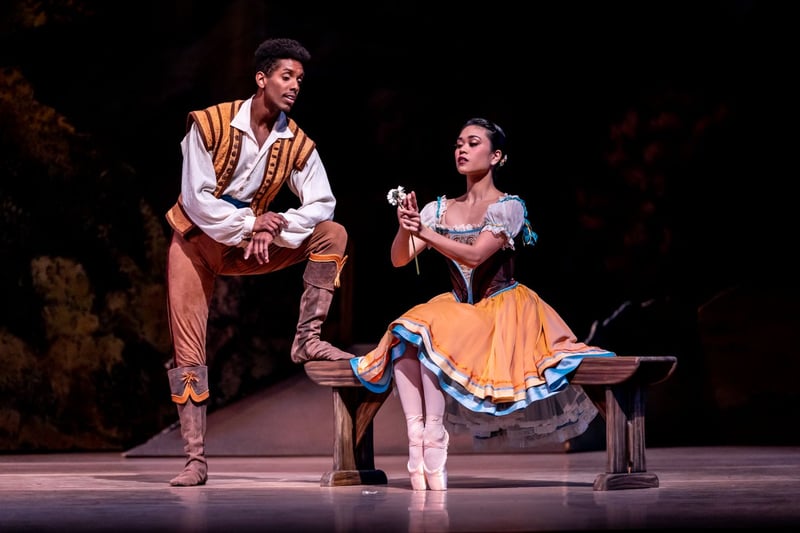
For a ballet built on the dichotomy between two worlds—an idyllic sunlit village by day and eerie moonlit forest by night—Pacific Northwest Ballet’s Giselle is a production of mesmerizing harmony. Despite its 19th-century roots, the Romantic ballet still captivates with its themes of love and heartbreak, brought to a modern audience with haunting elegance under Peter Boal’s artistic direction.
It had been years since I’d seen Giselle when I took my seat in McCaw Hall, but by the time I left, it had risen to the top of my favorites ballets. Unfolding against Jérôme Kaplan’s whimsical sets and French composer Adolphe Adam’s score, the ballet follows Giselle, a charming peasant girl who unwittingly falls in love with a disguised duke, Albert. When her jealous suitor, Hilarion, reveals Albert’s true identity, Giselle dies from heartbreak, only to rise at night as a Wili. Led by their merciless queen, Myrtha, the Wilis are the ghosts of jilted brides who beguile unsuspecting men into dancing to their deaths. Yet Giselle’s love for Albert persists—a love story so compelling that the ballet, too, has persisted for over 180 years.
Based on original choreography by Jean Coralli, Jules Perrot, and Marius Petipa, PNB’s production seamlessly layers music, movement, costuming and scenery with exceptional detail. The ballet begins in an idyllic village, complete with golden-green trees and castle-crowned mountains. Dancers stream across the stage in embroidered, earth-toned costumes, further evoking the nostalgic beauty of a fairytale. Reflected by the muted color palette, a sense of restraint underlies Act I. The delicate score intertwining with featherlight choreography—a swell of music accented by a perfectly timed hand gesture—lulls the audience into a false sense of serenity before the act’s tragic crescendo.
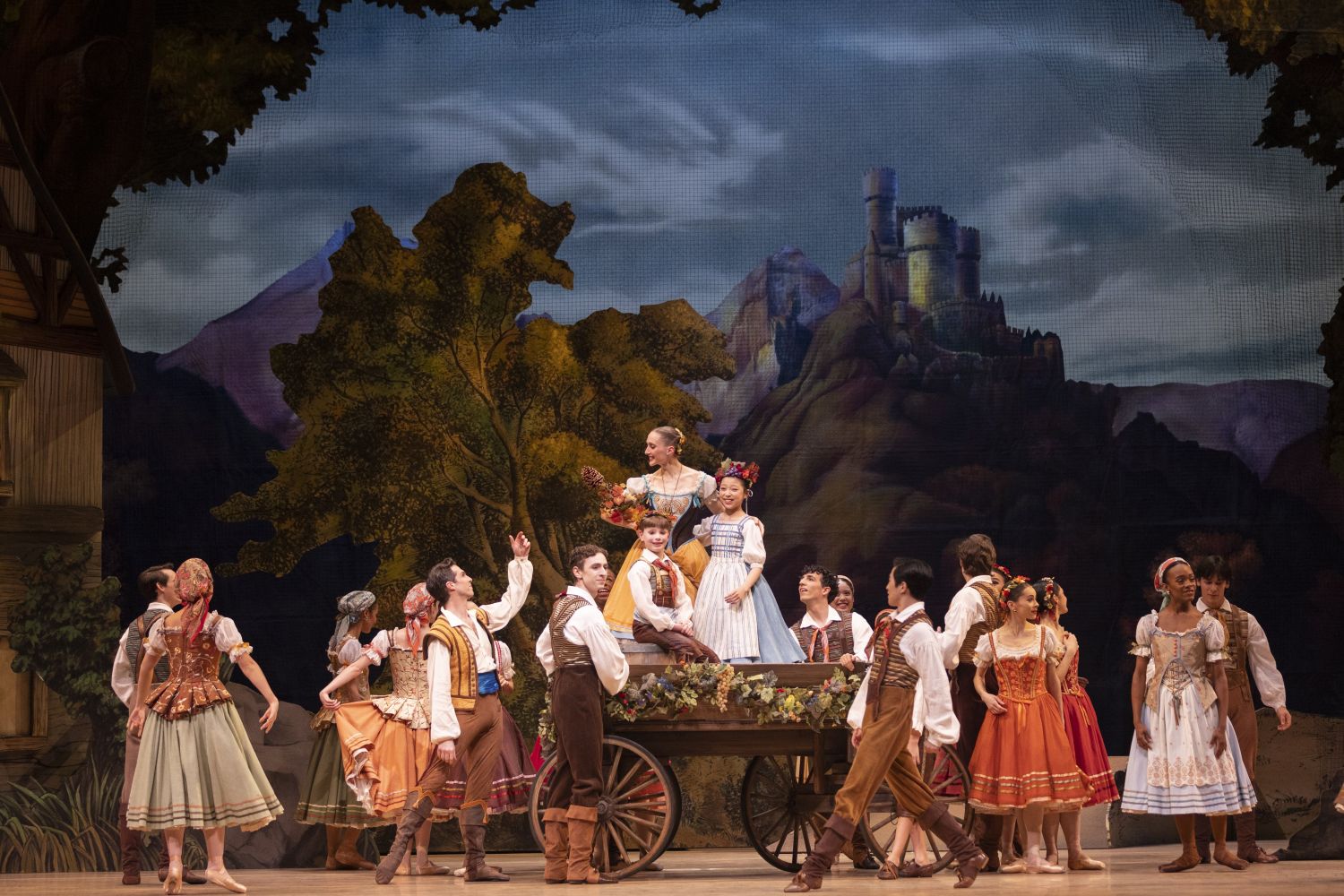
As Giselle, Sarah-Gabrielle Ryan exuded youthful optimism. From the mischievous upturning of a basket full of grapes to crowding Albert off a bench, her antics were both endearing and humorous. Opposite her, Kyle Davis as Albert was charming, if not completely convincing. His pleasant energy complemented Ryan almost too easily, failing to reveal the duplicity of his infatuated character. Dylan Wald’s Hilarion brought a more powerful, emotive presence. His assured gestures held my attention every time he was onstage.
Act I flowed gently, punctuated by ripples of comedy and conflict—mostly performed in pantomime. This allowed me to appreciate each detail of the production, from the precise footwork to subtle gradients in the sky’s lighting to the leitmotifs marking each character’s entrance. Waltzes brightened the score, and moments of lively energy made me smile, such as the spirited peasant pas de deux between dancers Malena Ani and Noah Martzall.
The first moment of discord in Act I is marked by the sounding of horns and the entrance of a royal hunting party with Albert’s fiancée, Bathilde. The lords and ladies, in their respective scarlet coats and deep blue gowns, were a sharp contrast to the villagers. This shattering of Act I’s restrained harmony mirrors the emotional collapse of Giselle’s fairytale world when she discovers Albert’s betrayal. The audience could feel the force of Giselle’s heartbreak and madness as Ryan danced her death throes with vivid anguish.
The interplay between these dichotomies continues in Act II, where Giselle’s gentleness contrasts with Myrtha’s fierce coldness. Although the act opens with a touch of levity—a group of foolish gamekeepers narrowly escaping the clutches of the Wilis—the tone soon turns somber. Punctuated by sharper crescendos, the music takes on a haunting quality as the veiled Wilis glide like ghosts through an eerie moonlit forest filled with blue-tinged mist. When the veils rose from their heads, drawn up by invisible strings, a chorus of gasps echoed across the audience. These gasps morphed into applause as the corps de ballet moved in flawless synchronicity. Wearing ethereal white dresses, they flowed in and out of formations like the opening and closing of a flower’s petals.
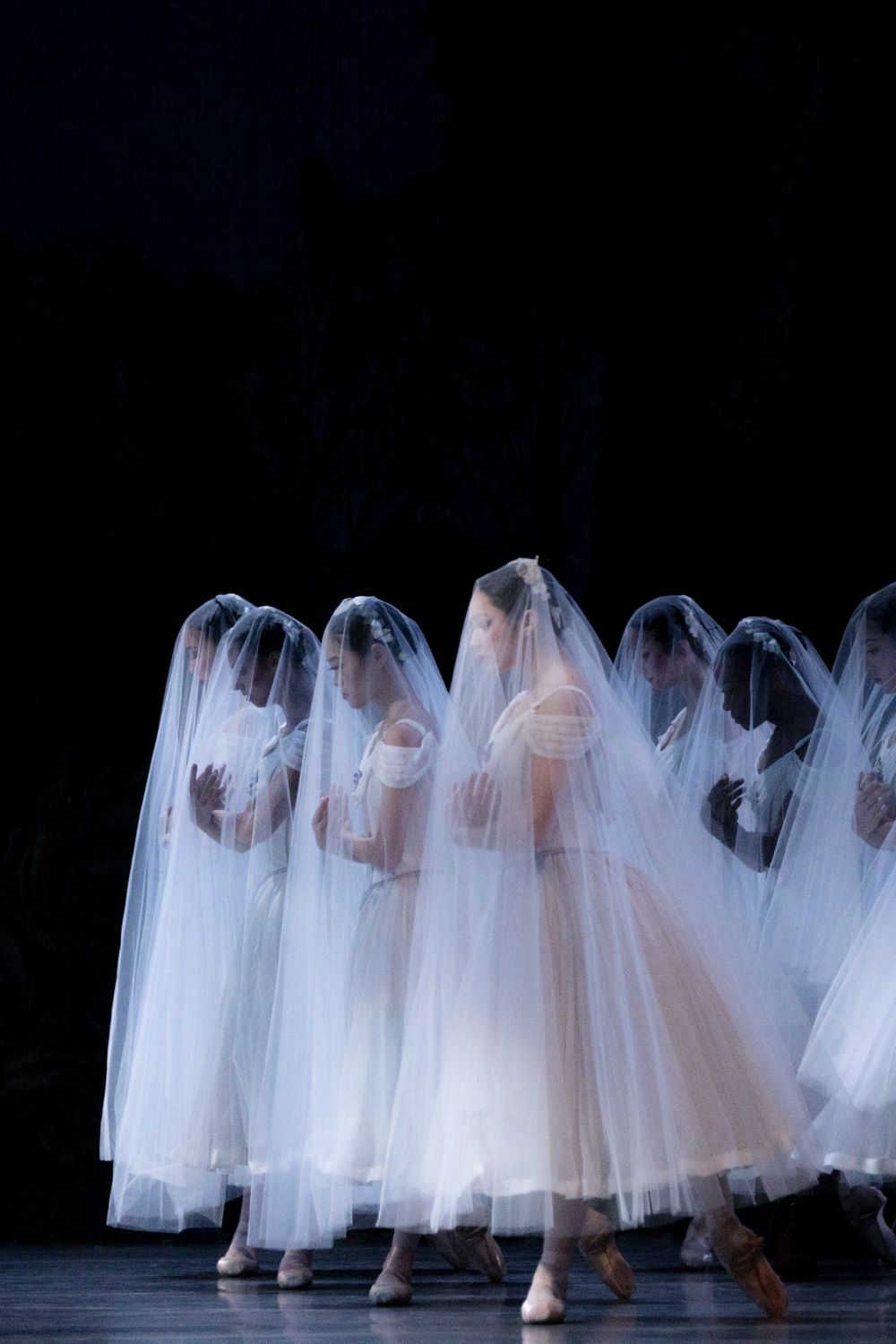
As Myrtha, Ashton Edwards commanded the stage, radiating ruthless intensity with every sharp movement. Among the Wilis, Ryan’s Giselle morphed from playful levity to fluid grace. I was particularly impressed when Myrtha forced her to dance: her arms moved smoothly yet unnaturally, like an elegant mannequin come to life. When the unfortunate Hilarion wandered into their clutches, the ensemble took a dark turn. Wald’s frantic last moments as the Wilis mercilessly encircled him sent chills through me.
Giselle's pleas for Albert’s life when he also falls under Myrtha’s spell were particularly poignant. Although Davis’s growing exhaustion as Albert never evolved into desperation, Ryan’s entreating gestures conveyed the scene’s gravity. The choreography here gave Davis and his athleticism a chance to shine. Every one of his leaps and turns seemed effortless. His endless series of entrechats six near the end of Act II captured Albert’s dance toward death with relentless precision.
For me, the most touching moment of the ballet was Ryan’s and Davis’s heart-wrenching pas de deux. It was a joy to watch them move seamlessly as one, encapsulating the natural grace and harmony that makes Giselle so compelling. The epitome of this was the angel lift where Ryan seemed to float above Davis, as weightless as a ghost. This tenderness made Giselle’s final choice to save Albert even more bittersweet.
A hauntingly beautiful production, Giselle cemented its place as a classic in PNB’s repertoire—and as one of my favorite ballets. At its core, Giselle is a story that dances between life and death, love and heartbreak. Although modern viewers may wonder why Albert is rewarded with a new future after deceiving the innocent Giselle, these universal dichotomies continue to resonate with audiences no matter the century. Brought to life with gorgeous harmony, PNB’s Giselle remains as enduring and true as the love of its heroine.
Lead photo: Jonathan Batista and Angelica Generosa in Giselle, photo © Lindsay Thomas.
The TeenTix Newsroom is a group of teen writers led by the Teen Editorial Staff. The Teen Editorial Staff is made up of 5 teens who curate the review portion of the TeenTix blog. Each spring, the Teen Editorial Staff are invited to review an event themselves while being mentored by a guest professional.
The TeenTix Press Corps promotes critical thinking, communication, and information literacy through criticism and journalism practice for teens. For more information about the Press Corps program see HERE.